
The Ontario government’s compensation program for livestock losses to wild predators will expand to take in more types of prey and predator alike — and to provide more money.
The province on Thursday updated the 30-year-old program to raise the maximum compensation rates available to affected producers and expand the current list of wildlife species and variety of livestock for which farmers can be compensated.
The new program also commits the province to a review every two years, which “helps us refresh maximum compensation rates regularly, keeping them in line with current market values,” Agriculture Minister Carol Mitchell said in a release.
Read Also
Klassen: Feeder cattle market continues consolidation
For the week ending March 28, Western Canadian feeder cattle market once again traded $10/cwt higher to $10/cwt lower compared…
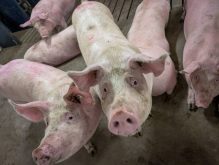
The expanded program will compensate for damage caused by wildlife to cattle, sheep, poultry over 25 kg, goats, horses, hogs, bees (beehives, colonies and related equipment), alpacas, bison, donkeys, mules, emus, ostrich, llamas, rabbits, rheas and farmed elk, deer and fur-bearing animals.
For all livestock other than bees, the program will now cover wildlife damage caused by bears, bobcats, raccoons, coyotes, wolves, lynx, crows, ravens, eagles, hawks, turkey vultures, elk, fishers, foxes, minks and weasels.
For beekeepers, the program will now cover damage caused to beehives, bee colonies and beehive-related equipment caused by bears, skunks, raccoons and deer, up to $150 per colony and $100 for damaged equipment.
The program provides 100 per cent of the value of the loss up to the prescribed maximum compensation values, such as $2,500 for a non-registered cow, $300 per non-registered sheep, $8,000 per horse, $30 per chicken kept for egg production or $70 for a meat turkey.
The updated program also commits the province to provide a $30 reimbursement for each claim a municipality processes on the province’s behalf.
It also sets up a $50,000 fund for “strategic investments with industry, to better understand how to prevent agriculture-wildlife conflicts.”
Curtis Royal, president of the Ontario Cattlemen’s Association, hailed the province’s new approach and noted the province has committed to increase the training of its livestock valuers who assess predator damage.
The upgrades “will work to provide a more streamlined, consistent, and market-reflective program,” he said in the province’s release Thursday.
“The new compensation rates and the addition of more species are much more reasonable for farmers who have suffered damage,” Lorne Small, vice-president of the Christian Farmers Federation of Ontario, said in the same release.
Application forms are to be made available July 1, the province said.