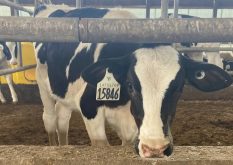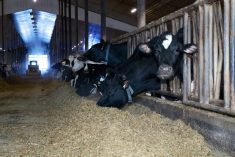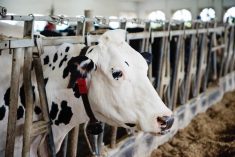


University of Alberta researchers are developing an easy pen-side test for mastitis.
The test works by mixing urine samples with a chemical solution that uses colour intensity to reveal metabolite concentrations. Although still in development, the test could predict the likelihood of mastitis with 95 per cent accuracy.
Identifying cows that are susceptible to developing the udder inflammation caused by bacteria-infected mammary glands could save milk producers millions of dollars, said immunobiologist Burim Ametaj, a professor in the faculty of agricultural, life & environmental sciences.
A case of mastitis costs an average of $660 in medication, labour and lost milk production, he said.
Read Also

Producers push for simpler programs, livestock support in Next Policy Framework
APAS summit panellists say the framework replacing SCAP must make livestock risk management competitive with crop supports.
“The common practice for 90 per cent of producers is to proactively treat all of their cows to avoid infection,” Ametaj said. “But on average, only 23 per cent need treatment.”
Treating only those susceptible cows would reduce antibiotic use, he said.
Ametaj and his fellow researchers focused on identifying changes in metabolites present in cow urine before, during and after the animal’s pregnancy. They were able to identify a handful of metabolites that differed between healthy and diseased cows, and were typical of mastitis. They can serve as “screening biomarkers” to reveal susceptible animals.
The research was funded by Genome Alberta and the now-defunct Alberta Livestock and Meat Agency.