
Farm Credit Canada (FCC) is forecasting Canada’s real GDP growth will “slow significantly” in 2026.
The culprits behind the oulook include the ongoing trade war with the U.S., underused trade deals with other trade partners, and high-rate mortgage renewals.
WHY IT MATTERS: Canada’s economy, agriculture included, is till trying to navigate volatile seas when it comes to trade and geopolitics, impacting projected farmer profit margins, investment and gr0wth prospects in the agriculture sector and more.
Read Also
Gene edited, PRRS resistant pig approved in Canada
Canada has given its stamp of approval to pigs gene edited to resist porcine reproductive and respiratory syndrome (PRRS).
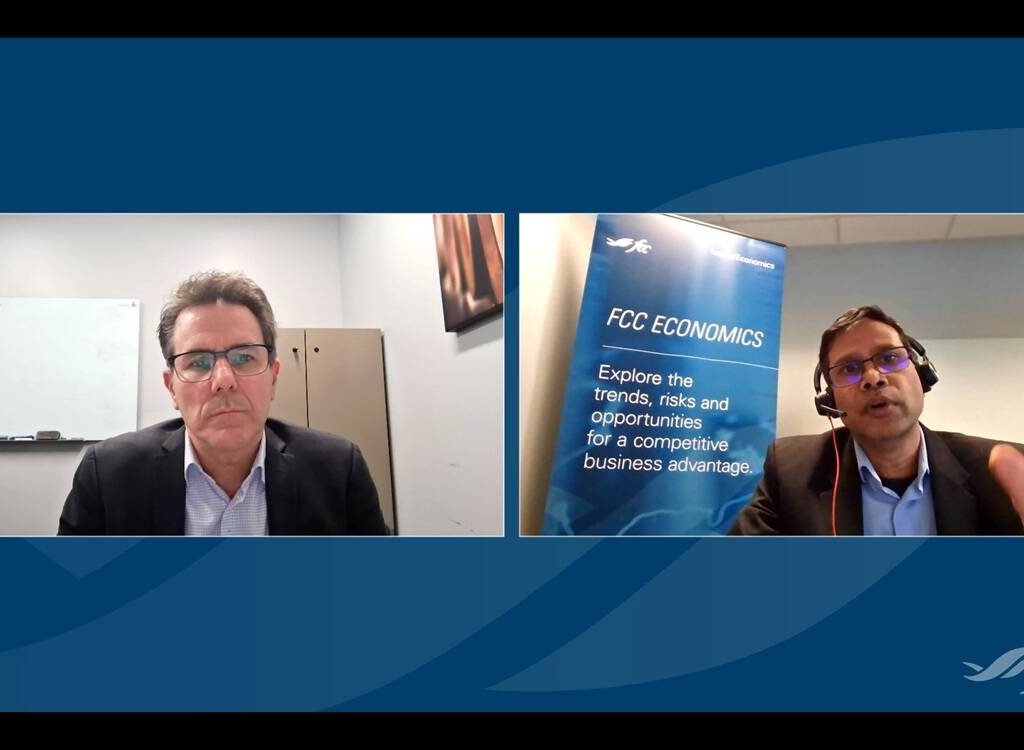
Krishen Rangasamy, principal economist with FCC, predicted a 1.2 per cent drop in GDP growth this year. He spoke at the farm lending company’s 2026 Economic Outlook Jan. 22.
“I understand that what we’re saying here is quite different from consensus on interest rates, because most forecasters are predicting either no change to the overnight rate or even an increase later this year,” said Rangasamy.
“That may well be the right forecast if the economy picks up materially. But … we think economic growth will weaken this year and and, if we’re correct about that, additional stimulus by the central bank should not be ruled out.”
Uncertain economics reign
Uncertainty over the future of the Canada-United States-Mexico Agreement (CUSMA) will continue to be a limiting factor, he said. Rangasamy also doesn’t see the threat of U.S. tariffs going away anytime soon.
He suspects Canadian exporters in CUSMA’s tariff-free categories such as farm, fishing and intermediate food products have felt above-expected tariff impacts due to confusion over rules of origin requirements, losing their CUSMA compliance in the process.
“Remember that the majority of our exports to the U.S. is tariff-free thanks to CUSMA, and yet, outside of the energy sector, our exporters have really struggled since the U.S. tariffs were imposed,” he noted.
Tariffs that have been placed on Canadian goods have caused U.S. importers to look elsewhere. This has caused Canada’s share of the U.S. market to drop to 11 per cent — its lowest ever — in 2025.
Although Rangasamy considers Canada’s attempts to diversify trade partners commendable, he’s disappointed in the country’s apparent inability to “materially reduce” dependence on the U.S., in light of its 51 existing free trade agreements.
“We’re not capitalizing on opportunities presented by those trade deals,” he said, citing ignored opportunities presented by the Canada-European Union Comprehensive Economic and Trade Agreement (CETA).
That agreement was designed to offer Canadian businesses preferential access to the EU market. But some expected big winners when the deal was first inked have failed to see major gains, particularly meat sectors who say regulation conflicts continue to keep them out.
“Over the last eight years (EU) exports grew by 40 per cent to Canada. Our exports to the European Union have barely budged over that eight-year period,” he said. “So we’re struggling to even take advantage of the trade deals we’ve got already.”
Leveraging the house
This year will also see a large share of Canadian households renewing mortgages at higher interest rates than their origination. According to Bank of Canada estimates, mortgage payments will increase by an average six per cent this year.
“Those households that are renewing their fixed-year, five-year mortgage — which, by the way, is the most popular mortgage product in the country. For those folks, payments will increase by about 20 per cent,” outlook listeners heard.
If there’s a bright spot for Canada, Rangasamy said it’s the federal government’s new focus on ambitious public projects that could rekindle business investment. But don’t expect big results too soon.
“It’s probably not a 2026 story. It’s probably something more like next year or even 2028.”