


A policy analyst with RBC says the country is losing share in the global agri-food trade, but may be able to regain its status by following a three-pronged approach.
Despite a global agri-food landscape that has “grown exponentially” over the past 25 years, Canada has lost roughly 15 per cent of agri-food export value over that time, said Lisa Ashton, agriculture policy lead with RBC, in a live stream at the Crossroads Crop Conference in Edmonton Jan. 27.
WHY IT MATTERS: Canada is becoming increasingly called to task by economists and analysts for failing to capitalize on existing trade deals outside the United States.
Read Also
Alberta farmers and ranchers aided by Water Amendment Act
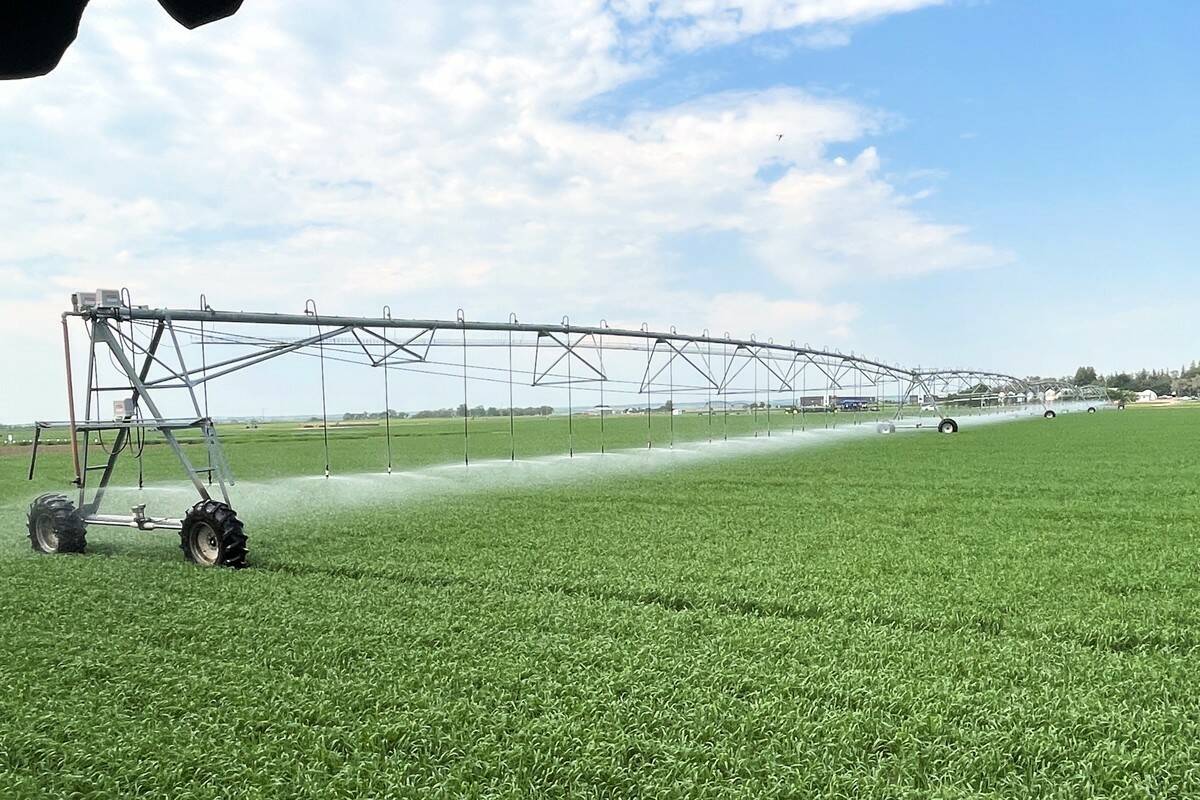
A quarter-century in the making, the Water Amendment Act officially modernizes how Alberta manages its most precious resource. From streamlining multi-licence consolidations for irrigation districts to allowing ministerial approval for low-risk inter-basin transfers, these changes aim to support a growing economy while protecting the environment and the “first-in-time, first-in-right” priority system.
The country’s biggest hindrance, she said, is over-reliance on the United States as an export partner at the expense of emerging new opportunities.
“Our trade growth is deeply dependent on one trading partner, and that’s the U.S. So when they grow, we grow, which is not necessarily a diversified strategy,” said Ashton, who suggested a three-pronged approach for regaining Canada’s piece of the export pie.
Prong 1: Grow where Canada already has market access
This includes the European Union (EU) and fellow signatories to the Trans-Pacific Partnership, but it also comprises some economies starting to require higher-value agri-food imports — and more of them — due to population growth or production challenges.
“Bilateral agreements that we can be taking more advantage of include those in South America like Chile, and South Korea — which is growing its food trade deficit in Colombia as well — and even the Ukraine,” she said.
This view is consistent with comments made by Krishen Rangasamy with Farm Credit Canada at a recent economic outlook for 2026.
“We’re not capitalizing on opportunities presented by those trade deals,” he said, citing ignored opportunities presented by the Canada-European Union Comprehensive Economic and Trade Agreement (CETA).
Prong 2: Expand in the world’s best growth markets
“There are pockets around the world … where population is still expected to rise exponentially over the next decade and GDP is also expected to rise as countries develop their economies,” explained Ashton.
“And with that comes a demand for higher-value products, more imports especially as consumers have more disposable income to spend on products like fruits and vegetables, meat, higher-value greens and oilseeds.”
Some examples include sub-Saharan Africa, North Africa and the Middle East. “Especially because (the Middle East is) developing a number of food security and food development strategies … and looking to build more strategic and strong relationships around agri-food.”
Prong 3: Think about agri-food as a diplomatic tool
The ag industry needs to think of agriculture and food as strategic tools in diplomacy, she said. That might be a key tactic for bringing the U.S. back into the trade fold.
“This is especially relevant when we think about countries that have a growing agri-food trade deficit. This includes China, this includes Japan and importantly, this includes the U.S. The U.S. has had a trade deficit for agri-food products over the last three years.
“So this is an opportunity for Canada to really demonstrate its leading role as a partner to the U.S., particularly on agri-food.”