

GLACIER FARM MEDIA — In a world dominated by tariffs, wars, social media controversy and more tariffs, it’s great fun to watch a duck walk up a ladder and then slip down a children’s slide on its butt.
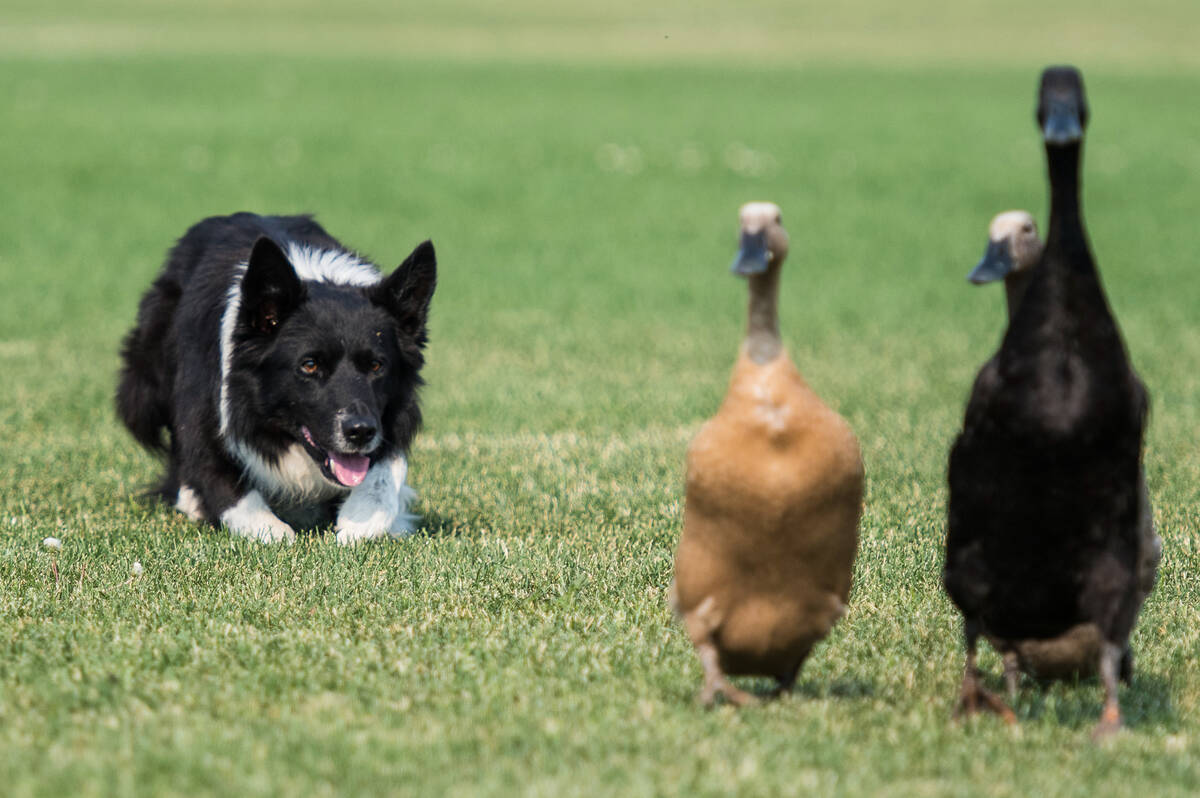
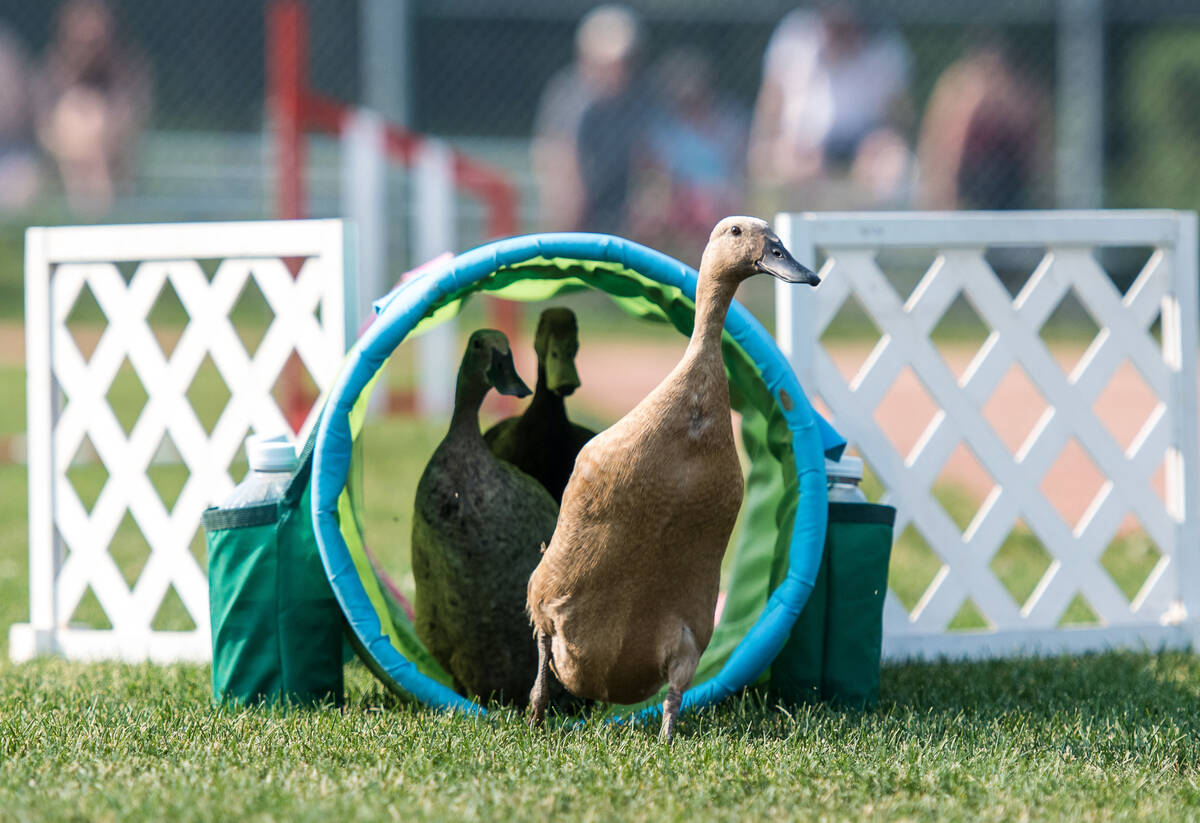
Such a video can be found on YouTube (see below), and the stars of the 90-second film are four ducks and a border collie from Stony Plain, Alta.
Read Also

Livestock receipts drive farm cash to $101B despite crop decline
Canadian farm cash receipts rose to $101 billion in 2025 as surging livestock revenues offset declining crop receipts and shrinking direct government payments.
Jai, the border collie, darts across a grassy area at a park in Stony Plain, stopping and starting to herd the ducks down the slide, across a tiny bridge and through a plastic tunnel.
The purpose of the duck demonstration, done in June 2022, was to entertain a small crowd of cheering kids and parents at Farmer’s Days.
The audience was amused, but the person in the video, Jai’s owner, is very serious about dog training and helping people manage behavioural issues with their pets.
Gisela Griesser runs Pawsome Connection, a business that provides agility and other dog training.
Duck herding isn’t a core part Griesser’s business — it’s more of a promotional tool.
“I’m educating about how a herding dog works … and it’s also entertainment with the ducks,” said Griesser.
“Ducks are way more entertaining than (sheep).”
Griesser grew up in Switzerland and moved to Canada in 1997, in part because she needed more space to pursue her interests, or should we say, her passions.
“I was born horse and dog crazy,” Griesser said.
She got her first border collie in 1989 because she wanted to compete in sheep herding and agility trials in Switzerland.
Once in Canada, Griesser continued to train her dogs for competition, learning more about canines and their behaviour along the way.
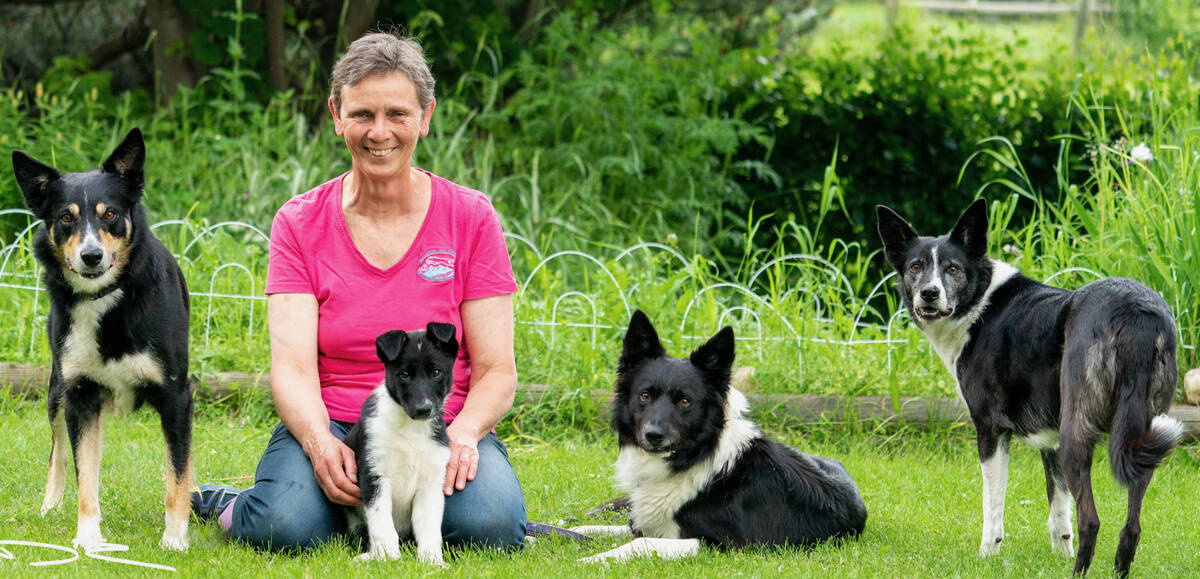
Around 2017, Griesser had an “aha” moment in her dog training journey.
One of her dogs wasn’t listening to verbal commands for agility training, and Griesser was frustrated by the lack of progress.
Then another dog expert shared some advice.
“He (the dog) is paying attention to your body language. He is reading that,” Griesser recalled.
“People want to use verbal communication because that’s how we are used to communicating. … (But) I ran into a wall with that.”
The “aha” moment led Griesser to a program developed in Finland called OneMind dog training.
The back story for OneMind dog training is worth a mention.
In 2003, a border collie named Tekla lost her hearing, but Tekla’s owner, Janita Leinonen, found a new way to communicate so the dog could continue with agility competitions.
Leinonen used hand signals, body language and movement to train Tekla, and “they went on to win several championship titles in various agility competitions,” according to OneMind.
Griesser learned the OneMind method and the importance of posture and positioning. It changed how she thinks about human-dog interaction.
“Verbal communication is at the bottom of the list of what the dog pays attention to. … The most important one is movement. That’s what every dog understands.”
One obvious example is shaking a paw.
The dog will respond to someone bending down and reaching out with their hand. The “shake a paw” command is less important, Griesser said.
There are dozens of YouTube videos where a person tells a border collie or some other smart-looking dog to “get the giraffe.”
Ten seconds later, the dog returns with a stuffed giraffe.
That sort of verbal training does work, but it requires an immense amount of repetition, Griesser said.
Hand signals and body language are a much simpler method to train for certain behaviours.
“I don’t have to teach the dog my language. I’m communicating in a language they already understand.”
However, teaching dogs to herd livestock is a different beast.
It does require verbal commands because the situation is more complicated.
There’s an owner, a dog and a group of livestock.
Plus, the natural instinct of a herding breed, such as a border collie, plays a large role in how the dog responds.
“When they see livestock, there’s a switch that flips in their brain,” Griesser said.
The dog instinctively “reads” the movement of the livestock.
Griesser has been training dogs and dog owners for decades, but she still wants to learn more.
She’s in the middle of an 18-month, online program from the Canine Behaviour College in England.
Dog training is not a regulated industry, so anyone can take a program or earn a certificate and call themselves a trainer.
The diploma program from England is internationally recognized and will help Griesser in the future.
She already provides dog management advice through Zoom, but Griesser wants to be fully qualified to assist dog owners who are struggling with their pet’s inappropriate behaviour.
Griesser had her own challenges with Jai (the duck herder) because he wasn’t friendly with other dogs or humans.
“I think a big (thing) is reactivity. It’s not aggression. It’s just (some) dogs have inappropriate responses to other dogs or people,” said Griesser.
“We (need to) help those dogs.”
The Hierarchy of Dog Communication
According to the OneMind method Griesser uses, dogs prioritize information in this order:
- Movement: the most natural “language” for a dog.
- Body language/posture: how you lean or where you point.
- Positioning: where you are located in relation to the dog.
- Verbal commands: surprisingly, this is at the very bottom.