
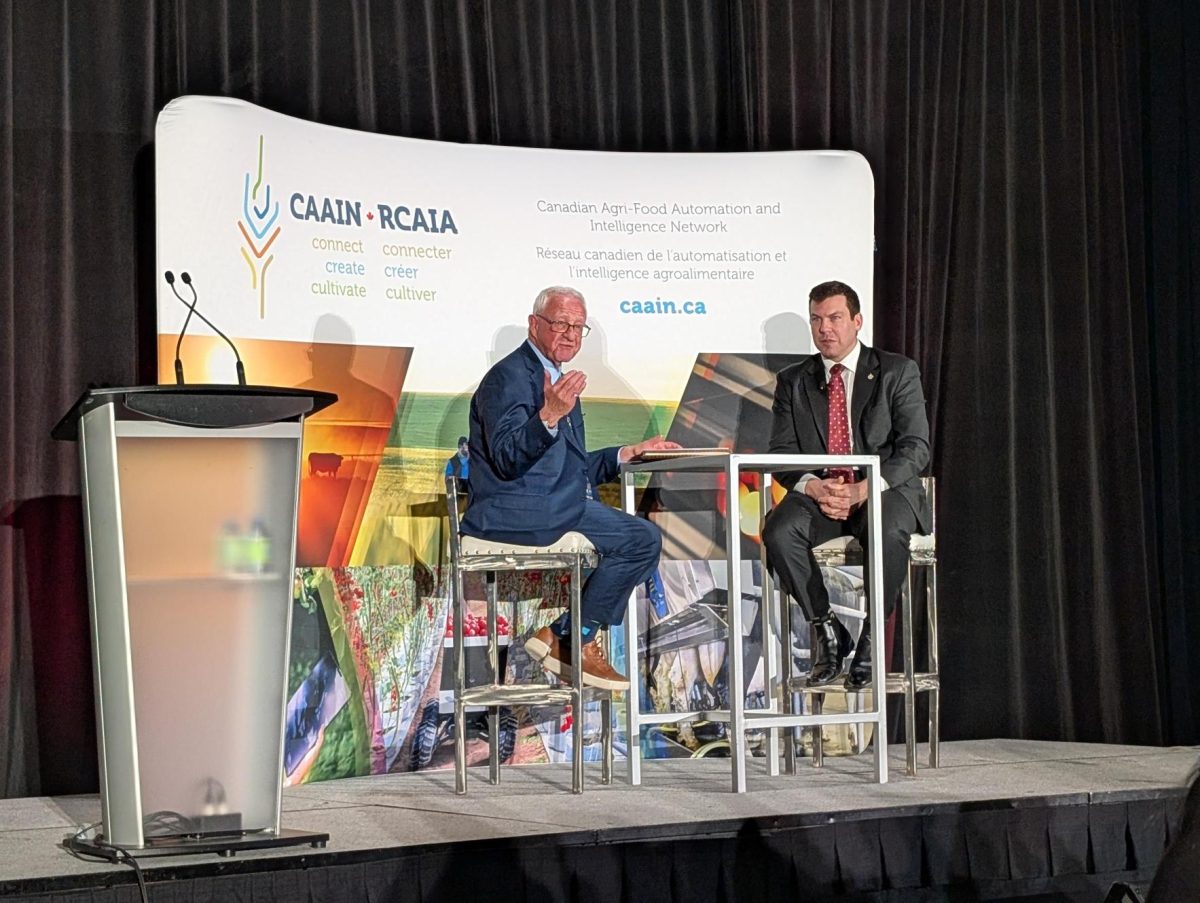
UPDATED – Agriculture must be pushed as a sector of expansion and investment opportunity in Canada said Kody Blois.
“It’s our work around the country to remind people that this is a fundamental pillar of the Canadian economy, whether at the farm gate all the way through to agri-food,” he said.
Blois is a former agriculture minister who serves as a Parliamentary Secretary to the Prime Minister.
Read Also
Canadian Cattle Association won’t back traceability changes
The Canadian Cattle Association says it won’t support proceeding with the CFIA’s proposed changes to federal cattle traceability regulations after feedback from members.
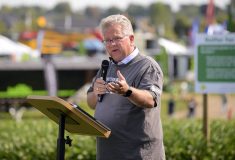
He spoke during the third annual Canadian Agri-Food Automation and Intelligence Network (CAAIN) fireside chat on Feb. 9, hosted by Canadian Agricultural Hall of Fame member Kim McConnell.
One of the main problems, Blois said, is that “the industry does not just fit under one portfolio anymore. It is over a multitude.”
“If you’re in the agri-food business, you’re as worried about what (Employment and Social Development Canada) is going to do and (Immigration, Refugees and Citizenship Canada) is going to do for your labor complement,” he said. “If you’re at the farm gate, you’re keeping an eye on (Environment and Climate Change Canada) and how they’re going to handle biofuel policy and used cooking oil.”
Agriculture and food part of the vision
Blois said agriculture and food are a part of Prime Minister Mark Carney’s vision for Canada, even if agriculture is not in his background.
“Let’s not pretend he’s in the granular,” he said. “He doesn’t know AgriStability, like broad level, but he’s a quick study.”
“Food is being talked a lot about in the House of Commons. Not your intricate policy questions the way you might like it … but there is a lot of conversation on affordability and food.”
The federal government recently announced a strategy on food affordability and security. Blois pointed to this as a sign of a new commitment to food, specifically the pledge to finance greenhouses.
“That could be a massive policy for Southwestern Ontario. 4,000 acres of greenhouses, if that’s how it’s defined, that’s a huge policy win.”
“But the most important (measure) was the National Food Security Strategy,” he added. “$500 million under the Strategic Response Fund, $150 million to the regional development agencies. That’s $650 million of federal government funding that is intended to support food outcomes in this country.”
The Carney government also recently cut jobs across Agriculture and Agri-Food Canada and made plans to shutter some research centres across Canada as part of broad cost-cutting.
Blois urged agri-food stakeholders to take advantage this “window of opportunity.”
“Get your foot in the door,” he said. “Say ‘we’re here not only on what we can do to reduce costs, to maybe stabilize food costs, but how we can use this as a rural agenda to drive the country forward?’”
The lead-up to CUSMA
The Canada-United States-Mexico Agreement (CUSMA) review this summer is top of mind for the agriculture sector.
Blois said a rational approach will be crucial in the lead-up to the negotiations.
“We have to be prepared and level-headed. Agriculture stakeholder groups can’t light their hair on fire the moment some tweet goes up, or some Truth Social, or whatever it is.”
He said many Americans may share Canadian goals and mentioned recent developments from the U.S. like the House Democrats pushing to remove the tariffs on Canada. U.S. producer groups have also recently expressed support for the agreement.
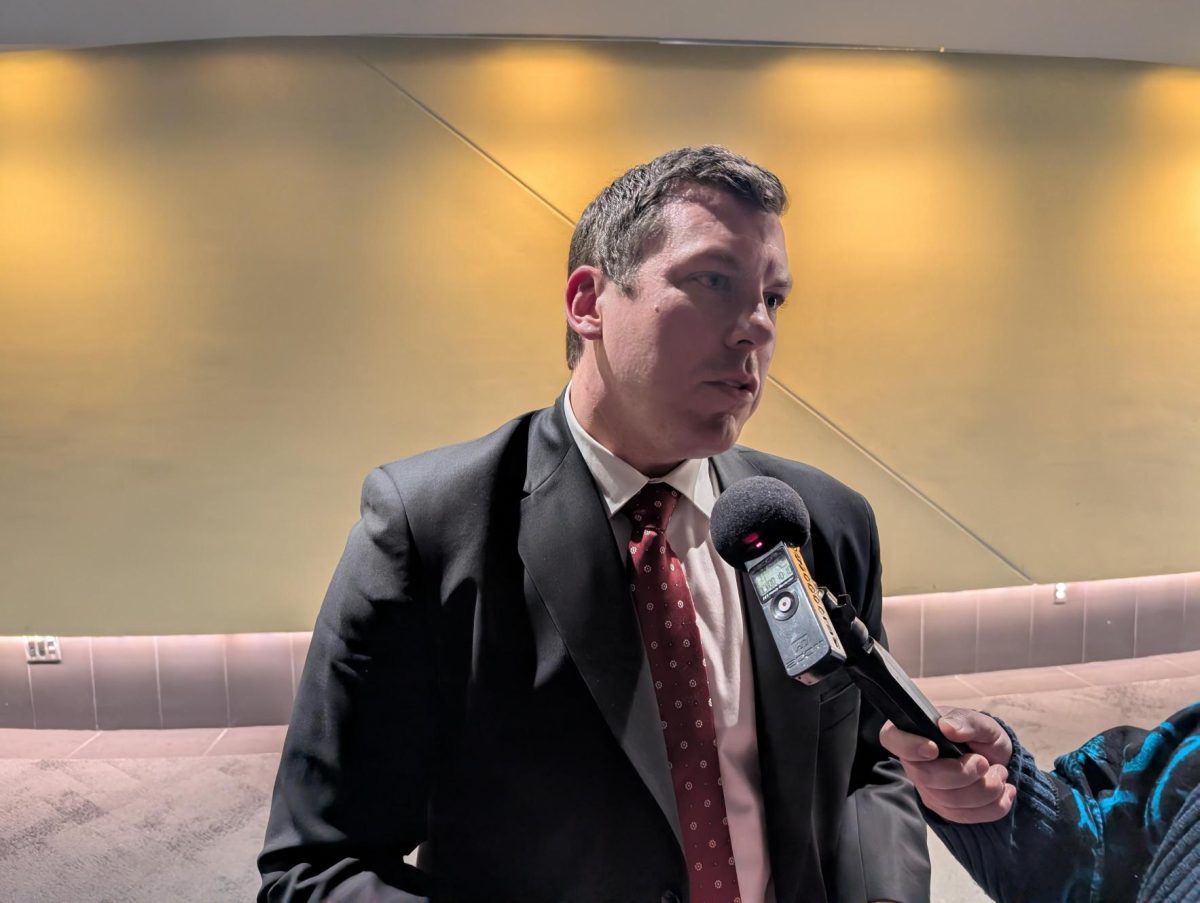
Blois later told reporters Carney has “been in regular contact” with U.S. President Donald Trump ahead of the renewal, scheduled for July of this year.
“There are obviously irritants that the United States has raised. We will work through those,” he said.
“I think it’s important that we continue to have this dialogue with congressional leaders alongside the administration, that this is a partnership that has benefited the United States and Canada both in a very significant way.”
The role of parliamentarians like him, Blois said, is to “reinforce across the spectrum the importance of the relationship.”
Getting involved in a new era for trade
One of the next important steps for Canadian agriculture will be finding new markets in an uncertain trade landscape. Business leaders can play a role in this.
“This is not a Liberal talking point,” Blois said. “This is, I think, unified across most of the political spectrum that we need to just not rest on our laurels. We benefited as a country having that relationship. But boy, it’s a big world out there.”
He mentioned Canada’s work in the Indo-Pacific, specifically the Indonesian market as signs of a new national trade focus.
Blois said exporters and commodity groups could begin taking advantages of the government’s new trade focus.
“One of the best values of the Government of Canada is our trade commissioners,” he said. “We have good civil servants all across as part of our diplomatic corps who are there to serve the needs of industry, whether that’s agriculture or otherwise.”
He encouraged those international businesses to consider following Carney’s upcoming trade trips to countries like India and Mexico.
“The Prime Minister … visited 44 different countries last year. I think it’s the right thing to be doing in this environment. Follow him.”
“Connect with individuals, follow where the Prime Minister’s going. If you do business there, leverage that goodwill. The trips have largely been positive,” Blois said.
The future of global trade
In an increasingly uncertain and volatile global market, Blois said Canada will have a part to play as a stable jurisdiction.
“Global trade is no longer a given,” he said. “Global trade is going to be country by country.”
Something he said Canadians should keep in mind is that Canada often sees itself differently than other countries see it.
Blois said colleagues who spend time with Canadian and global CEOs have noticed a difference in perspective.
“You go talk to the Canadian CEO, ‘ah geez, you know, we’re not doing so well.’ Talk to the global CEO, ‘My God, Canada’s a panacea.’”
“I’m not suggesting that we’re perfect,” Blois added. “We have challenges. We have work. This government is focused on delivering it. But I think if you were to take an objective view of what’s going on in the world, Canada has political stability, the difference between our two major parties, although I would suggest there’s some key ones, it’s not a gulf. And we have institutions that provide stability.”