
Billed as Canada’s “most modern university veterinary hospital,” the Universite de Montreal’s University Veterinary Hospital Centre officially opened for all species Friday.
The federal and Quebec governments put up over $74 million alongside the university’s own funding to double and renovate the facility.
UVHC’s expanded facility, which will be open 24 hours a day, 365 days per year, was built as “a fully integrated medical facility where equine, bovine, farm, domestic and exotic animals can be diagnosed, admitted and treated,” the university said in a release Friday.
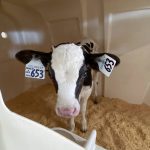
The hospital is expected to treat about 14,000 animals per year, including a farm animal hospital for hogs, cattle, chickens, sheep, goats, llamas and ostrich. That facility admits about 700 cases a year. The equine hospital treats up to 1,500 race or sporting horses per year from Quebec, eastern Ontario and the U.S., while a domestic pet hospital will handle up to 12,000 dogs and cats per year.
Read Also
No way to segregate gene-edited pigs Canadian Pork Council says as groups call for labelling
Canadian Pork Council says it supports bids to get public acceptance for pigs gene edited for resistance to PRRS as some consumer and agriculture groups call for mandatory labelling.
Also, a “roving” clinic includes specialists who are expected to provide about 3,600 on-site farm visits per year to treat livestock.
The UVHC is also expected to serve as the hub for 60 professors and researchers, 100 support staff and 40 interns and residents. Research at the hospital will focus on major illnesses affecting mammals, ranging from cancer to arthritis, including research that could be applied in human health care, the university said.