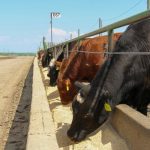


Western Canadian feeder cattle prices were steady to $2 per hundredweight higher last week. The main yearling run has been delayed by approximately three weeks because of favourable pasture conditions and plentiful forage. Therefore, feedlot operators are bidding more aggressively for the smaller available supplies.
Lighter-weight feeder cattle had a mixed tone. The grain harvest has wrapped up in the southern regions of the Prairies and the farmer backgrounding operator is starting to buy light-weight calves.
Lightweight calves under 400 pounds sold in the range of $165 to $175 in southern Alberta. This was actually a bit lower than last week but only small volumes were available. Steers weighing just over 600 lbs. with no special feature sold for $158 just north of Calgary. In central Alberta, a mixed group of steers averaging 828 lbs. sold for $135/cwt. Alberta packers were buying fed cattle in the range of $107-$110 as the stronger Canadian dollar has pressured basis levels for nearby delivery.
Read Also
Strong 2025 could mean complications for Canadian grain sector in 2026 says analyst
Carryover supply of many crops in Canada could complicate the market in 2026
U.S. feeder cattle prices were $2-$4/cwt higher than last week. The U.S. Department of Agriculture reported in Valentine, Nebraska, a large group of steers averaging 791 lbs. sold for $154/cwt.
Industry comments suggest that the U.S. beef cow slaughter has dropped off sharply over the past month, which supported prices in Western Canada. Slaughter cow prices should continue to percolate higher throughout the fall period.
The industry is anticipating a larger volume of feeder cattle coming through auction rings over the next few weeks. Weakness in the fed market is deterring some smaller feedlot operators in the short term. The Canadian dollar is at 13-month highs and there is potential for additional strength as the U.S. greenback moves back to historical lows.
Cash barley prices in southern Alberta reached $165 per tonne last week and could move higher now that the harvest is in the final stages. The feeder market will likely trade sideways through mid-October as feedlots cannot lock in a profit on replacement cattle given the feeding economics at this time.
— Jerry Klassen is a commodity market analyst in Winnipeg and maintains an interest in the family feedlot in southern Alberta. He writes an in-depth biweekly commentary, Canadian Feedlot and Cattle Market Analysis, for feedlot operators in Canada. He can be reached by email at [email protected] for questions or comments.