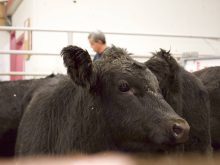


Western Canadian feeder cattle prices were steady to $3 per hundredweight (cwt) lower on average compared to week-ago levels with larger volume of calves coming on stream.
Deferred live cattle futures were lower and weaker feedlot margins are the main factors pressuring feeder cattle prices in the short term. Barley prices in southern Alberta jumped $6 per tonne last week, reaching $276, and feedlots are having a hard time buying significant volumes. The negative sentiment from the XL Foods plant closure has feedlot managers on the defensive. The overall environment can be considered "gloomy with cautious optimism."
Read Also
Prairie Wheat Weekly: Rising loonie pushes down cash prices
Cash prices for Western Canadian wheat and durum stepped back during the week ended March 11, pushed lower by a stronger Canadian dollar.
Charolais-cross heifers weighing 404 pounds sold for $177/cwt in southern Alberta; medium-frame black Angus heifers weighing 536 lbs. traded at $146/cwt. The spread between heifers and steers has narrowed to a meagre 10 cents with feedlot operators looking at lower-priced cattle, and will push efficiencies. A larger group of Charolais-cross steers weighing 495 lbs. sold for $174/cwt. Top-quality red steers weighing 543 lbs. sold for $155/cwt. Fed cattle in Alberta sold in the range of $106-$108/cwt; feedlot break-even prices are around $120/cwt and fed cattle marketing weights are edging higher.
U.S. feeder cattle prices were steady to $3/cwt higher as winter wheat pasture is in good condition. Fed cattle in the U.S. southern Plains were selling $1/cwt higher, at $125/cwt, with carcass weights reaching an all-time record high. Fourth-quarter beef production will be higher than earlier anticipated.
Feeder cattle prices feel sluggish and have potential to soften over the next couple of weeks. Barley prices have potential to jump another $15 to $25 per tonne over the next month given the tight fundamentals and limited farmer selling. Larger-than-expected beef production, along with volatile consumer demand, will limit the upside in the fed cattle market. Therefore, something has to give and feedlot managers will price feeder cattle accordingly.
— Jerry Klassen is a commodity market analyst in Winnipeg and maintains an interest in the family feedlot in southern Alberta. He writes an in-depth biweekly commentary, Canadian Feedlot and Cattle Market Analysis, for feedlot operators in Canada. He can be reached by email at [email protected] for questions or comments.