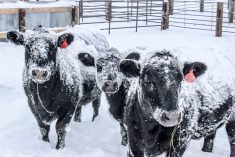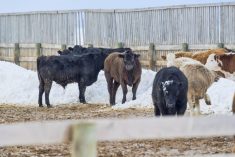


U.S. yearling prices were $3-$4 per hundredweight (cwt) lower last week as Chicago Board of Trade (CBOT) corn futures reached their highest levels in two years. U.S. calves were moving $3-$7/cwt lower amidst lower demand and increasing head counts.
Buying interest for replacement cattle has subsided, with feeding margins under pressure and deferred live cattle futures failing to stay near the $104/cwt area.
Feedlot managers are also struggling to come to terms with recent U.S. Department of Agriculture data. Year-to-date feedlot placements are running five per cent higher than last year, while the 2009 calf crop was one per cent lower than in 2008. The feeder market is experiencing a significant fundamental shift, with larger-than-expected supplies and lower demand due to rising feedgrains costs.
Read Also
Gene edited, PRRS resistant pig approved in Canada
Canada has given its stamp of approval to pigs gene edited to resist porcine reproductive and respiratory syndrome (PRRS).
Western Canadian feeder cattle prices have held up very well but are starting to feel the weight of the lower export program. The recent frosts have spurred on some selling of grass cattle. Many cattle producers have been holding onto cattle longer than normal because of the abundant forage situation. Steers weighing 800 pounds were $2-$3 lower this week but lighter cattle were steady with values earlier in September.
Western Canadian feedlots have not experienced a surge in feedgrains like the U.S. feedyard operator. Barley is still hovering at $165 in Lethbridge, similar to prices earlier in August. However, I feel barley values will start to strengthen over the next couple weeks.
Western Canadian feeder cattle prices are expected to grind lower in October and could drop $5-$10/cwt from current levels. Rising feedgrain costs and a surge in available numbers, along with the lower export program, will set a negative tone to the domestic feeder market.
— Jerry Klassen is a commodity market analyst in Winnipeg and maintains an interest in the family feedlot in southern Alberta. He writes an in-depth biweekly commentary, Canadian Feedlot and Cattle Market Analysis, for feedlot operators in Canada. He can be reached by email at [email protected] or 204-287-8268 for questions or comments.
The material contained herein is for information purposes only and is not to be construed as an offer for the sale or purchase of securities, options and/or futures or futures options contracts. While the information in this publication cannot be guaranteed, it was obtained from sources believed to be reliable. The risk of loss in futures trading can be substantial. The article is an opinion only and may not be accurate about market direction in the future. Do not use this information to make buying or selling decision because adverse consequences may occur. This information may be wrong and may not be correct about current market conditions in all areas of Canada. This is an opinion only and not based on verified facts.