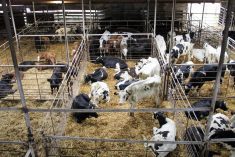


Western Canadian feeder cattle prices were up $1-$3 on average last week as major feedlot operators were more aggressive to secure nearby supplies.
Steers in the range of 700 to 800 pounds averaged $140 per hundredweight (cwt); yearlings in the 800- to 900-pound category averaged $130-$132/cwt while replacement cattle over 900 pounds brought back $125/cwt.
April live cattle futures traded near contract highs, which spurred on demand for feeders that would be marketed in the late winter and early spring period. Barley prices have jumped approximately $8 per tonne over the past two weeks but this rise in input costs did little to temper overall enthusiasm.
Read Also

China urges hog producers to manage output, vows timely reserve adjustments
China’s state planner on Friday said authorities will make timely adjustments to hog reserves and continue to strengthen the management of hog production capacity.
Auction markets report a slight increase in calf numbers and with last week’s widespread Prairie frost, many cow-calf producers will now be bringing lighter weight feeders to market.
U.S. feeder cattle prices remain under pressure with yearlings down $2-$5/cwt and calves down $6-$8/cwt on average. Despite softer corn values, the U.S. feeder market is struggling due to softer buying interest. Many feedlots in the southern Plains have filled up on light-weight calves as the extensive drought this past summer resulted in larger placements. Feedlot operators are now content with current numbers and many have run out of buying power. The U.S. farmer feedlot operator is gearing up for the corn and soybean harvests, so the phones of many cattle merchants are very quiet.
Earlier in summer, the March 2012 feeder cattle futures were trading at a discount to the October 2011 feeder contract. However, this past week the March 20011 contract traded at a $3-$4 premium over the October 2011 contract.
The feeder cattle futures are now telling producers to hold onto feeder cattle through the winter. The larger U.S. placements over the past four months have weighed on the nearby feeder market, as I discussed in the previous paragraph. This will likely result in tighter supplies in the first quarter of 2012; therefore, the March contract has strengthened over the October market.
— Jerry Klassen is a commodity market analyst in Winnipeg and maintains an interest in the family feedlot in southern Alberta. He writes an in-depth biweekly commentary, Canadian Feedlot and Cattle Market Analysis, for feedlot operators in Canada. He can be reached by email at [email protected] or at 204-287-8268 for questions or comments.