

CNS Canada — The biggest factor in Chicago Board of Trade (CBOT) corn and soybean trading has been the recent volatility in global markets.
Once those concerns diminish, however, commodities will start moving with weather again — which is mostly bearish, according to one analyst.
“Our markets, really, if you look at it, have fared pretty well considering the global economy,” said Brian Rydlund, market analyst with CHS Hedging.
Financial problems in China are bearish for soybeans, as the country is a major importer of U.S. and South American supplies. But on the bullish side, soybeans are fairly competitive globally, at least compared to corn or wheat, Rydlund said.
Read Also
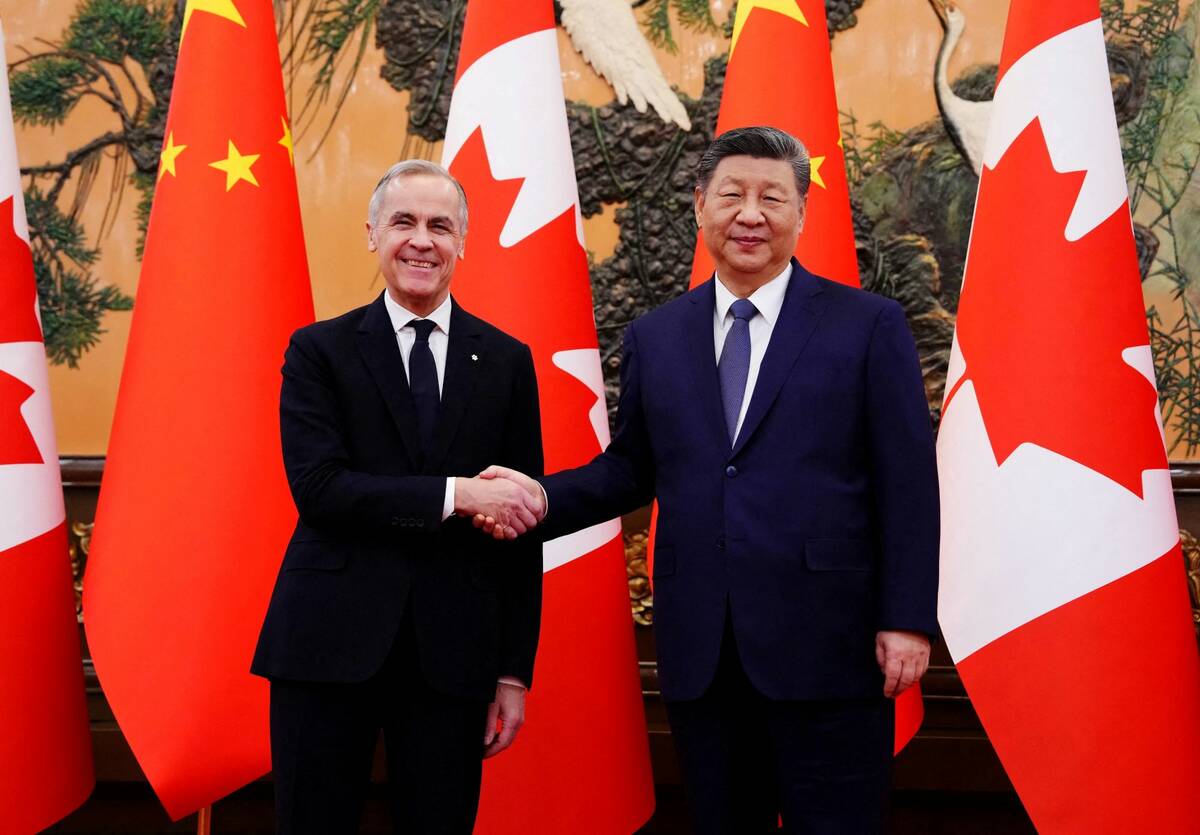
Canada-China roundup: Producer groups applaud tariff relief; pork left out; mix of criticism and praise from Trump administration
Producer groups across Canada expressed a mix of relief and cautious optimism following the news that Canada had struck a deal with China to lower tariffs on canola, peas and other goods, in return for relaxing duties on Chinese electric vehicles.
“That’s always something that we have to watch: comparative values, who is cheaper compared to the next guy, and how much more they have to sell.”
However, Rydlund said, soybeans likely have more losses to come. He pegs the upside and downside targets at US$9 and US$8.55 respectively in the November contract.
Soybeans posted losses of 15.75 cents per bushel and 33.75 cents per bushel in the nearby September and November contracts.
Rydlund said corn could move 25 cents either way from the US$3.75 area at which it sat Wednesday in the December contract.
“I’d probably favour the downside if the crops are filling nicely, and theoretically getting bigger,” he said.
Corn is seeing a number of bearish factors, he said, including non-threatening weather and a lack of global competitiveness.
“There’s not much talk of the ‘F’ word, frost, just yet. I’m sure it’ll come up at some point, but the crop should finish in good shape, should lead to a little bigger crop.”
Corn lost five-and-a-half cents per bushel and five-and-a-quarter cents per bushel in the September and December contracts.
Outside economic concerns are already starting to diminish, Rydlund said.
“So we’re kind of getting back to what we should be trading once the outside noise and disruptions are behind us. Then we go back to looking at weather and fundamentals.”
Those factors are heavy on commodity prices, he said, and traders are working on the idea that things could move lower moving into September.
— Jade Markus writes for Commodity News Service Canada, a Winnipeg company specializing in grain and commodity market reporting. Follow her at @jade_markus on Twitter.