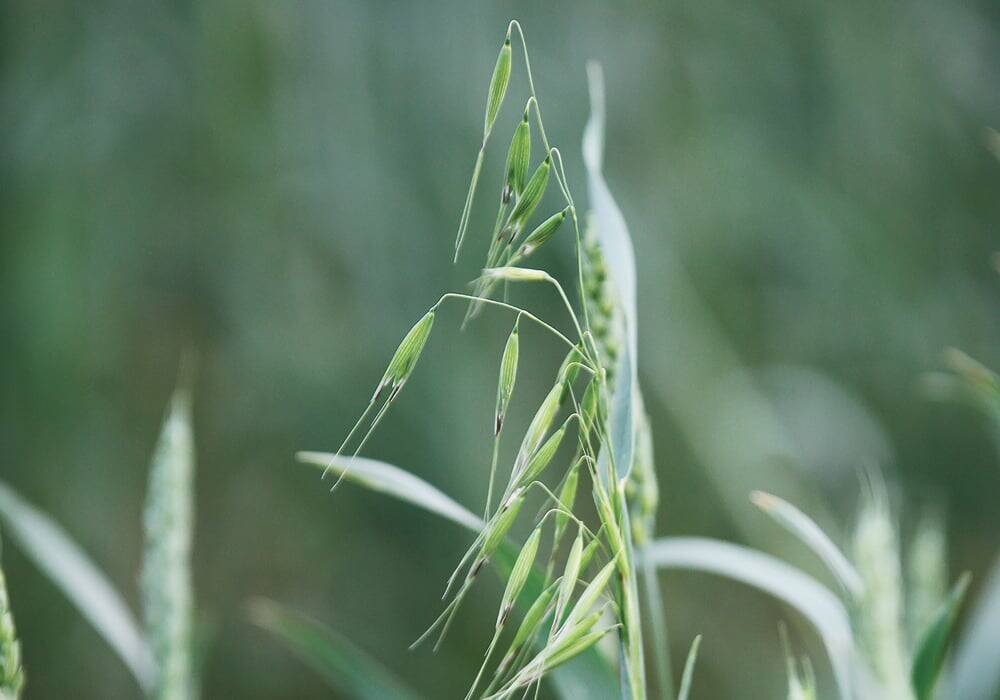
Every year, farmers ask private agronomist Maury Micklich when there’s going to be a new active ingredient for wild oats, a weed that is extensively resistant to Groups 1 and 2 herbicides.
He tells them two things:
Read Also
Prairie spring forecast: What weather models predict for March to May
Weather models offer varied outlooks for Prairie spring. This forecast review compares Old Farmer’s Almanac, NOAA, CFS, CanSIPS, and ECMWF predictions for March through May temperatures and precipitation.
- Don’t hold your breath.
- You’ll need to work with what you have.
“Do not expect any quick help on that front with wild oats,” said Micklich, precision ag specialist and owner of Progrow Agriculture in Vegreville, Alta., in a presentation at Agronomy Update 2026.
“It is an extremely complicated plant.
“It’s actually hexaploid, so it has six different sets of chromosomes. What that means is it’s extremely unpredictable on … how each chemical interacts with each other in the target sites. So it’s just an extremely hard plant to map out,” he added.
WHY IT MATTERS: Wild oat is a tough weed to control, with no one herbicide capable of tackling the Prairie pest.
But don’t despair. Cultural control practices — such as increasing seeding rates and adding an early-maturing crop to rotation — can go a long way towards removing these pesky oats from your field, he said.
“There is no shortage of options to be used in the fight against wild oats.”
However, producers may need to reconsider any “This is what I’ve always done” attitudes they may be harbouring, advised Micklich.

“We need to move to ‘What do I need to do?’ and ‘How can I manage this?’ We need to be more long-term focused.”
Maury Micklich
Progrow Agriculture
Herbicide-resistant wild oat (HRWO) is of “special concern” according to Alberta Grains. And for good reason: According to the most recent herbicide resistance survey, resistance is building and building fast.
The survey results reveal that 69 per cent of Alberta fields sampled for resistance in wild oat contain HRWOs.
Of that percentage, 62 per cent of fields are resistant to Group 1 herbicides, 34 per cent to Group 2 herbicides and 27 per cent are resistant to both.
Those numbers are growing. The producer organization points to “drastic increases” in HWRO in Alberta since a Western Canada-wide survey in 2000.
Make the switch to TKW
There are several tasks producers should perform prior, during and after the crop season when dealing with HRWO. Micklich pointed to examples such as scouting for post-spray efficacy, identifying cross-resistance, seed sampling and reaching out to dealers for resistance testing if necessary.
One of the most important things producers can do to fight HRWO is increase seeding rates. However, some may have to make an adjustment in how they measure seed.
For producers who haven’t made the switch from bushels or pounds per acre to 1,000 kernel weight (TKW, sometimes known as total seed weight or TSW), or the weight of 1,000 seeds, this is the time to do so.
In 2019, Harry Brook, agrologist with Alberta Agriculture, told Alberta Farmer Express why TKW is a more precise gauge of seed size measurement.
“Where there is significant variation in seed size between one variety and another, bushels per acre is a poor seeding tool to use,” he said.
“With peas, for example, there can be as much as 75 per cent seed size variation. That can have a big impact on plants per square foot.”
Adds Micklich, “When you’re just doing a two bushel an acre measurement, that’s a volumetric measurement. It’s just not that accurate anymore.”
“What we want to do is use 1,000 kernel weight and calculate it off of what your target plant per square foot is, because if you just use bushels off of seed weight, your rate will sway. It can sway up to 20, 30 per cent just based off of seed weight if you’re just doing 120 pounds an acre and that’s it.”
Add early maturing crops to rotation
Adding early maturing crops such as peas and winter wheat to a rotation is likely the most important tool growers can use prevent reoccurring wild oat growth, said Micklich. The idea is to kick wild oats out of the seed bank before they’re physically mature, decreasing their survivability drastically.
“So if we can knock it off the plant in mid-August where it’s not quite mature … you reduce the survivability of that seed over winter.”
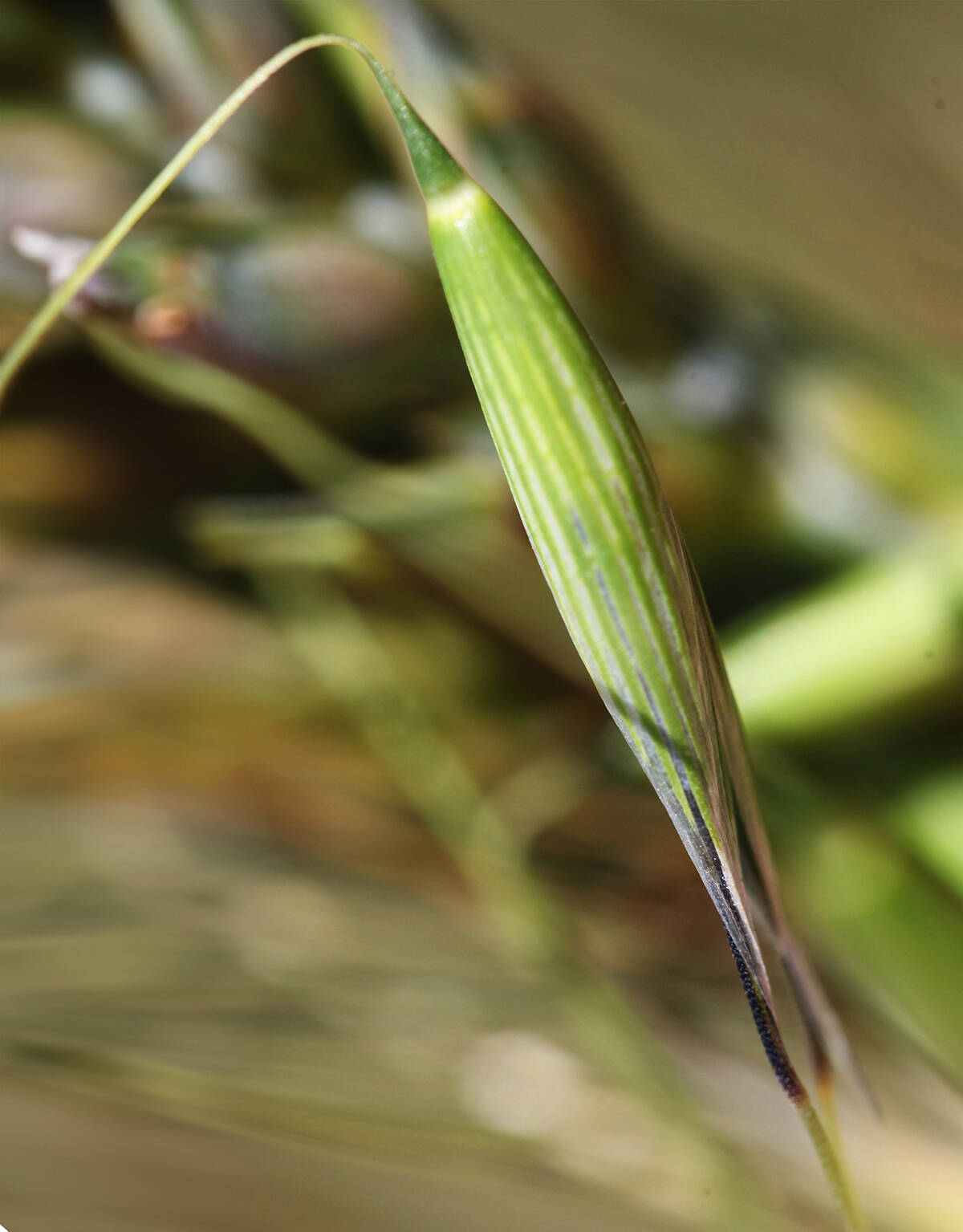
Taking preventative measures against wild oat early — particularly with late-harvested crops like wheat and canola — makes sense because there aren’t many control options once the oats establish.
“That (wild oat) seed will reach maturity before we get to it and (the seeds) will drop. So you’re just replenishing that seed bank. I wouldn’t say you’re starting from square one, but you’re just not eliminating that seed,” noted Miklich.
“A lot of times in east-central Alberta, by the time we harvest canola, it’s getting close to freezing. Most guys aren’t going to be doing a post-harvest spray. So you just get yourself in a weird spot where there’s nothing you can do to try and reduce that seed bank until the spring.”
Herbicide layering now a must-do
With so much herbicide resistance already a part of wild oats, producers don’t have much choice but to layer herbicides to control the weed, said Miklich.
“This is mandatory — you’re just getting ahead of it by initiating this.
“The concept of it is we’re trying to use different groups or modes of action sequentially throughout the growing season.
“The basis of it is you do a fall apply in say Group 15; a pre-burn, say, in a Group 2 or Group 15, and then an in-crop, say, in a Group 1 … whatever group you would have the most efficacy with.”
Minimize tillage
There are several reasons to minimize tillage, but in the case of wild oat a big one is preventing the incorporation of wild oat seed underground where it can remain dormant for years, in the process increasing their life spans.
“When guys are high-speed disking their wild oat patches — that is one of the worst things we can do for it because you are burying that seed and it will sit in dormancy.”
What growers need to do, offered Micklich, is induce germination of the wild oat.
“So say, in a pea crop; if you’ve had that stubble sitting for a month in the sun, a lot of those wild oats will be germinated. Either the frost will get it or it will give us a point of attack to eliminate those seeds: A germinated seed that you can kill or do something with is one less seed in that seed bank.”