

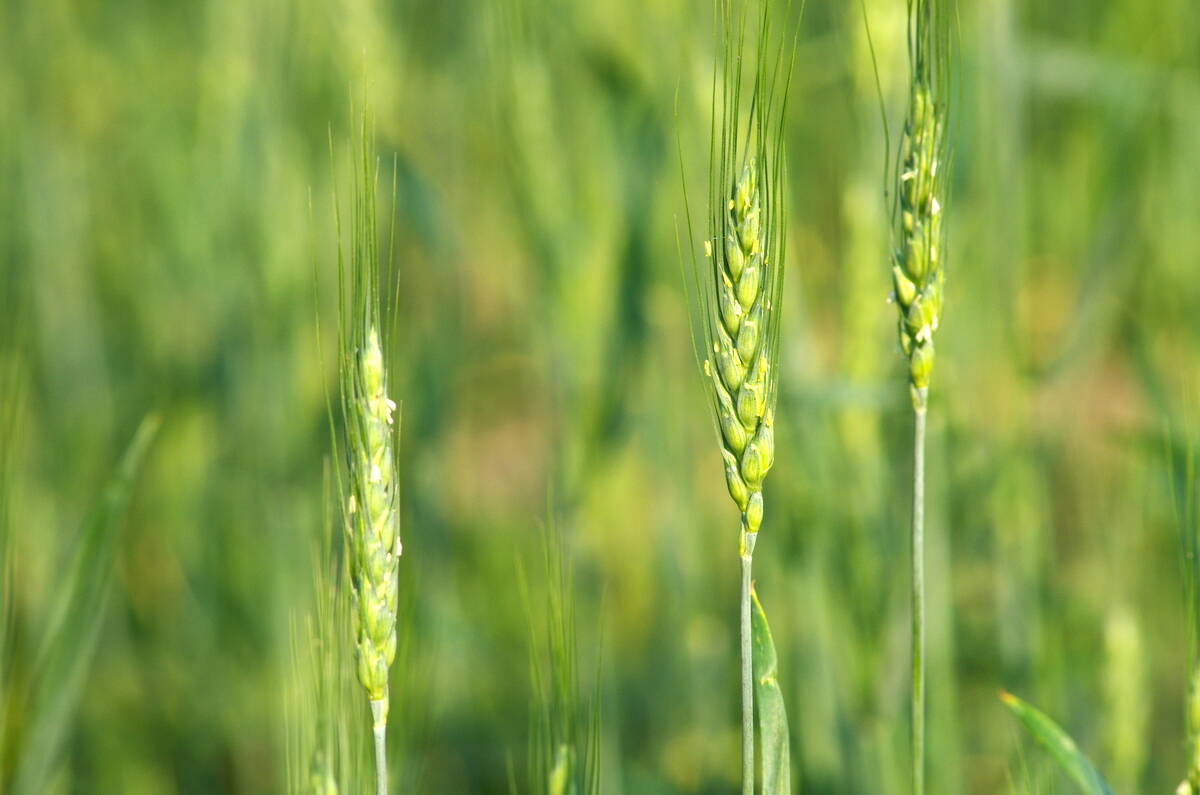
U.S. crop breeders have developed wheat plants capable of creating their own nitrogen fertilizer.
Researchers at the university used CRISPR gene editing technology to increase a naturally-occurring chemical that allows the wheat to fix nitrogen according to a November 25 report from ScienceDaily.
WHY IT MATTERS: Nitrogen fertilizer is an enormous cost for Canadian farmers — not to mention a source of tension due to potential environmental impacts.
Read Also

Olymel parent company sees increased earnings in 2025
Meat processor Olymel recorded sales of nearly $4.9 billion in 2025 helped by strong pork and chicken markets said parent company Sollio Cooperative Group.
“For decades, scientists have been trying to develop cereal crops that produce active root nodules, or trying to colonize cereals with nitrogen-fixing bacteria, without much success. We used a different approach,” said Eduardo Blumwald in the report.
Blumwald is a distinguished professor in the University of California, Davis plant sciences department.
“We said the location of the nitrogen-fixing bacteria is not important, so long as the fixed nitrogen can reach the plant, and the plant can use it.”
Researchers, led by Blumwald, examined 2,800 chemicals that plants make naturally and identified 20 that could encourage nitrogen-fixing bacteria to form biofilms, the report said.
Biofilms are sticky coatings that wrap around the bacteria and produce a low-oxygen environment suitable for nitrogen fixation.
The team identified the genes involved in the process of making these biofilms. They then edited the wheat plants to create more of the related compound, called apigenin. The plants produce more apigenin than they need and the excess is released into the soil.
In experiments, the surplus stimulated soil bacteria to protective biofilms that allowed them to fix nitrogen in a form usable to the wheat plants.
Blumenwald noted that about 500 million acres are planted with cereals in the U.S.
“Imagine, if you could save 10 per cent of the amount of fertilizer being used on that land,” he said. “I’m calculating conservatively: That should be a savings of more than a billion dollars every year.”
The advancement could also support farmers in developing countries.
“In Africa, people don’t use fertilizers because they don’t have money, and farms are small, not larger than six to eight acres,” Blumwald said. “Imagine, you are planting crops that stimulate bacteria in the soil to create the fertilizer that the crops need, naturally. Wow! That’s a big difference!”
The university has a pending patent application for the wheat. Bayer Crop Science provided some of the research funding.