

CNS Canada — Corn and soybean futures on the Chicago Board of Trade softened in value during the week ended Wednesday and could be set to drop even more as growing conditions improve in the U.S.
Rainy conditions across the U.S. Midwest and Plains have pressured prices in recent days. The July corn contract sunk below the $4 per bushel level by Wednesday’s close, while its soybean counterpart was also a touch below the $10 a bushel mark (all figures US$).
The ongoing trade dispute between U.S. and China has also been weighing on values. According to Jack Scoville of Price Futures Group, an upcoming meeting between Chinese trade officials and their U.S. counterparts in Washington could give soybean prices a boost.
Read Also
More canola, spring wheat likely to be seeded this spring
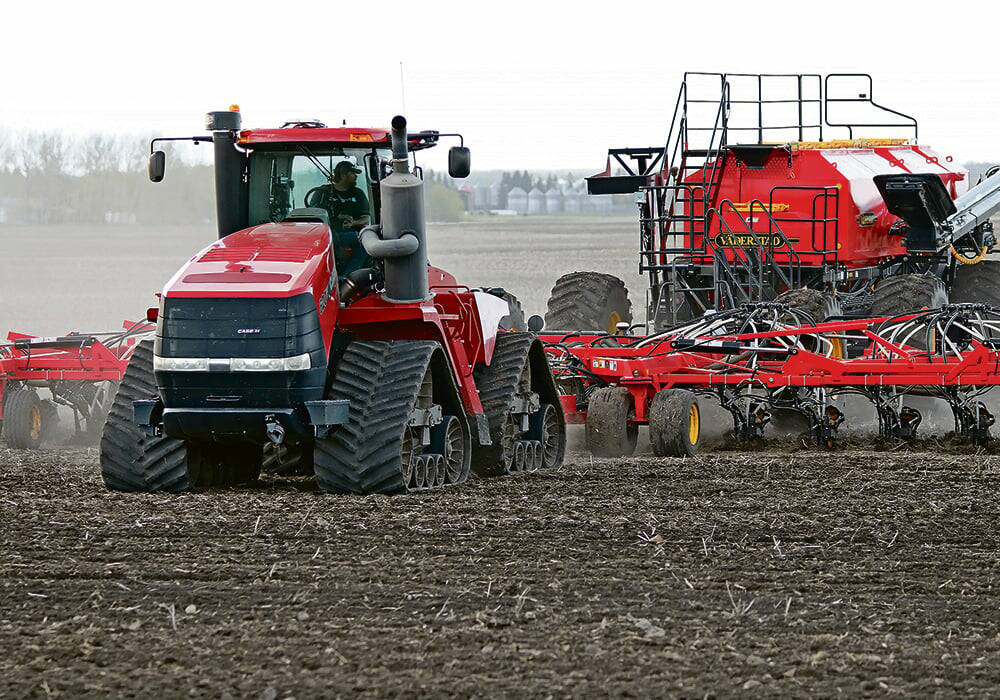
As spring planting approaches, farmers are busy planning which crops to seed this year and how much. With that, market thoughts have turned toward planted area projections, as Statistics Canada is set to issue its report on Thursday.
Scoville says support for the July soy contract lies at $9.80-$9.90.
Meanwhile, falling bean prices in Brazil are creating worries for U.S. exporters.
“The bean prices in Brazil are now below those of the U.S. so we don’t have our natural advantage anymore,” Scoville said.
Fortunately for U.S. exporters, prices for corn in Brazil are holding relatively firm.
Around 60 per cent of the U.S. corn crop is now in the ground. Scoville noted an enormous amount of corn sitting in bins, which will have to be moved. “Farmers have to sell supplies,” he said.
Support for July corn is around $3.95 a bushel, according to Scoville, but many buyers are waiting for prices to dip down to the $3.85-$3.90 range.
Going forward, corn appears to have more room to the upside than soybeans.
“For this month it looks like the Chinese bean prices are in the tank. So world demand for soybeans could be limited the next few months,” Scoville said.
— Dave Sims writes for Commodity News Service Canada, a Glacier FarmMedia company specializing in grain and commodity market reporting.