
The Canadian Food Inspection Agency (CFIA) has temporarily suspended imports from U.S. regions following two Vesicular Stomatitis Virus (VSV) outbreaks in Arizona.
“Canadian horses, swine and ruminants returning to Canada will not be able to enter Canada after a stay in a VS-infected state in the last 21 days,” stated a CFIA release.
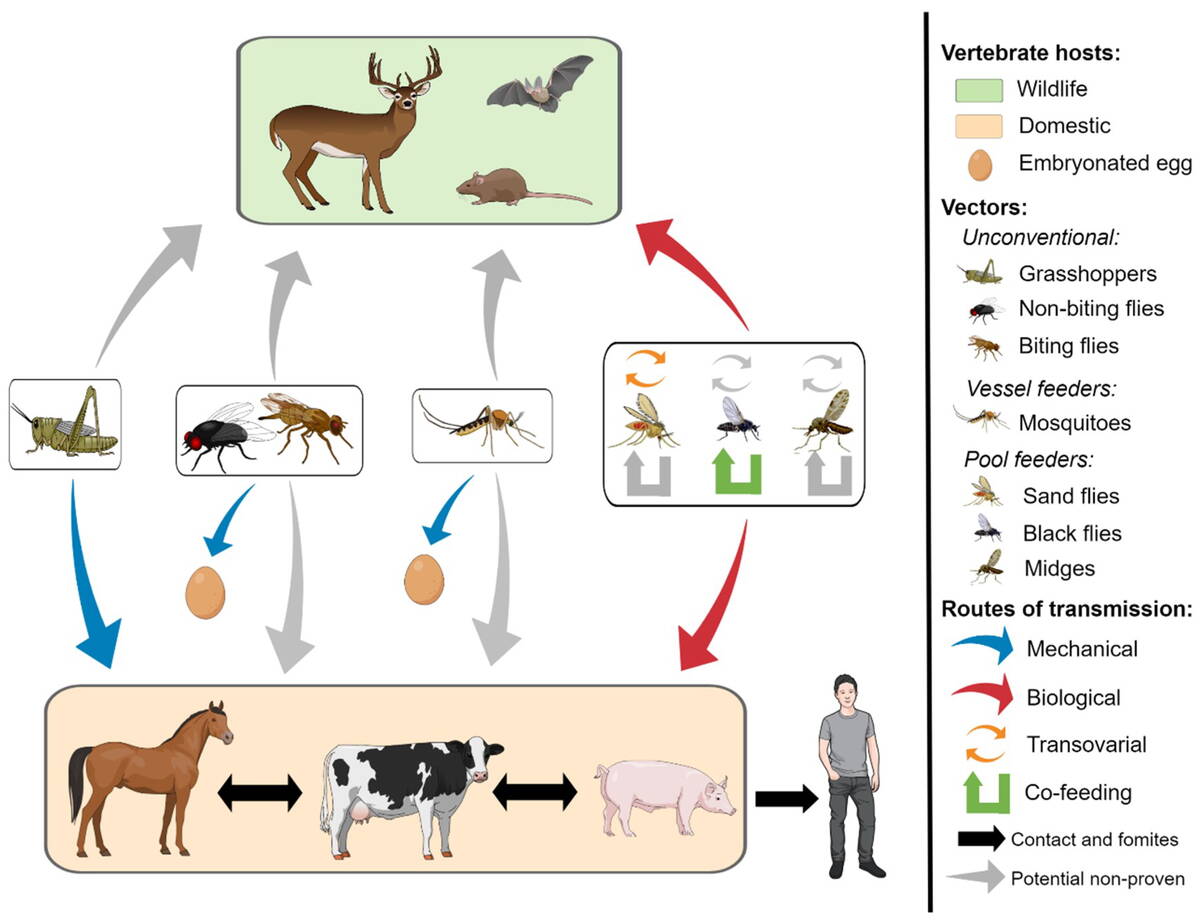
WHY IT MATTERS: Transmitted by black flies, sand flies and biting midges, VSV resembles the highly contagious foot-and-mouth disease, causing mild fever and blister or crusting lesions inside the mouth, on the ears, lips, nose, udder, sheath, and above the hooves in horses, ruminants, swine, and members of the llama and deer families.
Read Also
War is increasing food prices, insecurity say IMF, World Bank and UN food agency
The World Bank, International Monetary Fund and the U.N. World Food Programme warn that sharp increases in oil, natural gas and fertilizer prices triggered by the war in the Middle East will cause rising food prices and food insecurity.
In October, the National Veterinary Services Laboratories (NVSL) confirmed VSV outbreaks on two farms in Arizona involving horses. The facilities also housed cattle that were not clinically affected.
The virus has an incubation period of two to eight days, and full recovery occurs in three to four days. However, it can affect milk production and lead to market losses for live animals, meat, and animal genetics.
The NVSL release states no livestock were moved on or off the affected premises, and biosecurity measures, along with vector control, are in place to reduce the spread. A 14-day quarantine starting from the last affected animal’s lesion onset is also implemented.
Canadian animals with a Canadian health certificate can return within three days of the USDA declaring their host state affected by VSV, provided they are inspected by the CFIA POE (port of entry) vet.
Otherwise, the release said, the Canadian health certificate is null and void, and animals from a VSV-infected state will require a minimum 21-day quarantine in a non-infected state before they can be exported to Canada.
The CFIA, in partnership with the USDA, has arranged special accommodations for animals imported for Canadian livestock events such as the Royal Winter Fair, Agribition, the Calgary Stampede and horse-specific events at Spruce Meadows and Thunderbirds.
“U.S.-origin and returning Canadian horses and ruminants that qualify for this exception are required to obtain a CFIA import permit and a USDA health certificate with the USDA addendum for VSV,” stated the CFIA release.
The last outbreak of VSV in the U.S. occurred from May 2023 through January 2024 and affected 319 premises across California, Nevada, and Texas.