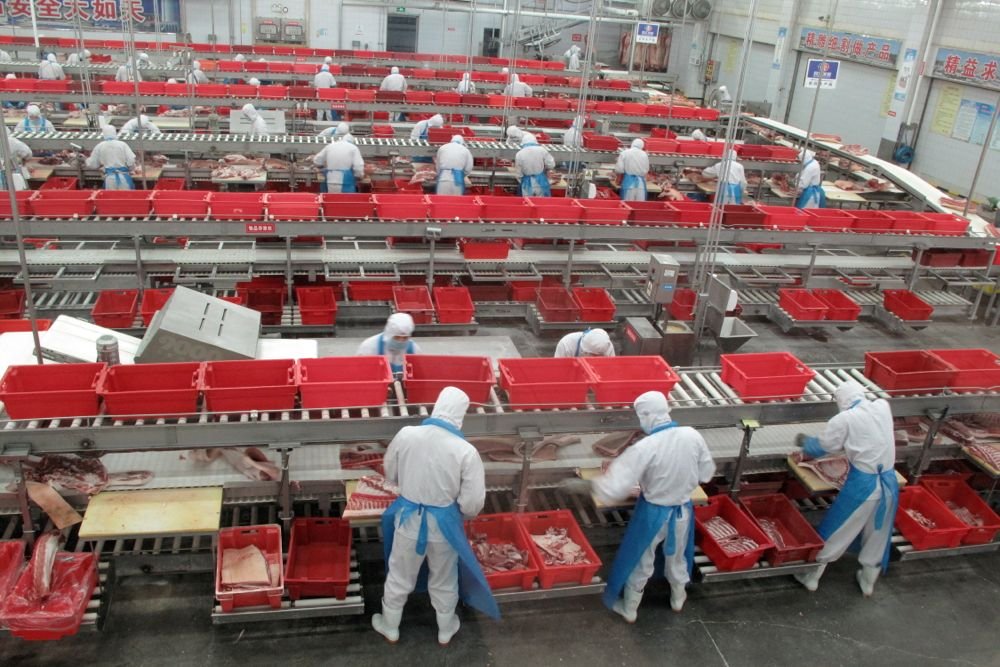
Paris | Reuters – African swine fever (ASF) will cut pork output in China, the world’s largest producer, by at least 20 percent in 2019, the United Nations’ food agency said on Thursday, doubling the decline it had expected six months ago.
The disease has slashed China’s hog herd since August 2018, pushing Chinese pork prices to record highs, while reshaping global meat and feed markets.
With the disease also spreading to neighbouring countries, notably Vietnam, Laos, Mongolia and Cambodia, the UN’s Food and Agriculture Organisation (FAO) expects world pigmeat production to fall 8.5 percent this year to 110.5 million tonnes (carcass weight equivalent).
Read Also
China urges hog producers to manage output, vows timely reserve adjustments
China’s state planner on Friday said authorities will make timely adjustments to hog reserves and continue to strengthen the management of hog production capacity.
In May, the FAO had forecast that Chinese pigmeat output would fall by at least 10 percent.
The World Organisation for Animal Health (OIE) forecast last week that African swine fever would spread further across Asia where it has devastated herds. It said no country is immune from being hit by the deadly animal virus.
The fall in pork production in Asia would impact maize and oilseed use for feed, the FAO said.
“World trade in meat and meat products is forecast at 36.0 million tonnes in 2019, up 6.7 percent from 2018, principally driven by increased imports by China due to domestic tightness caused by ASF-related production losses,” FAO said.
China’s overall meat imports are expected to rise by around 2 million tonnes, or about 35 percent, this year with increased purchases across all meat categories.
By contrast, several countries are expected to import less meat, including the United States and Angola.