
A new European study suggests your cattle may be among the animal species that have a built-in compass.
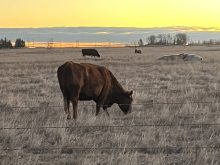
Quoted Tuesday in an Associated Press report by Randolph Schmid, a joint German/Czech study led by biologists Hynek Burda and Sabine Begall of the University of Duisburg-Essen found that cattle at rest or grazing show a statistical tendency to align their bodies in a north-south direction.
Studying 8,510 cattle in 308 pastures on different continents, the research team found 60 to 70 per cent of cattle were oriented north-south, which Begall told AP was a “highly significant deviation from random distribution.”
Read Also
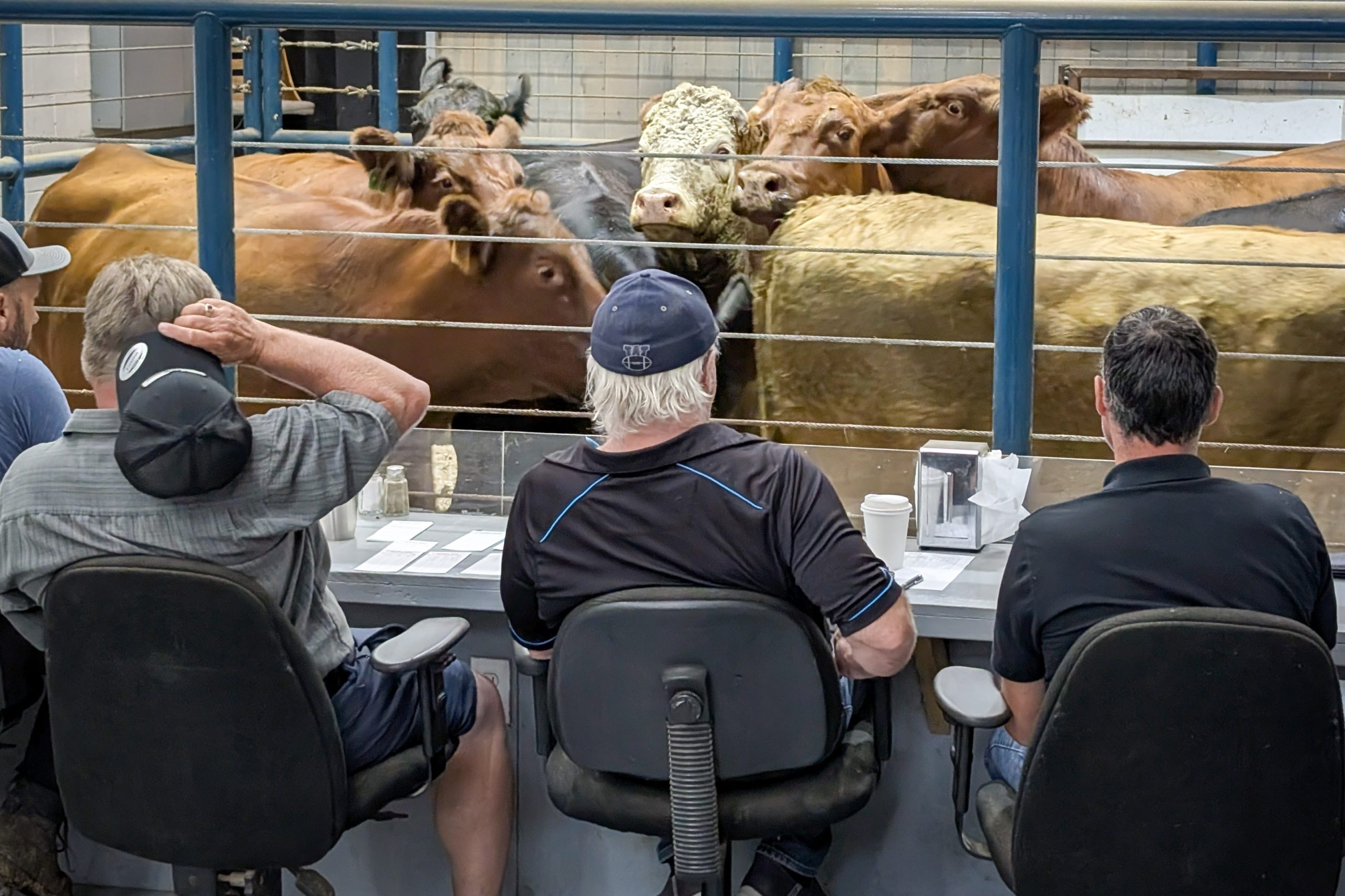
Klassen: Feeder cattle market continues consolidation
For the week ending March 28, Western Canadian feeder cattle market once again traded $10/cwt higher to $10/cwt lower compared…
At first studying the effects of Earth’s magnetic field on African mole-rats, “the question came up whether large animals could also sense the Earth’s magnetic field or not,” Begall told AP.
“But of course, it is difficult, or maybe impossible, to do these studies in the lab So, the idea arose to look for other large mammals like cattle, and Hynek Burda was fascinated when he recognized that cattle could be found on Google Earth satellite images.”
Google Earth shows the north-south orientation of the animals, but lacks the fine resolution to show whether an individual cow is facing north or south, the researchers said.
The study also said red and roe deer in the Czech Republic were found to orient north-south when grazing or resting. Begall told AP the team plans also to study sheep, goats, horses and wild boar.
Such passive alignment of animals to magnetic fields has been shown in honeybees and termites, Joseph Kirschvink of the California Institute of Technology told AP, but he wondered aloud if fences around the pastures might also affect how cattle orient themselves.
The study also acknowledged that cattle tend to face the wind, and have also been known to seek out the sun when it’s cold out. But the researchers said they could discount the effects of weather, through analysis of the position of the sun, based on shadows, among other factors, AP said.
AP’s Schmid also quoted Wisconsin dairy producer Tina Hinchley, who found about two-thirds of the cattle in an aerial photo of her family’s farm were facing north-south, corresponding with the study’s findings.
Hinchley proposed that cow comfort may also play a role in why cattle face a given direction. “Their body temperature is 102°F (39°C), and they are wearing black leather jackets, literally,” she told AP. “If turning north-south would keep them cooler, they would stand that way.”
Furthermore, University of North Carolina biologist Kenneth Lohmann, who like Kirschvnik is not associated with the Duisburg-Essen team, told AP that “to demonstrate conclusively that cattle have a magnetic sense, some kind of experimental manipulation will eventually be needed.”
The “Editors’ Picks” feature will highlight unusual-yet-true news from the world of farming, as gleaned from various sources by the editorial staff of the Farm Business Communications division.