
Reducing food waste could mean savings for farmers and agri-food businesses — but it may demand more accountability say two experts.
“Wasting a kilogram of beef is not just wasting a kilogram of beef,” said Heather McLeod-Kilmurray, “but also the … 20 kilograms of feed, the water, the human labour, the transportation.”
Beyond the discarded item
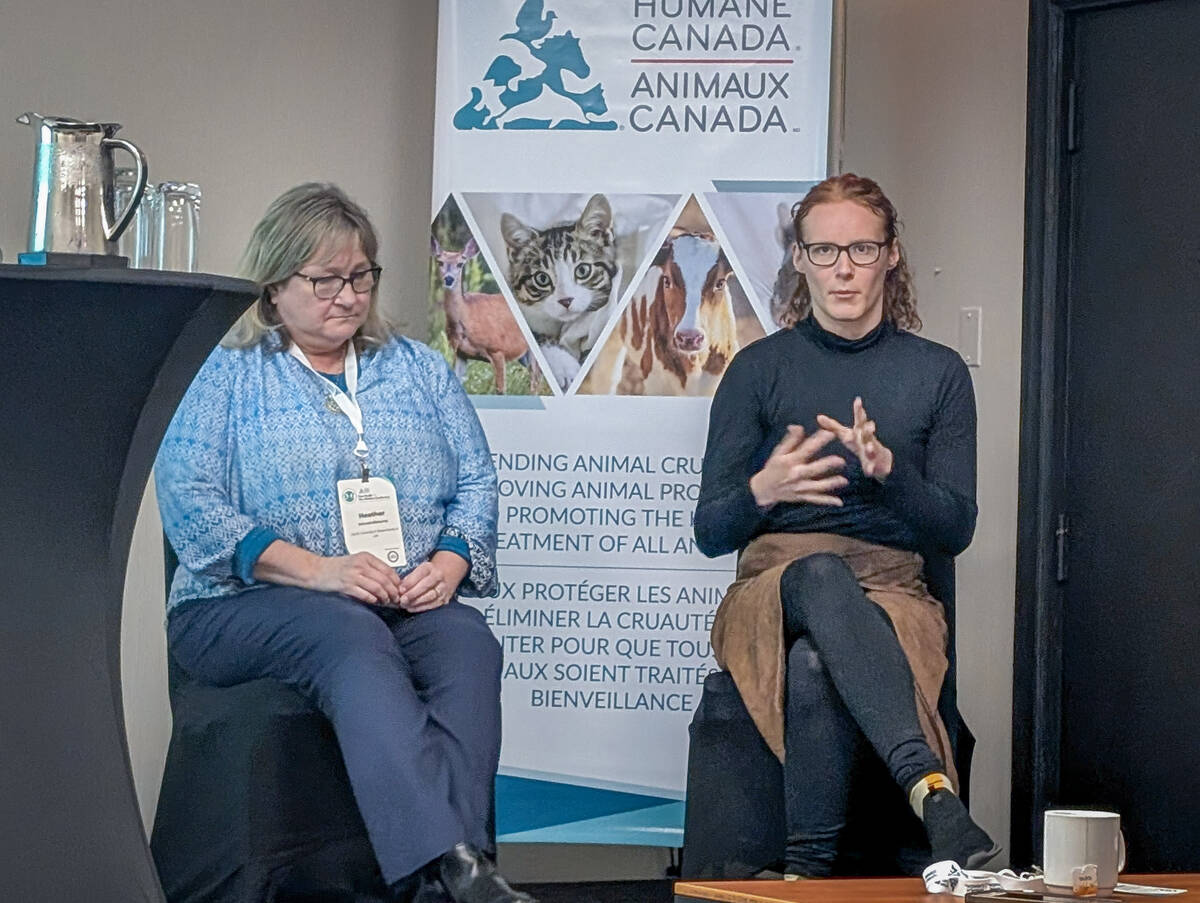
McLeod-Kilmurray, a University of Ottawa professor whose work focuses on sustainable agriculture spoke alongside Allison Penner, executive director of Reimagine Agriculture, at the Humane Canada One Health One Welfare Conference in Ottawa. They discussed how food waste goes beyond just individual products being discarded.
Read Also
Strong 2025 could mean complications for Canadian grain sector in 2026 says analyst
Carryover supply of many crops in Canada could complicate the market in 2026
If meat is wasted, by definition some of the crops grown to feed the animals were also wasted, Penner said.
“We hear it measured in kilograms and pounds,” McLeod-Kilmurray said. “We hear it measured in dollars.”
“Why don’t we link all of the elements in the food chain, do a full cost accounting of what food waste … costs, including climate emissions, etc?”
This is not an insignificant issue. Canada wastes enough food each year to feed every Canadian for five months, Penner said. The total financial and environmental cost is estimated at $31 billion and 56.6 million tons of C02 annually.
“It’s an incredible economic loss to the system,” she said. “It does not make sense to be wasting these really valuable resources.”
What producers can recoup
A food waste disclosure system could help address the issue, McLeod-Kilmurray said.
“If producers were required to report this, the full cost of the food waste, they would see … how much it is costing them,” she said.
She pointed to Ikea as an example of a business reducing costs and impacts after addressing the issue. After extensive reviews and commitments, the Swedish retailer/restaurant reduced its food waste by 54 per cent, resulting in a saving of $37 million annually.
McLeod-Kilmurray said the acceptance of deadstock in animal agriculture is also costly and should be addressed in the same conversation.
“What is the appropriate standard of treatment?” She said. “It says the regulators under the federal law do not demand perfection. It recognizes that some deaths are inevitable. The regulations try to strike a balance.”
“That is legal, that is accepted, that’s part of the regulatory process, and so that’s an inbuilt waste of animal products.”
She added the Canadian Food Inspection Agency will generally not investigate a case of animal death unless the mortalities reach four per cent. She called this a “baked in waste of animal products in the industrial system.”
The good news is that eliminating food waste is a politically viable issue, Penner said. The federal Liberal, Conservative and NDP parties have all shown support for ending food waste in Canada.
“I often joke that if I was the Minister of Environment and Climate Change Canada, I would be thrilled that food waste exists, because this is a problem that we don’t need to create these wide scale changes,” she said. “It’s something that we can change a lot from looking at the industry.”
McLeod-Kilmurray suggested addressing the issue through:
- Greater respect for animals
- Mandatory reporting standards
- Educating and mobilizing food system actors
- Persuading policymakers and corporations food waste reduction represents a win-win situation
- Promoting a circular economy that makes better use of animal byproducts