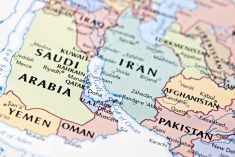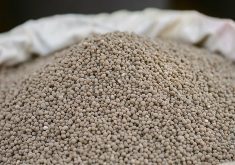
Glacier FarmMedia — Hostilities in the Middle East are already affecting North American fertilizer prices, says an analyst.
Urea barges in New Orleans traded roughly US$50-$80 per short ton, or 11 to 17 per cent higher, on March 2 compared to Feb. 28, according to Argus Media.
The conflict presents a “major risk” to North American urea supplies ahead of spring planting, according to an analysis published on the Argus website.
Read Also

U.S. to seek more foreign tariff cuts, CUSMA improvements in 2026
The U.S. Trade Representative’s office said on Monday it will seek further reductions in foreign tariffs and non-tariff barriers this year, enforce its “reciprocal” trade deals and consider launching new unfair trade practices investigations.
A vessel loading on Monday in the Middle East would arrive in the United States by mid-April. March and April are the largest months for urea imports.
“If shipments from the Middle East are delayed or disrupted, the U.S. would lose a critical source of urea, likely crunching supply and laying the groundwork for upward price volatility,” Argus analyst Calder Jett said in his article.
“Middle Eastern producers of urea so far have suspended offers and are grappling with shipping complications in the Strait of Hormuz.”
WHY IT MATTERS: This is the time of year when farmers are contemplating spring fertilizer purchases.
StoneX fertilizer analyst Josh Linville said the conflict couldn’t come at a worse time for North American farmers, who are gearing up for spring.
Commercial shipping traffic through the Strait of Hormuz has started to “grind to a halt.” Vessel owners do not want to put their ships and crews in harm’s way.
The market impact will depend on how long the strait is shut down, he said in a YouTube video on the subject.
U.S. president Donald Trump has stated that U.S. military operations in Iran are likely to last at least one month.
“The unfortunate part is that means you have locked in three of your top 10 global urea exporters and three of your top 10 global anhydrous exporters,” said Linville.
Saudi Arabia is also a major exporter of phosphate fertilizer.
The phosphate market was already suffering from the lack of Chinese exports. The world’s largest exporter of the product said it will not be shipping any product until August 2026.
The urea market has also had problems with supply keeping up to rising demand due to a lack of Chinese exports and the European Union functioning at about 75 per cent of its normal operating rate.
“We have gotten to the point where we don’t have any excess supplies anymore,” said Linville.
Iran and Saudi Arabia don’t have any alternatives to shipping through the Strait of Hormuz.
“For those manufacturers that rely on the Persian Gulf to get out to the rest of the world, if you shut down that narrow body of water, you’re stuck,” he said.
Dennis Voznesenski, agricultural economist with the Commonwealth Bank of Australia, reports that three freight vessels from the U.S. and United Kingdom have already been struck in the Strait of Hormuz.
He noted in a post on X that one-third of global urea trade passes through the strait, according to Kpler.
The hostilities will also disrupt natural gas shipments through the strait, which could lead to higher fertilizer production costs.