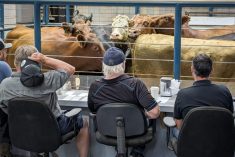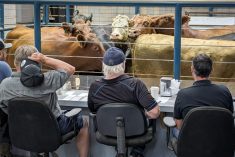
There were no feeder cattle sales in Western Canada for the week ending January 3. However, there were some sales in the U.S. and the Canadian markets will follow suit once activity returns to normal.
For example, at the Ozarks Regional Stockyards in West Plains, Missouri, weaned and vaccinated steers and heifers over 750 pounds traded US$5 to US$8/cwt higher compared to two weeks earlier. Calves weighing 500-750 pounds were valued US$12 to US$17/cwt above prices from the week ending December 20.
Alberta packers were on the sidelines during the holiday season. In Kansas, fed cattle were trading on a live basis at US$232/cwt (C$320) on Friday January 2, up US$3/cwt from seven days earlier. The dressed trade in Nebraska was quoted at US$360 to US$363/cwt (C$496 to C$501), up about $4 compared to the prior week.
Read Also
CBOT Weekly: April supply and demand report a ‘nothing burger’
There was very little change in the April supply and demand estimates from the United States Department of Agriculture on April 9, with the report essentially being a carbon copy of the March estimates.
We’re expecting the Alberta fed market to be up US$2-US$3/cwt during the first full week of January. During January 2025, there was a strong demand pull from the U.S. for Alberta fed cattle given the sharp premium of the U.S. market over Alberta prices.
Canadian fed cattle exports reached over 62,000 during January 2025 and we’re expecting similar numbers during January 2026. Alberta feedlots are somewhat backed up with market-ready cattle and the stronger live cattle exports should be supportive for the Alberta fed cattle basis.
Beef demand has held up despite record high prices. It appears that the industry is bracing for higher beef prices in 2026. A one per cent increase in consumer spending equates to a one per cent increase in beef demand.
Companies listed on the S&P 500 Index had 14 per cent growth in earnings for the third quarter. This is the fourth consecutive quarter of double-digit growth. Americans will have a healthy Christmas bonus.
Secondly, President Trump has said that Americans should see tariff dividend cheques and the largest tax refunds in U.S. history during 2026. This will cause beef prices to percolate higher as restaurant spending for 2026 is expected to be up 8 per cent to 10 per cent from 2025.
Last week, we discussed how breakeven pen closeouts will increase over the next four months. It looks like feedlot margins are poised to improve during the spring and summer. The outlook for feeder cattle has changed considerably compared to where we were a month ago.