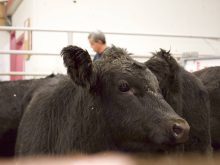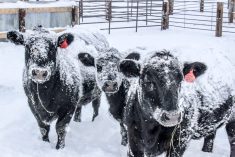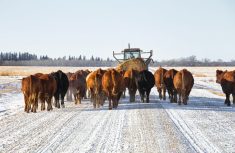



Western Canadian feeder cattle values started the year on a very strong tone. Lighter-weight calves under 700 pounds were a solid $4 to $6 higher in comparison to mid-December; replacements over 700 lbs. were $2 to $4 higher on average. This was the first week of major sales in 2015 and cattle buyers were extremely busy, despite adverse temperatures in the eastern Prairies.
Feedlots have been more aggressive liquidating fed cattle and the buildup of equity over the past couple of rounds appears to be pouring into the feeder complex without any hesitation. Lower volumes were noted in the heavier weight categories, but major feedyards were quick to jump on shorter-keep cattle. Larger-frame exotic steers with medium flesh in central Alberta, weighing just over 700 lbs., sold for $260. The market for lighter-weight feeders was extremely hot; an auction market in east-central Alberta saw 185 steers in the 550- to 600-lb. range sell for an average price of $305. Featherweights in southern Alberta in the 300- to 400-lb. range traded from $330 to $342.
Read Also

Feed grains weekly: Prices bump up
To Darcy Haley, vice-president of Ag Value Brokers in Lethbridge, there are two main reasons for recent increases for feed barley and wheat. Haley said on March 12 that there’s an ongoing lack of farmer selling, plus stiff competition from the grain companies looking to export barley.
U.S. feeder cattle prices were $10 to $20 lower, following recent weakness in the futures market. The softer tone in the U.S. appears to have little effect on western Canadian prices, with the Canadian dollar deteriorating and wholesale beef prices near record highs.
However, looking forward, June live cattle futures dipped to $146 and, using an average basis, fed cattle prices for June are sharply under breakeven pen closeout values. I believe this is a red flag and reason for caution if we don’t see a bounce in fed cattle prices. Feed barley prices at Lethbridge are also percolating higher, trading in the range of $205-$208 per tonne delivered.
— Jerry Klassen is a commodity market analyst in Winnipeg and maintains an interest in the family feedlot in southern Alberta. He writes an in-depth biweekly commentary, Canadian Feedlot and Cattle Market Analysis, for feedlot operators in Canada. He can be reached by email at [email protected] for questions or comments.