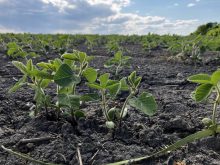

Bayer CropScience Canada has picked up registration for a new liquid treatment against early-season seed and seedling diseases in Prairie pulse and soybean crops.
And the company says its new product, branded Trilex AL, will be “very compatible” with inoculants used on those crops.
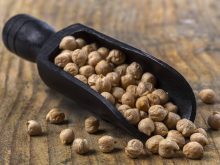
Trilex AL, announced in a release Monday, is registered for use on beans, chickpeas, lentils, peas and soybeans, against diseases caused by Rhizoctonia solani, Fusarium spp., Botrytis cinerea, Phomopsis longicolla and seed-borne Ascochyta spp., the company said.
Read Also
Canola, U.S. soybean crushes expanding
In calendar year 2025, the canola crushes in Canada and the United States remained above their respective five-year averages, Statistics Canada reported on March 13. While the U.S. soybean crush continued to expand, StatCan didn’t include any soybean crush data for 2025 due to confidentiality requirements under the Statistics Act.
The product, sold as a water-based liquid formulation, is designed for commercial or on-farm treating with conventional seed treating equipment and is already available from “participating retailers” across the West, the company said.
Calgary-based Bayer said its product “outperformed” major pulse seed treatment competitors and performed “way ahead” of untreated checks for control of rhizoctonia or fusarium in pulses and botrytis in lentils.
Graham Hastie, Bayer’s manager for cereal crop fungicides/insecticides and seed treatments, added in Monday’s release that inoculant companies have done “extensive testing” with Trilex AL.
Those companies, he said, found Trilex to have “one of the highest compatibilities between fungicidal seed treatments and rhizobium-based inoculants, which means plants are able to get maximum nodulation.”