

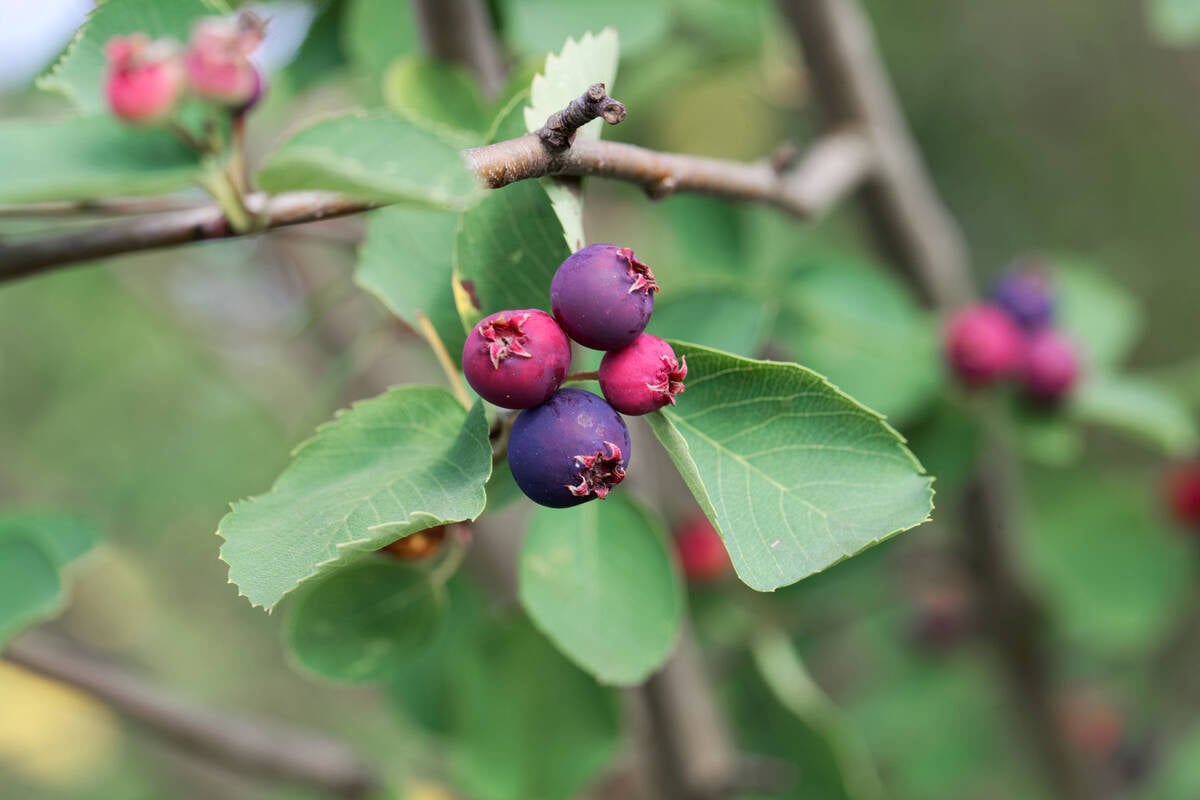
A University of Saskatchewan researcher seeks to categorize varieties of the saskatoon berry — a fruit historically difficult to breed due to its complex genetic makeup.
“For over 50 years, there has been almost no genetic improvement of saskatoons, no systematic streamlined breeding that has been successfully done because saskatoon berry cultivars … won’t successfully cross,” said Anže Švara in an online article from the university.
Read Also
More canola, spring wheat likely to be seeded this spring
As spring planting approaches, farmers are busy planning which crops to seed this year and how much. With that, market thoughts have turned toward planted area projections, as Statistics Canada is set to issue its report on Thursday.
WHY IT MATTERS: New varieties of saskatoon berries are historically difficult to develop.
Švara is an associate professor in the University of Saskatchewan’s plant science department. He is helping to lead a new project that will categorize saskatoon berry varieties to better understand their traits. The hope is this will identify characteristics that can potentially be selected for future new varieties.
The university houses around 2,000 saskatoon berry varieties collected over the decades.
“We have two key questions: can certain saskatoon berry plants breed with other saskatoon berry plants? And is there diversity that can be utilized to develop new varieties with improved traits?” said Švara in the article.
The university said it hopes the project will contribute to future innovative breeding projects and help berry growers.
Saskatoon berries present a particular challenge in breeding because some historically successful cultivars have four sets of chromosomes instead of two. Plants produce seedlings nearly identical to the parent plants, but it’s difficult to breed those plants with others to develop specific traits.
The project is funded through the federally-supported Agriculture Development Fund and by the Saskatchewan Fruit Growers Association.