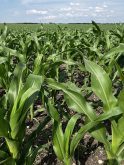


Chicago | Reuters — U.S. corn and soybean futures slumped on Friday on expectations that crops may benefit next week from a break in the rains that stalled plantings across the American Midwest this spring.
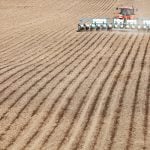
Widespread storms caused unprecedented delays in corn plantings and prevented farmers from planting crops across millions of acres. The weather problems heap more worries on a farm sector that has suffered from years of low crop prices and a U.S.-China trade war that is slowing agricultural exports.
But drier conditions are expected across much of the Corn Belt, which “should finally allow wetness to ease up a bit and field work to resume,” U.S. weather firm Maxar said.
Read Also

Pulse Weekly: SaskPulse optimistic despite input, crop price concerns
SaskPulse executive director Carl Potts is optimistic ahead of the planting season despite lower crop prices and the war in Iran.
“Temperatures will finally turn warmer next week as well, which will begin to accelerate growth of corn and soybeans,” Maxar said.
The most actively traded corn futures on the Chicago Board of Trade dropped 1.4 per cent to $4.42-1/4 a bushel, after climbing by two per cent on Thursday (all figures US$).
Most-active CBOT soybean futures lost 1.3 per cent to $9.02-3/4 a bushel. Most-active CBOT wheat futures slipped 0.2 per cent to $5.30-3/4 a bushel.
Price movements were limited as traders waited for the U.S. Department of Agriculture to release a weekly U.S. crop-progress report on Monday and separate reports on acreage and grain stocks on Friday next week.
USDA on Thursday announced a new measure to help farmers who were unable to plant corn and soybeans due to widespread flooding across the U.S. Midwest.
Traders remain nervous about the potential for reduced U.S. corn and soybean yields after late plantings. The crops face an increased risk for damage from hot weather during key development periods this summer and from an early autumn frost.
Corn futures reached a five-year high on Monday on worries about bad weather, but have since pulled back about 4.7 per cent.
“We’re seeing profit-taking after the prices ran up,” said Terry Reilly, senior commodity analyst for Futures International in Chicago.
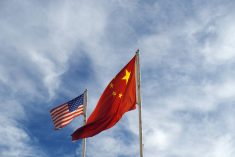
Next week, traders will keep an eye on the G20 summit as U.S. President Donald Trump and his Chinese counterpart, Xi Jinping, are expected to meet to discuss trade issues. The ongoing trade war between Washington and Beijing has slowed U.S. soybean exports to China, the world’s top importer of the oilseed.
“The G20 is going to be very important,” Reilly said. “It could lead to a tentative agreement.”
— Reporting for Reuters by Tom Polansek in Chicago; additional reporting by Gus Trompiz in Paris and Colin Packham in Sydney.