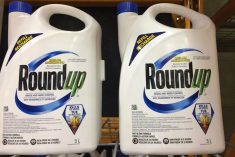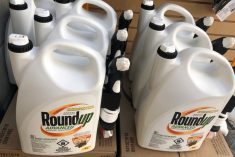


Reuters — A U.S. judge on Tuesday said he would reduce a US$80 million damage award against Bayer to US$50 million or less in the case of a man who blamed his cancer on glyphosate-based herbicide Roundup.
U.S. District Judge Vince Chhabria in San Francisco said the jury’s $75 million punitive damages award to plaintiff Edwin Hardeman in March could not stand (all figures US$).
“It’s quite clear that under the Constitution I’m required to reduce the punitive damages award and it’s just a question of how much,” Chhabria said during a court hearing in which lawyers for both sides discussed the company’s request to overturn the verdict. Chhabria said he would issue a ruling by the end of next week.
Read Also

Crop merchant Louis Dreyfus reports lower profits, higher volumes for 2025
Global agricultural commodity merchant Louis Dreyfus Company said on Wednesday it had recorded a decline in annual profit, driven by lower prices for most crops and market uncertainty arising from tariffs and economic concerns.
Following a four-week trial, a federal jury on March 27 awarded $5 million in compensatory and $75 million in punitive damages to Hardeman, who was diagnosed with non-Hodgkin’s lymphoma in 2014.
U.S. Supreme Court rulings limit the ratio of punitive to compensatory damages to nine-to-one.
Chhabria said he was also considering reducing the compensatory damages award because Hardeman was now in full remission and unlikely to suffer as much as he had in the past.
Bayer, which bought Roundup maker Monsanto for $63 billion last year, says Roundup and its active ingredient glyphosate are safe for human use and not carcinogenic.
The company faces lawsuits by more than 13,400 plaintiffs nationwide and a series of Roundup jury verdicts against Bayer have prompted its share price to plummet. Under pressure from activist shareholders, Bayer on Wednesday said it set up a committee to help resolve the litigation and hired an external lawyer to advise its supervisory board.
Bayer had asked Chhabria to completely reverse the jury verdict in Hardeman’s case in light of scientific evidence and assessments by regulators finding glyphosate to be safe.
Brian Stekloff, a lawyer for Bayer, on Tuesday said Monsanto went “above and beyond” to meet regulatory requirements, warranting a complete reversal of the punitive damages award.
But Chhabria disagreed, saying jurors had seen sufficient evidence that Monsanto did not care whether its products cause cancer, instead focusing on undermining people who were raising concerns.
“There was nothing suggesting that anybody at Monsanto viewed this issue objectively or with any consideration for the life of human people,” the judge said.
— Tina Bellon reports on U.S. business and liability law for Reuters from New York.