

Blood was boiling among many producers at an Alberta Pork regional meeting on Mar. 19, when it came to using blood plasma for feed.
A recent case of Porcine Epidemic Diarrhea virus (PEDv) on a southern Alberta farm was confirmed on Feb. 22. What was also confirmed in the Q&A session was the farm using spray-dried porcine blood plasma (SDP) in its feed rotations.
Read Also
Alberta producers must repay AgriStability benefits after cattle pricing error
An issue in the AgriStability model for heavy weight cattle in 2024 means some Alberta producers will have to pay back their benefits.
WHY IT MATTERS: Porcine Epidemic Diarrhea virus has been relatively contained in Alberta, where many pork producers would like to keep it that way, calling for a ban on blood plasma for feed which has been a suspected link.
The discovery quickly sparked passionate debate that Alberta Pork should take a firm stance on its use. While not concrete proof of a cause and effect, a commonality has formed in recent confirmed cases where blood plasma has been used as feed.
“Here we are, why don’t we take a vote … don’t bring blood plasma into Alberta,” said one producer.
“Every time we hear about this PED, it’s always linked to blood plasma. I’ve heard that so many times once you have it, I can’t afford to have it. I think we should just outlaw this stuff,” said another. “Whoever’s using it, should have to destroy it. The guy’s company that’s selling it is going to be taken to task. Why are we risking our farms on this kind of stuff? It’s not necessary to use it.”
What blood plasma does and what it costs
Blood plasma is used to boost performance as a fast-digestible protein source. Used in nursery pig diets, studies have shown including four to eight per cent blood plasma in the nursery pig diet boosted feed intake levels by 41 grams per day and daily weight gain by 47 grams on average.
But given its high costs and repeated suspicions of being linked to PEDv, many producers in the room at the Sandman Signature Lethbridge Lodge were left scratching their heads why anyone would use it.
How the case was handled
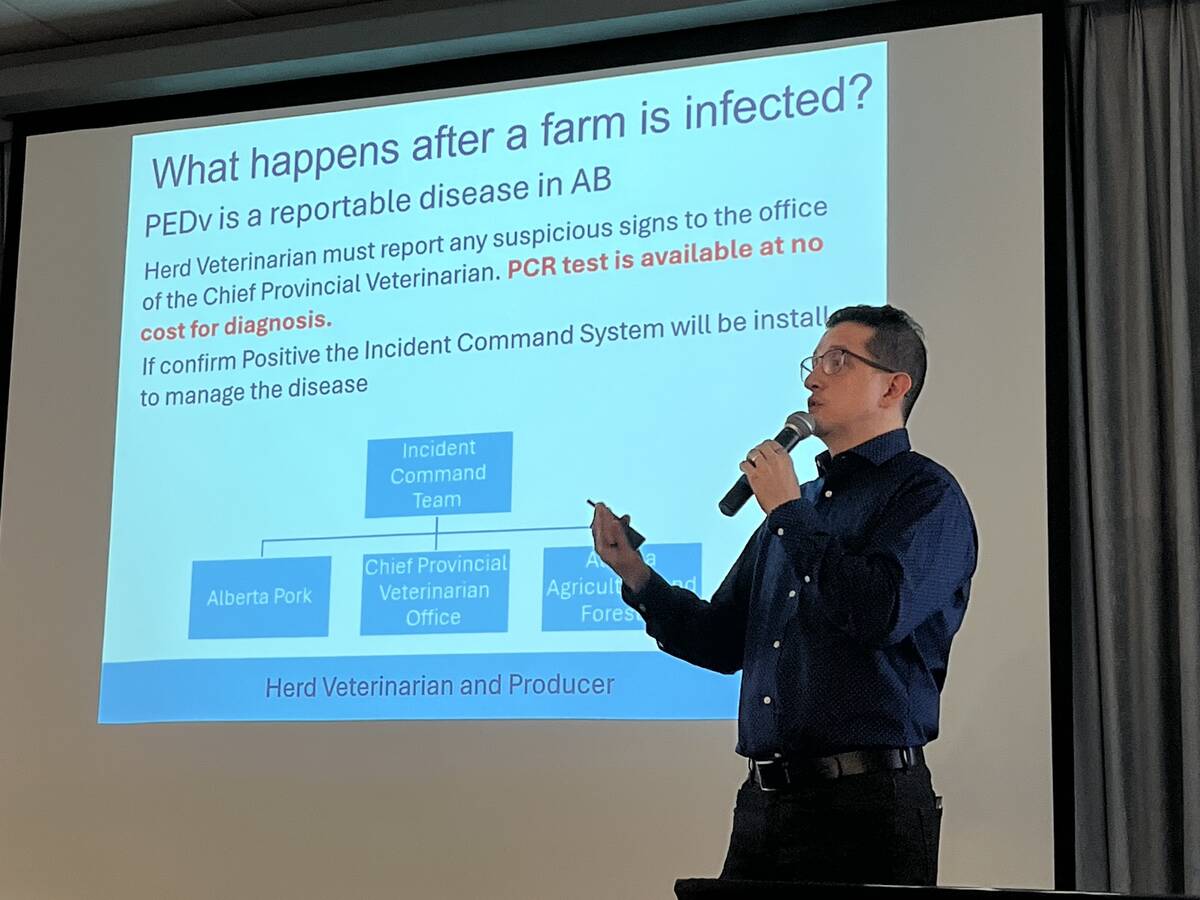
This is the first confirmed case of Porcine Epidemic Diarrhea virus in Alberta since February 2022. The disease first arrived in Alberta in 2019.
As the producer noticed rapid onset of diarrhea, they called the herd veterinarian. Through assessments, concerns were bumped up provincially from suspicion to positive test in nine days (Feb. 12 to 21). Animal movement and visitors to the farm were halted immediately at suspicion.
Surrounding surveillance zones of three kilometres from the farm were considered infected, with another 10-kilometre buffer zone established for monitoring. There were no farms close by to increase the risk of spread.
“So in this point, we are really lucky in Alberta that our farms are a little bit more separated. Other than that, we will have a different problem going on like Manitoba and Ontario. When farms are closer, this virus can jump very fast and very easily,” said Javier Bahamon, quality assurance and production manager for Alberta Pork.
Bahamon cited more than 150 cases of PEDv cases and a handful of Seneca Valley Virus (SVV) in Ontario, where reporting parameters are not as strict as in Alberta. The disease is provincially regulated in Alberta, and suspect cases must be reported to the provincial authorities.
Tracing the source
Samples were taken from the pigs, livestock trailers, the slaughter plant the farm had a contract with, and bulk and pork-based feed ingredients. Given it was a closed herd, the introduction of infected pigs was ruled out along with reviewed logs that showed zero visitors in the previous three weeks.
“We tested all those trailers that they use to move animals. They tested the slaughter facility that they have a contract with. We have tested constantly, and we continue to test heavily, and we cannot find any virus in those places,” said Bahamon.
“Based on the testing done at the farm, a feed ingredient that was fed to the pigs where disease was initially noticed, is suspect as a potential source. Other routes of entering cannot be technically ruled out, but are not highly suspect. So we have just one highly suspect on this case.”
Producers push back
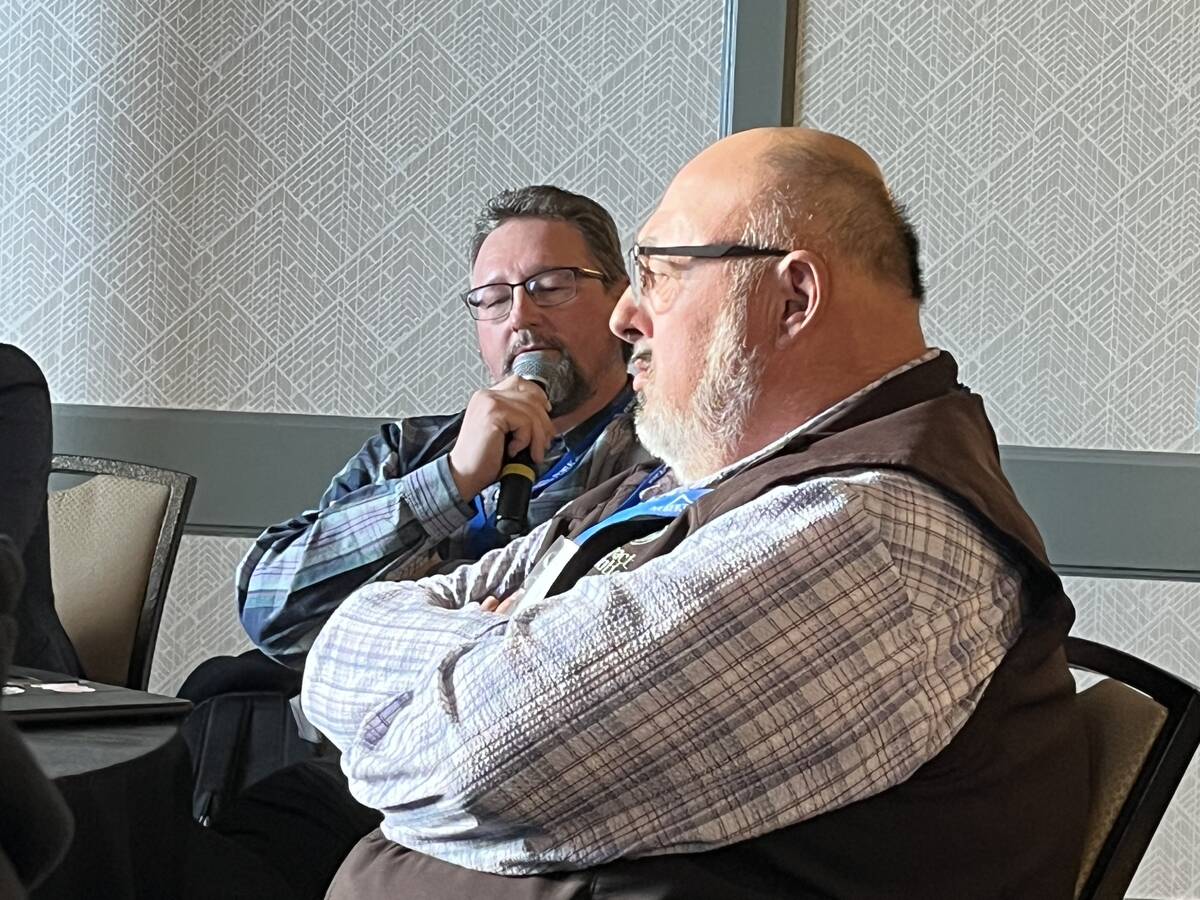
“I think this is the third time now that we can see that porcine blood plasma is highly suspect to the PED positive. I think it’s time to maybe call out some of the companies that are supporting that. That’s what bothers me the most, is those companies even defending this, that is wrong,” said pork producer Martin Waldner, to a loud, unified ovation in the crowd.
“If you don’t have more respect for your fellow producer, and you’re willing to put yourself and all the industry at risk because you know there is a risk feeding PED. They know there is a risk feeding blood plasma, because 10 producers immediately pulled it. Ten producers immediately pulled porcine blood plasma after this positive test. It’s on us in this industry. Today, I think we have a very good chance to eradicate PED out of Alberta.”
What PEDv does to a herd
The rule of thumb once PEDv is diagnosed is that nothing goes into or out of the farm for 28 days, until it can be proven the pigs have stopped shedding the virus, and they can be moved safely to the contracted packer.
PEDv causes diarrhea and vomiting in pigs. The illness can kill younger pigs in herds that have not been previously exposed to the virus.
“All the animals need to be exposed to the disease. The disease will happen at the same time in all the farm and the shedding will happen. The pigs are going to be sick, and most likely from two to three days, they get really sick,” said Bahamon.
“Later on, they start to get better. Unfortunately, piglets, 15 days and younger need to be euthanized. They’re not going to survive, and there is no treatment, nothing that we can do for those animals.”
PEDv does not pose a risk to human health, food safety or other animals. The disease can be spread by direct contact between infected and non-infected pigs, but also by people’s clothing, boots, vehicles, equipment and any items contaminated by the feces of infected animals.