
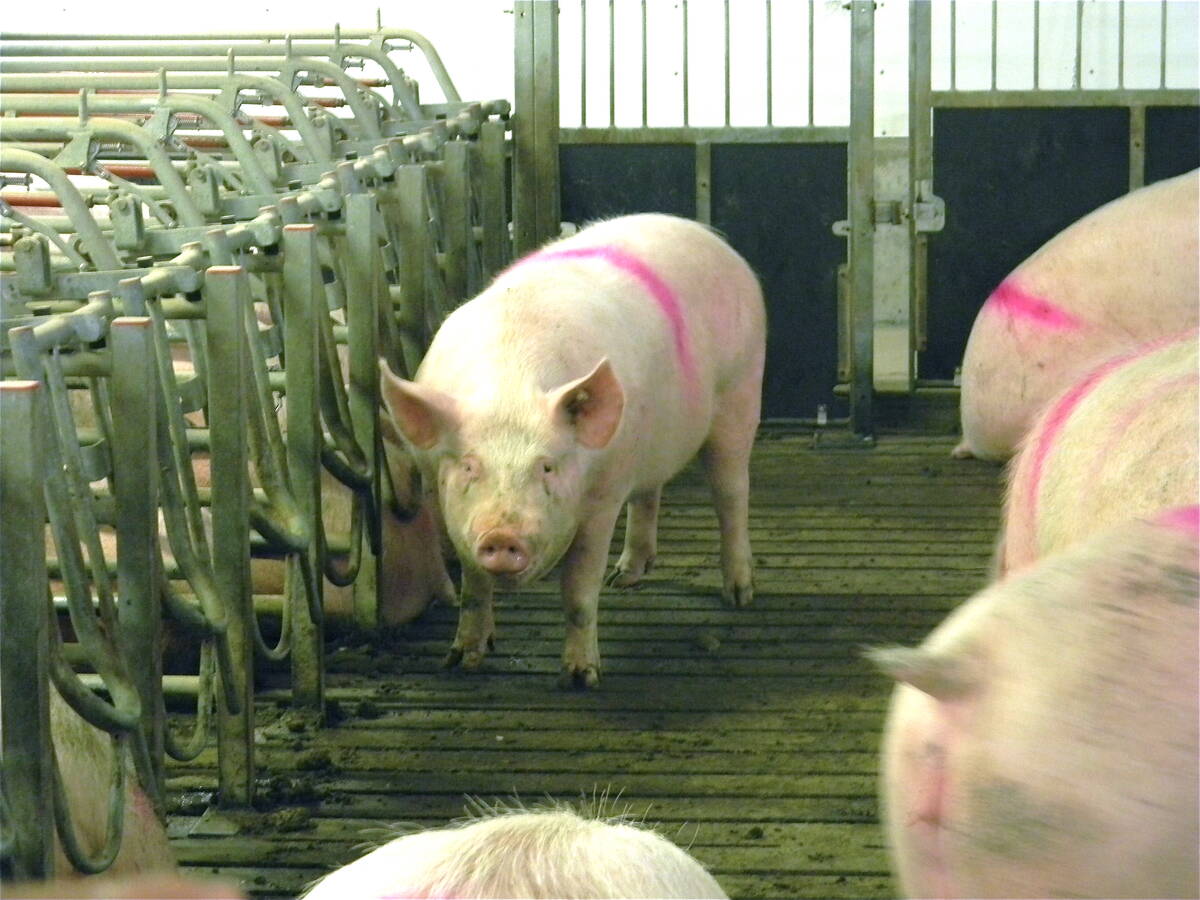
If you ask a swine producer what diseases they are most afraid of infecting their farm, porcine reproductive and respiratory syndrome virus would be in the top three.
PRRS has been one of the most significant swine diseases around the world for 30 years.
It is estimated to cost the North American industry $1.4 billion annually, is widely distributed and leaves a path of economic devastation that can span months to years.
Read Also
Producers encouraged to enhance biosecurity in response to porcine epidemic diarrhea virus discovery
One expert says producers need to enhance their biosecurity in the face of porcine epidemic diarrhea virus’ reemergence in southern Alberta.
History
First described in the late 1980s as mystery swine disease because researchers had not identified a pathogen, it was eventually described as a syndrome in which severe reproductive losses were noted on farms where extensive respiratory signs and high mortality were observed in growing pigs.
In 1991, researchers had identified and made the link to a novel virus that had spread to thousands of farms around the world.
The PRRS virus genome easily mutates as it replicates, forming new strains of virus that can be more virulent than the parent virus.
The virus is also prone to combine with other PRRS viruses that infect the same pig at the same time, again creating new and novel PRRS strains.
When a farm has been infected for a period of time, it has been said that the farm likely has multiple similar strains circulating in a “PRRS soup” rather than a single strain.
This highly variable nature makes sustained immunity and protection difficult to build in a farm population.
Signs and symptoms
Early clinical signs often include abortions and the birth of stillborn and weak piglets. Sometimes early signs are neonatal diarrhea because piglets are born weak and not able to suckle properly.
Nursery and finisher farms commonly observe laboured breathing in weak, lethargic pigs of all ages.
PRRS is known as “blue ear” disease in some countries because severely infected pigs develop blue-coloured extremities and ears with low blood oxygen levels.
The clinical signs are generally widespread, affecting a significant percentage of the population.
Feed consumption and growth are typically affected for several weeks. Secondary endemic diseases are often reported to increase during active PRRS circulation.
PRRS virus infects lymphoid tissues and immune cells called macrophages.
Part of the mechanism for creating further disease is the inflammatory cascade resulting in reduced immunity toward bacterial and other viral infections.
Some pigs infected with PRRS virus become persistently infected, meaning the virus can be cleared from the blood and lungs of the pig, but virus persists in the lymph nodes around the body, allowing the pig to shed virus intermittently for several months after the initial infection.
While pig-to-pig transmission occurs easily via secretion of virus in saliva, blood, semen and other body fluids, vertical transmission from mother to fetus leads to the reproductive fallout.
With widespread viral secretion, the immediate environment around the infected pigs becomes contaminated, allowing for further transmission to other pigs or even neighbouring herds through shared equipment, supplies, boots, dirty hands and contaminated transportation.
PRRS virus is also aerosolized during an outbreak, and virus can be found more than 10 kilometres away from the source farm.
The survival of virus outside the pig depends on moisture, pH, humidity, protection by organic matter and exposure to UV light.
Mitigation
While it is easily killed by heating, drying and disinfecting, with proper conditions the virus can remain infective outside the pig for hours to days in manure and drinking water.
PRRS prevention has driven biosecurity investments on all swine farms, from implementation of mandatory shower-in/shower-out measures for all staff and visitors to construction of two-stage load-out facilities to further separate transport trailers from contact with the barn population.
Supply entry through decontamination rooms, including UV chambers, disinfectant fogging and extended periods of storage time before use are common practices on modern swine farms.
With the potential for infected semen to be devastating to hundreds of sow farms receiving semen from boar studs, most AI collection facilities have some form of air filtration equipment, reducing the risk that aerosolized PRRS virus enters the farm.
Boars will only be exposed to and breathe air that has passed through expensive filtration equipment equal to filtration ability of an N95 mask.
Detection and prevention
An incredible amount of money is spent on early detection on farms and proof of negative PRRS status of boars, semen and replacement gilts. Transport trailers will often be screened to ensure PRRS negative status before hauling replacement stock.
While several PRRS vaccines are available, their effectiveness at preventing disease is moderate at best.
Most vaccines use modified live viruses, working off the principle that we want to infect the pig with a known strain before other field strains can become active.
This practice can reduce the clinical and economic impact on a herd but also risks the recombination of vaccine virus with already circulating strains in the herd.
Anti-inflammatory medications and antibiotics are used to manage the health challenges of PRRS infections.
In Western Canada, many areas have low pig farm density, which reduces the re-infection risk. As a result, many farms will elect to eliminate PRRS virus from a site via partial or full depopulation strategies.
After decades of industry investment in PRRS research, there are still more questions than answers to this high-impact disease, but one thing is for sure: the swine sector would be best served to eliminate this disease.
Blaine Tully is a veterinarian and owner of Swine Health Professionals Ltd. in Steinbach, Man.