Richard Phillips is a self-proclaimed “water nerd” in his duties as general manager of Bow River Irrigation District and chair of Alberta Irrigation Districts Association.
Phillips constantly breaks down numbers of water usage and storage in his district over the years, with an authorized expansion limit to 320,000 acres, providing water to over 600 users.
Now, another user is entering the market in water use, as Alberta has an aggressive goal of attracting $100 billion in AI data centres over a five-year period.
Read Also
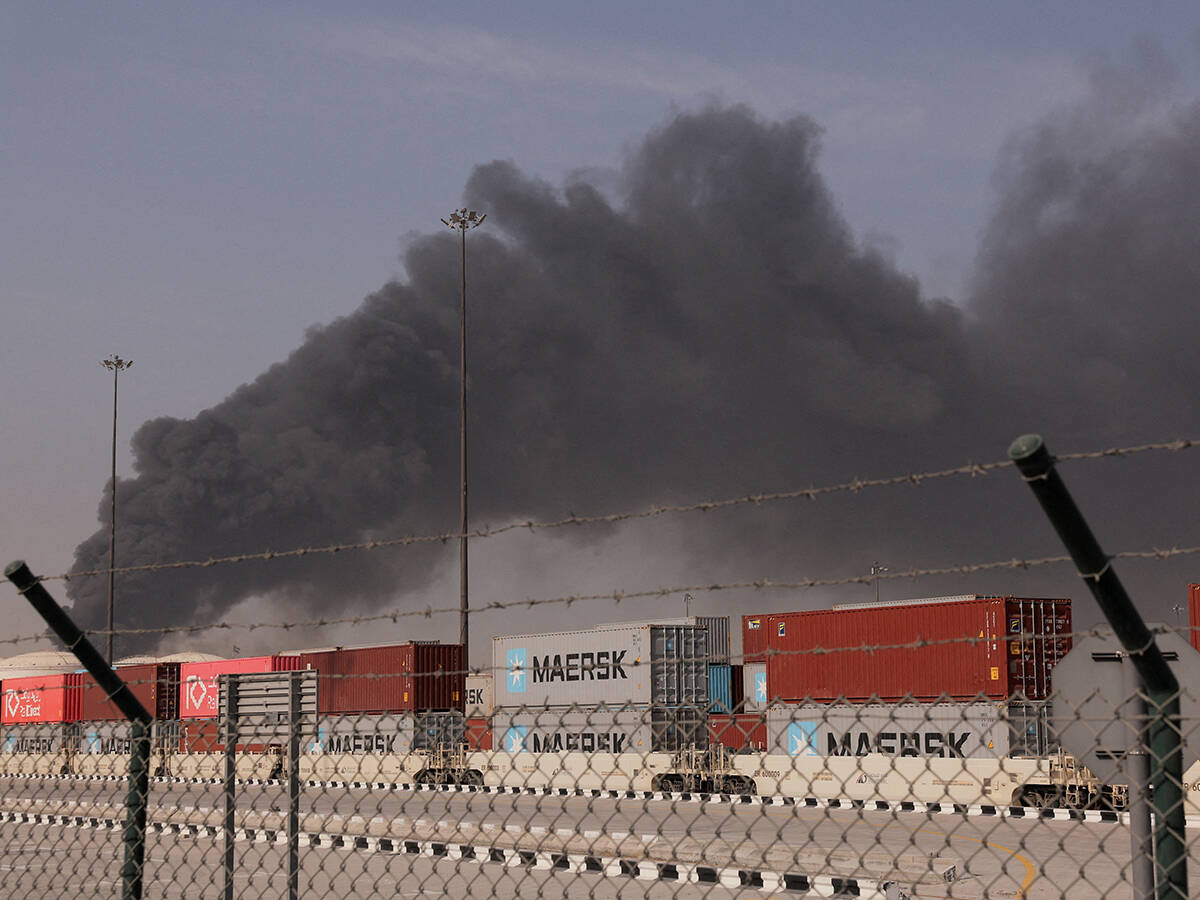
Pulse sales to Mideast markets ‘frozen’
Middle East conflict is freezing Canadian pulse sales as shippers impose hefty surcharges and reroute cargo, cutting off access to a $769 million market.
Data centres require water primarily for cooling, using evaporation to dissipate the intense heat generated by thousands of computers.
WHY IT MATTERS: With data centres soon to be dotting the North American landscape, it is good to be informed as agricultural producers what water and power usage will be like.
Putting data centre water demand in perspective
Several numbers are being thrown around on how much will be needed to run such centres. The numbers may seem massive to the layperson as examples are given, but given the supply available, it pales in comparison to agricultural use.
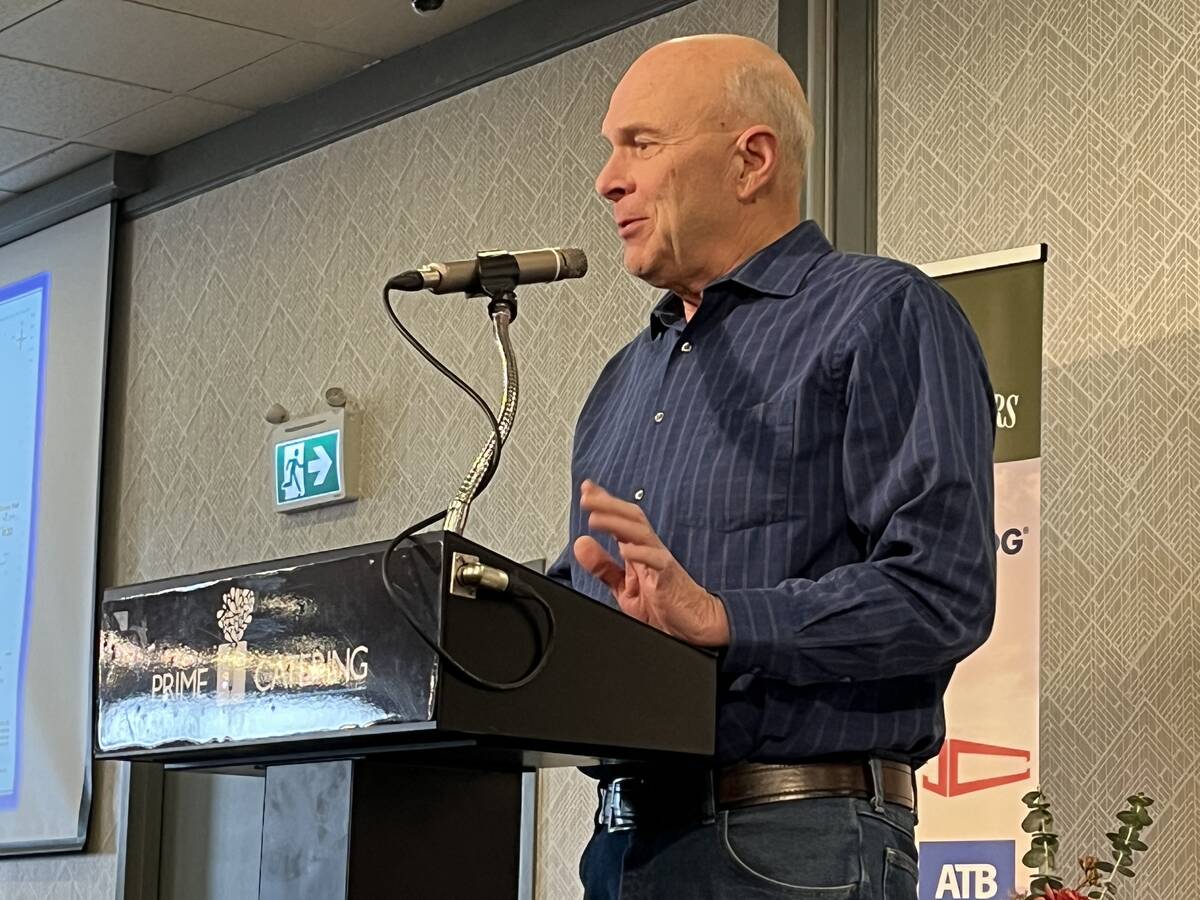
“People are nervous about water when you start talking about large volumes. They’ll talk about how many gallons they need, or how many litres they need, or how many Olympic-sized swimming pools they need,” said Phillips.
“It all sounds huge, right? Until you put it in perspective, in terms of how much water is really there. Not to say that this water is insignificant, but it’s all about scale and perspective.”
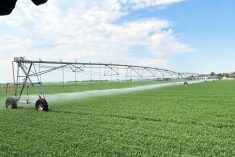
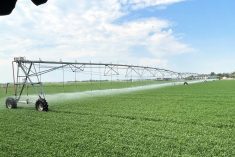
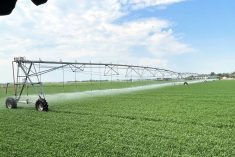
That perspective includes a typical irrigation pivot without a corner arm on it, using 900 gallons per minute of water. With many minutes in a day, it adds up in a hurry, and now multiply that with the over 1.5 million acres of irrigated land under the various 11 irrigation districts in the province.
Water use for data centres depends on size, although estimates are out there that “mega data centres” would require five million gallons of water per day. That is the equivalent of a town of 10-50,000 people. Agriculture often uses an acre foot for measurement for large volumes of water. Long-term average water use on irrigated land is approximately 12-inches per acre, with the number varying on dry and wet years.
“That’s scary, because people have trouble visualizing what five million gallons looks like. One of these monster data centres would use about as much water as on average, 5,500 acres of irrigated land,” said Phillips.
Southern Alberta rivers fully allocated
The Bow River, between April and October in 2025, saw 1.4 million acre feet that flowed through the mouth of the river even after everyone had already taken what they needed.
“As you go further north, it just becomes even more to the point where the water use relative to the size of the rivers is, I hate to say, insignificant. It becomes extremely small, the use of one of the mega data centres, compared to the size of say, the North Saskatchewan or the Athabasca or the Peace River.”
Just as with economic markets, there is supply and demand. With the water demand outlined, Phillips added there is plenty of supply depending on where the data centre would be built.
In Alberta, you cannot go to the province and get a new water licence on the Bow or Oldman rivers, any other tributary or the South Saskatchewan main stem.
If a data centre wanted to set up shop in the South Saskatchewan River area, they would have to find somebody who has a water licence and is willing to make their water available. You can transfer water licences, and numerous irrigation districts have already participated in that process. You can also go to a licensee and hope they will amend their licence if it doesn’t already allow for that industrial use.
Northern rivers offer abundant supply
But you can get a new licence on the Red Deer River and further north, where water bodies dwarf the size of the southern rivers.
“The North Saskatchewan is over twice as big as the Bow. The Athabasca is over twice as big as the North Saskatchewan, and the Peace River makes the Athabasca look small. There’s huge water in the north,” said Phillips.
Proposals have been floated of a 7.5-gigawatt gas-powered facility near Grande Prairie, and another for an Olds Data Centre Campus that has ran into some regulatory hurdles, among others.
Infrastructure and energy concerns remain
Alberta, especially northern Alberta, is seen as a prime location given its colder weather compared to its U.S. counterparts in say Texas or Virginia, as long as they are near larger urban centres with strong internet, fibre optics, highly trained work forces and an international airport nearby.
Concerns have been raised by residents of areas where data centres have been planned on the strain to infrastructure, energy grids and the environmental impact of the gas-powered developments in which Alberta is taking a “bring-your-own power” outlook through Bill 8.
As far as water needs go, if water needs were to be taxed as more data centres come online, irrigation districts would shift focus to building more water capture infrastructure with dams.
“I think every additional use makes it more important. The other thing that makes it more important is the ability to capture water when it’s there. If our planet becomes more variable, and river flows more flashy and unpredictable, it’s really important to catch the water when it is there.”