Diesel-electric hybrid drives are increasingly being used in agricultural machinery, a trend that was evident at Agritechnica 2025.
Zoomlion, a Chinese company that manufactures construction and farm machinery, had a lot of people talking when it displayed its entire tractor and combine lineup powered by diesel-electric hybrid drives.
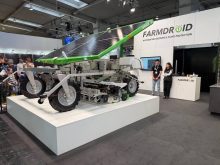
Category-busting one-power-unit company Nexat also drives its machine using electric motors.
Read Also

CUSMA review 2026: What agriculture needs to know about trade negotiations
Experts doubt the U.S., Canada and Mexico will maintain tariff-free trade under CUSMA when the review begins July 1.
WHY IT MATTERS: Farms are pressured to reduce their greenhouse gas emissions and are look to save money through fuel efficiency, which has resulted in more engine options than ever before.
Diesel-electric drives are used in locomotives and in construction equipment and have been slow to find their way into agriculture. They are based on the theory that systems can be made simpler and more energy efficient if the power is applied by electric motors at the points in the equipment where the power is needed.
A diesel engine is usually fitted with a generator off the back of the engine and the generator distributes power where it’s needed.
The major producers of engines for agriculture have shown some concepts powered by diesel-electric systems, but there are few on the market.
John Deere has a generator option for its 8R tractors, the eAutoPowr electronic variable transmission, which provides power for implements from a generator powered by the diesel engine, but it isn’t a full diesel-electric system.
Why are there more agricultural engine options?
However, the major machinery providers are building flexibility into their new engines, making them ready with some modifications to burn various types of fuels, ranging from ethanol to biodiesel and hydrogenated vegetable oil (HVO), popular in Europe as a completely renewable fuel.
That means farmers should be ready for engines that can burn most of the fuels they can lay their hands on, with some modification.
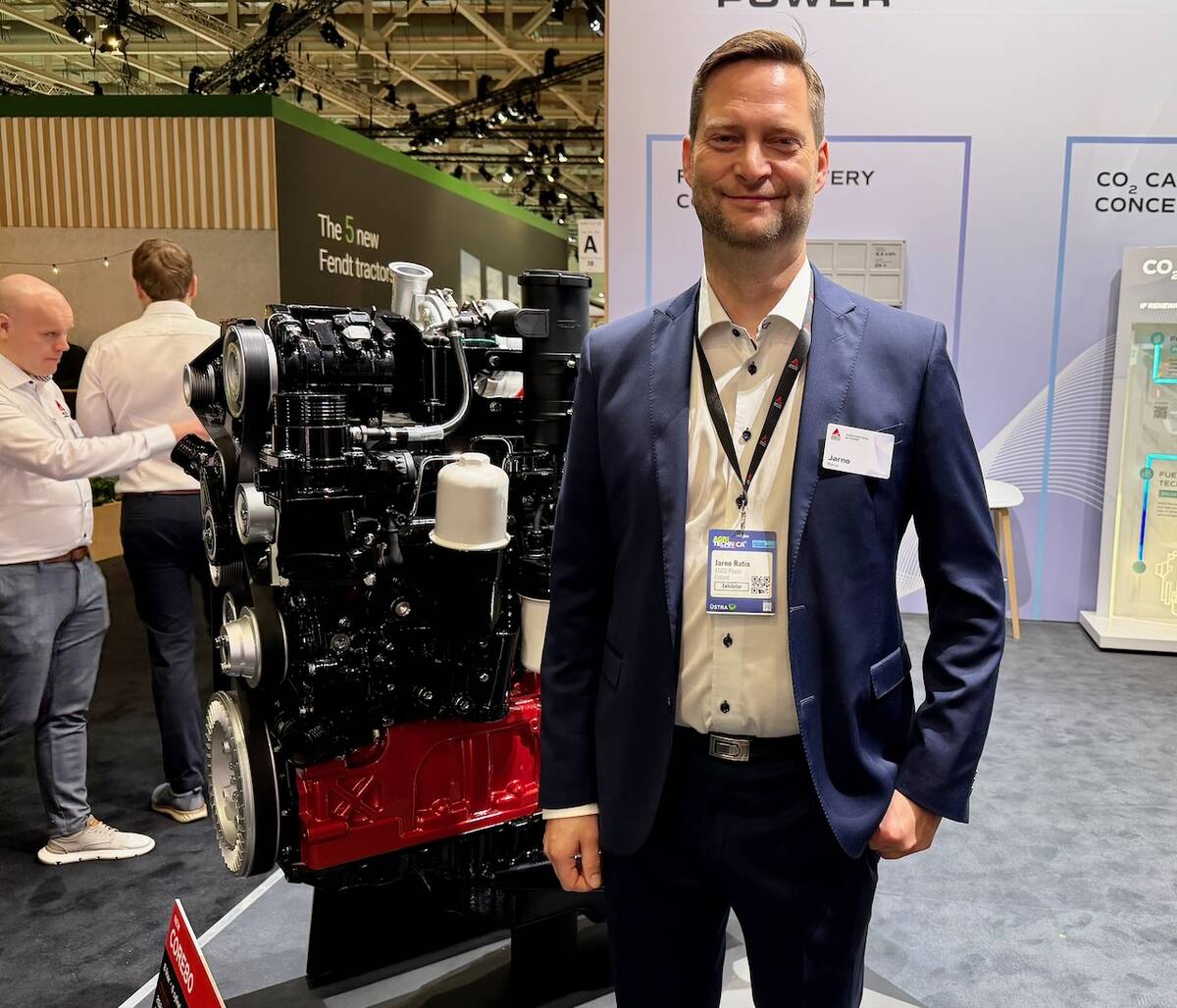
Agco Power unveiled the largest of its new Core engine lineup at Agritechnica, the 80, which is an eight-litre engine. It will end up in the Fendt 800 lineup, said Jarno Ratia, director, sales and marketing and project management for Agco Power.
The engines are highly efficient, he said.
“It revs at 1,700 (revolutions per minute), which is matched with the tractor power train perfectly,” he said.
The tuning of the continuously variable transmission with the engine means the engine can hit top speed at 1,400 r.p.m.
The Core engines are set up to use other sources of fuel, such as biodiesel, hydrogen and methane, depending on which fuel the farmer can source.
The bottom line is that none of them are better than the power that can be produced from a litre of diesel.
Hydrogen, for example, results in a drop of about 30 per cent in the power output of an engine.
There are supply chain and structural limits to hydrogen at this point, including being able to store it on farms and on tractors in enough volume to prevent frequent refilling.
JCB is betting heavily on hydrogen and has a working model that it sells to companies looking to reduce their emissions.
To help offset the power loss of hydrogen, Agco has added a hybrid system to its hydrogen energy.
However, Ratia says hybrids are a step, not a permanent solution. There were numerous tractors and combines with concept hybrid-battery boosters at Agritechnica 2023. There were few in 2025.
“Earlier, the whole industry thought that hybrid would be the first step to go full electric, but now we think a little bit different. So we know that adding hybrid is adding complexity and cost, but end of the day, not really giving too much benefit for the vehicle.”
The idea that farmers could produce their own fuel is also being discussed.
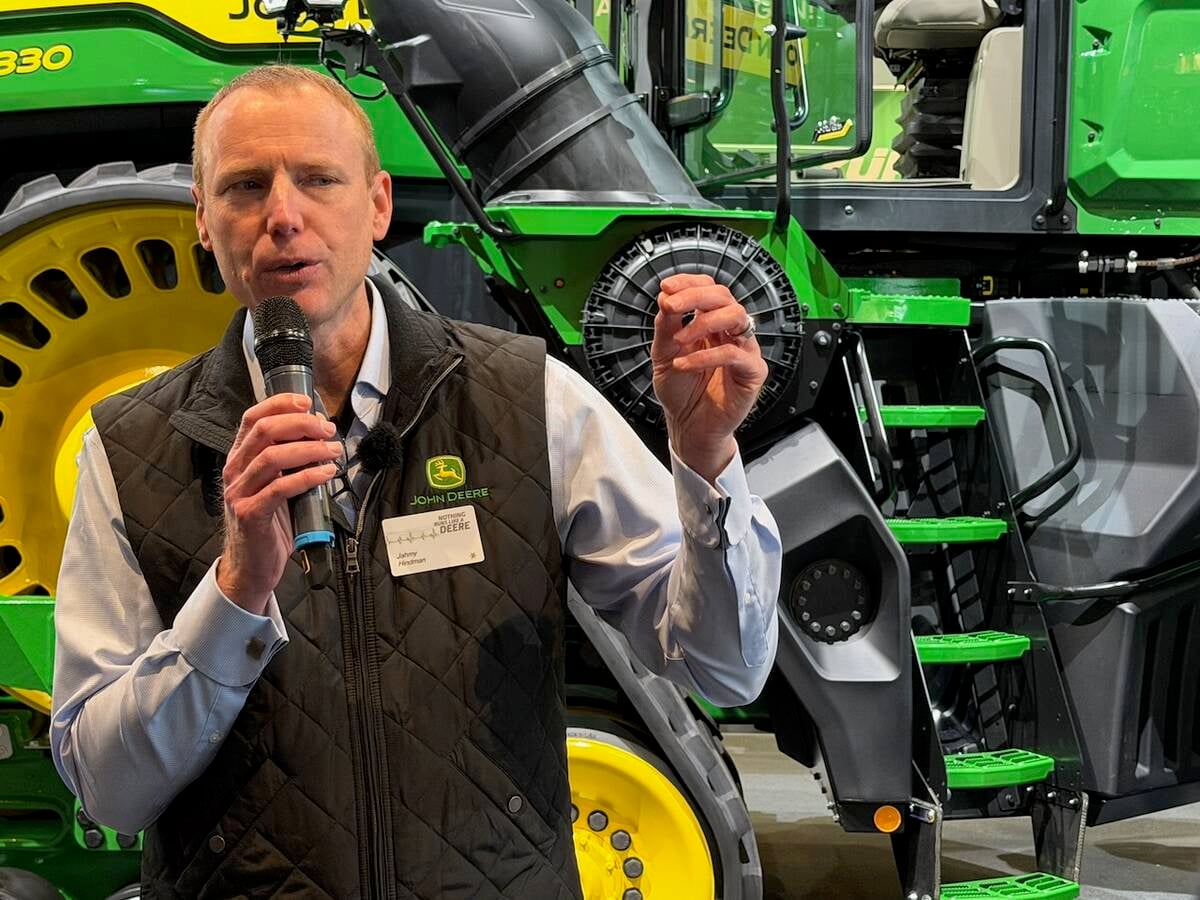
Jahmy Hindman, senior vice-president and chief technology officer at John Deere, pitched the idea that farmers could produce their own fuel on the farm, taking up a limited amount of a previous-year’s crop to produce the next and completing an energy cycle on the farm.
John Deere’s Justin Rose, president of the company’s Worldwide Agriculture and Turf division said at a media event at Agritechnica that the company will continue to produce options that farmers look for around powertrains.
New Holland showcased its T7 methane-powered tractor at Agritechnica, including the fact that it has made commercial sales. It would epitomize the ideal of energy circularity on the farm, using methane produced by manure to power the tractor.
Battery technology
There continues to be evolution in battery technology, too, and at Agritechnica John Deere showcased its 130 h.p. equivalent tractor and numerous autonomous systems that run on electricity, while Agco presented a new stackable battery concept.
Both are scalable so that the amount of working time needed for the tractor can be matched by its battery cost.
With current technology, 120 to 130 h.p. will be about as large as battery-only tractors will get before weight and charging capacity become limited.
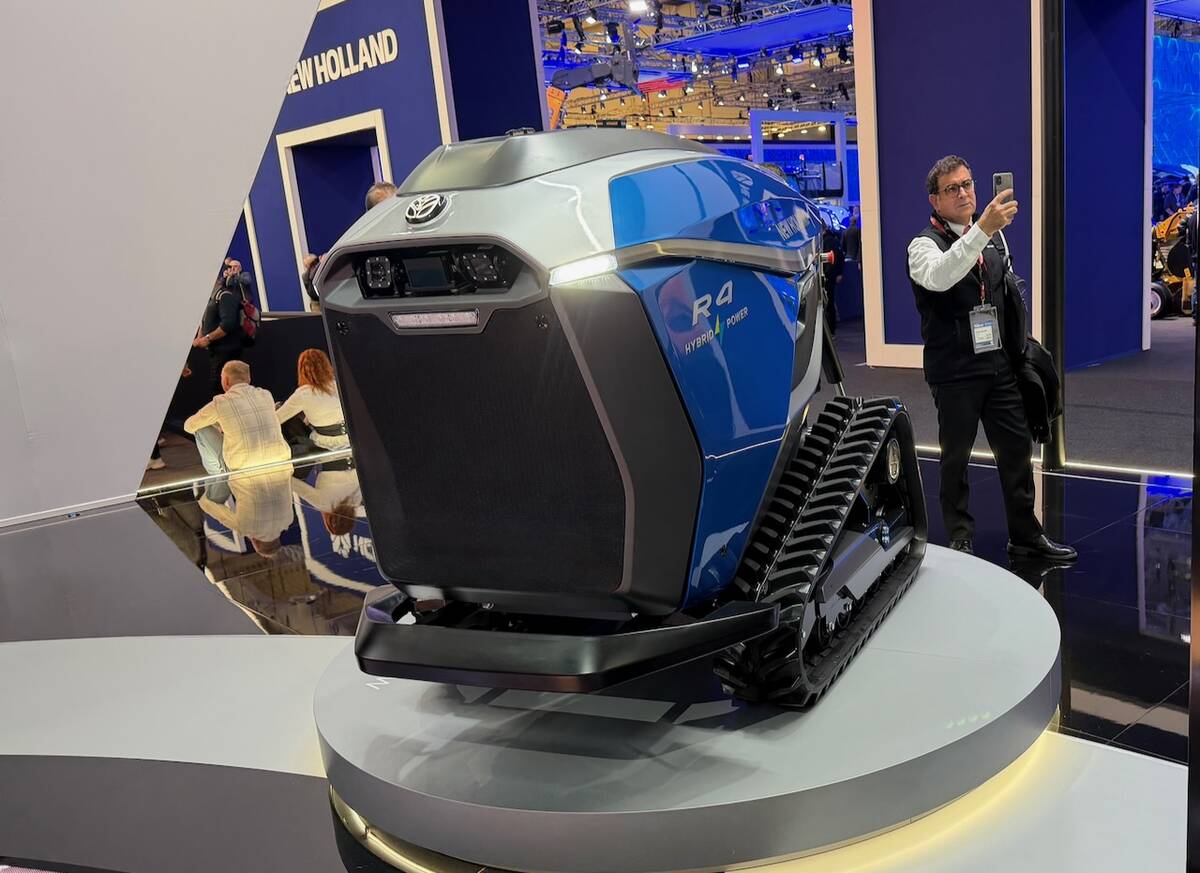
Autonomous vehicles also are being powered by a soup mix of power types that range from a battery at the smaller end to diesel engines used in tractors for the largest. In between, there are options such as the New Holland R4, an autonomous concept vehicle that runs on diesel-electric hybrid power.
The Nexat is powered by two 550 h.p. engines, but the wheels are driven by electric drives, which helps make the unique concept work.
Diesel electric helps Nexat distribute power more flexibly throughout its system.
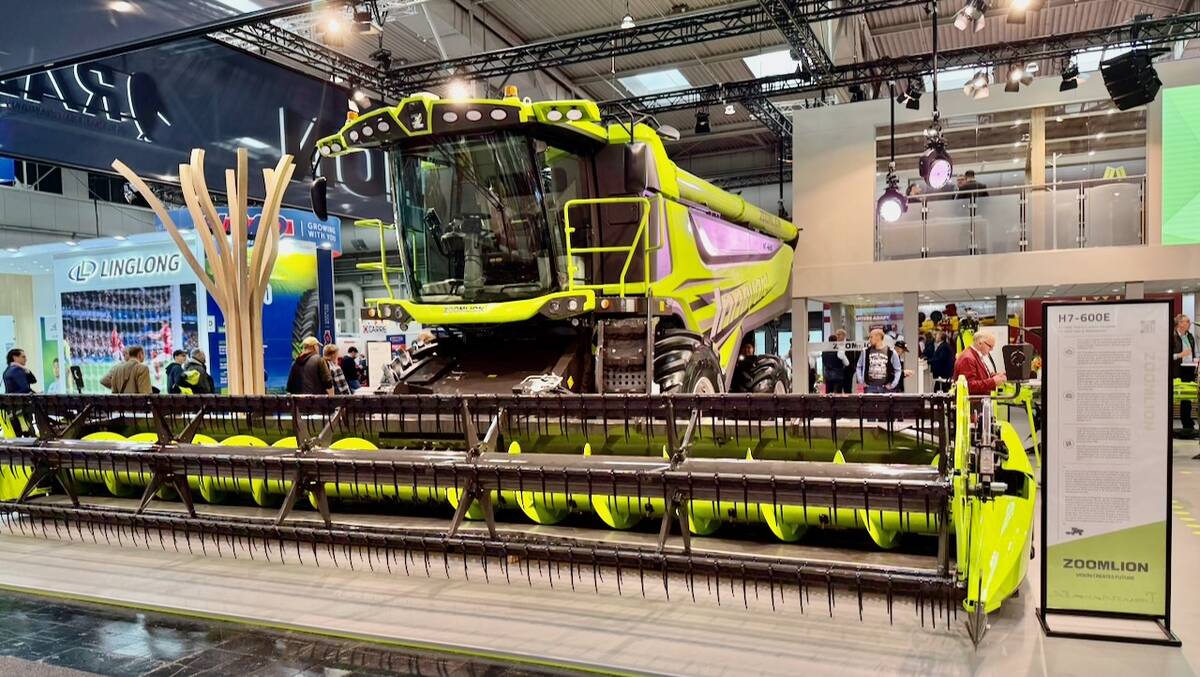
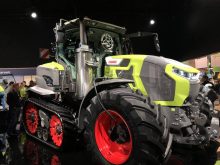
At Agritechnica, the Zoomlion combines and tractors were attracting lots of visitors and opinions.
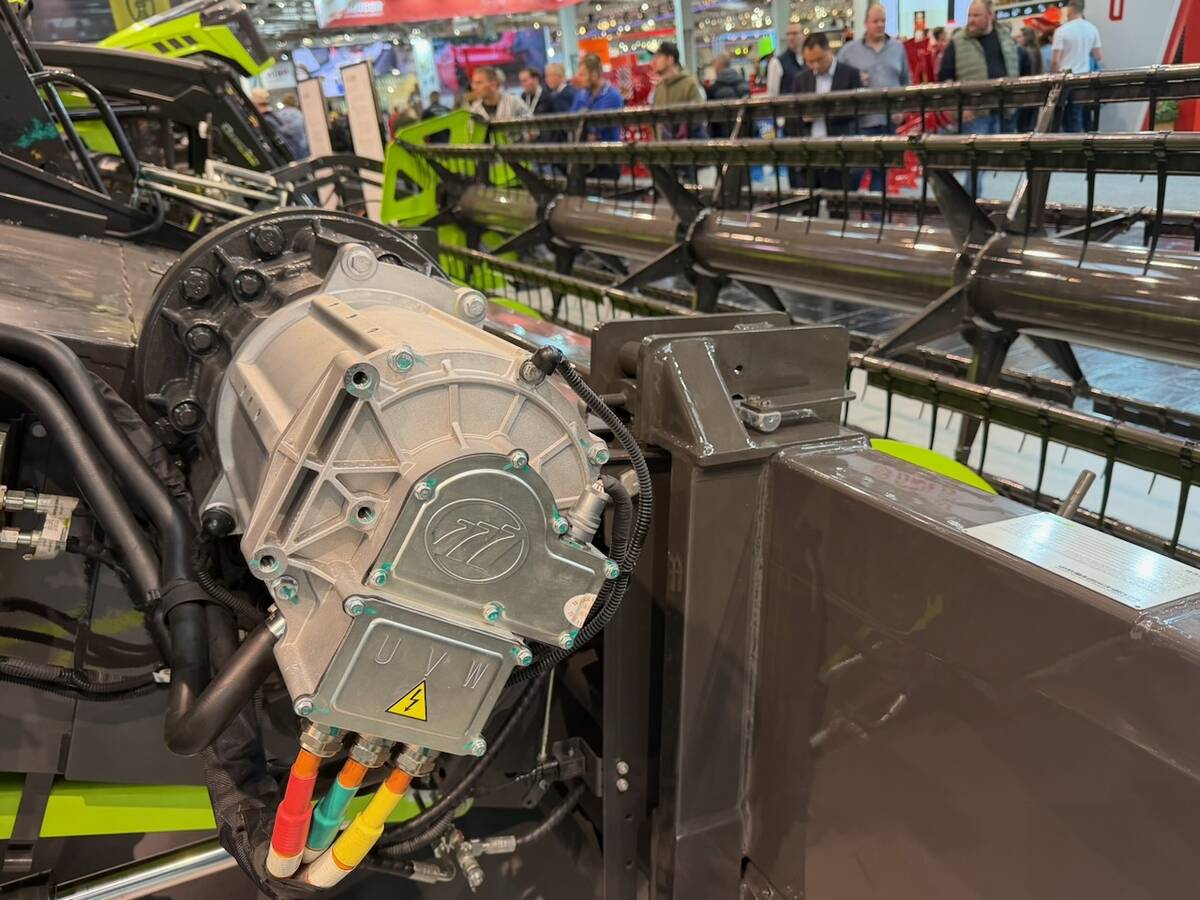
The company’s combine has a diesel engine that powers a generator, which distributes power to 12 motors to drive the wheels, the feeder housing and header, grain augers, dual rotor threshing system and the straw chopper. The combine is rated at 480 h.p. The system also includes a battery to help manage the power flow.
That means fewer belts, says Kevin Song, technical manager for the combine. It means a simpler unit with fewer moving parts.
The company says using electric drives will reduce the linkages — chains and sprockets and belts and pulleys — by 70 per cent compared to a conventional combine. That means fewer breakage points, although sorting out an electrical problem can also be challenging.
The motors can all reverse, which means easier cleaning out of plugged headers and feeder housing, said Song.
Zoomlion’s tractors are rated at 160 to more than 700 h.p. in a tractor that was just announced but wasn’t at Agritechnica. Company spokespeople at the show said diesel-electric drives can improve fuel efficiency by 15 per cent.
The company also demonstrated an autonomous tractor in a live video demonstration from a site in China.
Zoomlion’s tractors and combine aren’t yet available in North America but are working in Australia and South America.
Fuel efficiency and reducing particulate and greenhouse gas emissions continue to drive evolution in powertrains and are resulting in more options for farmers but also more complexity in the engines and fuel-supply systems.