

Boosting productivity in Canadian agriculture to just two per cent could result in historic growth for the sector, according to a new report from Farm Credit Canada.
Productivity, or the measure of how efficiently inputs translate into outputs, is strong in Canada, but it has stalled recently, dropping to 1.3 per cent in the 2010s and projected to sink to 0.8 per cent through 2030. If Canada can reverse this decline, it could create $30 billion in farmer income in the next decade.
WHY IT MATTERS: Levels of productivity in Canada are decreasing. With some tweaks from producers, government and industry groups, that trend could be reversed.
Read Also

Alberta producers set record for environmental farm plans in 2025
Albertan farmers and ranchers completed a record number of Environmental Farm Plans in 2025.
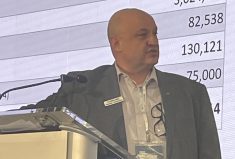
FCC thought leadership manager Craig Klemmer said increased productivity comes either through reducing production costs or increasing output.
“The combination of that is going to mean more farm income,” he said.
“The idea is that over the next decade, we would have an additional $30 billion in farm income for … crop and livestock producers in Canada.”
This would average out to roughly $150,000 for the average-size Canadian farm, more or less depending on the size of the operation.
“It does mean real dollars into the pockets of producers, because they’re the ones that are going to have the lower cost of production, or they’re going to have increased output.”
Klemmer said there is no single strategy that will fit every operation. The report identifies three main pathways through which producers can boost productivity growth.
The first is improving technical efficiencies.
“That’s really very much around management, using data-driven decisions,” said Klemmer.
“Getting more information … from participating in producer events in the local area, getting education and challenging the standard or the norm of what you’re doing and applying some of those pieces onto your farm.”
It also involves having access to timely data.
The second key point is about capturing economies of scale and targeting investments that can enhance efficiency.
“This doesn’t necessarily mean bigger is better,” Klemmer said.
“It’s about buying the equipment that you need for the job that you’re planning to do, as well as for what works within your business plan.”
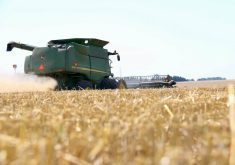
“If you’re going to be combining wheat and canola, for example, or if you’re going to be doing corn and soybeans, what is the combine that you require for the operation and (what is) the right-sized equipment? You don’t necessarily need the biggest one out there with all the bells and whistles that are going to use more fuel; cost more money.”
The third point is about fostering innovation and incorporating innovations to improve management decisions on the farm.
“Find efficiencies in your operation. Make it so that you can do more with what you have.”
“On that side of things, it’s really about being curious,” he said. “Seeing what’s out there, making decisions that are going to bring real returns to your operation.”
The report is presented as a call to action for producers, but Klemmer said the responsibility to increase productivity could also be shared by governments and industry groups.
“When it comes to management decisions, it’s about farmers being curious and working with other people in their area and learning about what’s out there,” Klemmer said.
“And then it’s on everybody to continue to invest in agriculture so we continue to find these things,” he said.
“When we look at things like improving management and improving information, it’s a whole value chain creating that.”
For those farms with less capital to invest in innovative technology or skilled and educated workers, as the FCC report recommends, Klemmer said there are still options to boost productivity.
“Having a good business plan so you can be informed about the decisions you’re making is a starting point.”
“There’s a lot of things out there that are free,” he said.
“When you go to the innovation farms, for example, or technology farms … those are often free to go to, and it’s just about being curious and putting the time in to learn about those.”
A key part of maximizing efficiency is knowing your own finances, knowing your operation and being realistic about expansion and transition planning.
Klemmer said this could be an opportunity not just for the agriculture sector, but for the Canadian economy as whole.
“Generating this additional income for farmers is also driving GDP growth for … all Canadians,” he said.
“The agriculture and food sector is a key and foundational part of the Canadian economy, and making these investments as a country, as an industry, to drive productivity growth, it’s not just going to benefit producers … it’s also going to really enhance and promote Canada and our overall economic opportunities.”