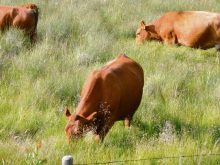

The Municipal District of Taber continues to find itself caught between conserving ranching legacy and advancing economic development as grazing leases reach expiry.
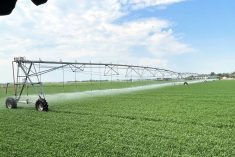
A multi-year process has been put on hold once again. In November, the southern Alberta municipality’s newly elected council paused the previous council’s decision to convert six sections of municipal native grassland into irrigated cropland near Scope Reservoir upon expiring leases in 2026.
WHY IT MATTERS: Rural municipalities struggle to find revenue streams for service delivery for their residents, trying to find a balance between environmental conservation with ranchers and their grazing with high-value irrigated crops for land value.
Read Also
High-stakes balancing act for beef market
Global trade shifts, pest pressures and stubbornly strong consumer demand are reshaping the cattle and beef market.
Previous council’s decision passed by a slim 4-3 vote, showing just how contentious the issue has been over the years, with packed, standing-room only public information sessions, coupled by more split votes from the fallout in late 2025.
According to meeting minutes from Dec. 16, resolutions involving grazing lease annual rates, term lengths, term conditions and compensation were all met with distinctive fractured split votes.
Council will once again direct administration to develop public engagement and consultation processes to grazing lease policy. Some of the grazing leases in question on tax-recovery land were set to expire as early as late February.
Former councillor and current agricultural lease holder Brian Hildebrand was one of those councillors voting in favour of the joint venture with Bow River Irrigation District (BRID) at the time. Approaching the Western Producer and Alberta Farmer Express, Hildebrand hopes the southern Alberta municipality’s vision stays the same going forward.
“I really believe strongly the resources the M.D. have are utilized responsibly and to the benefit of the municipality of all the residents, not just a few,” said Hildebrand, of the $344 million asset based off of three years sales of pasture land in the region, with trends going upwards.
“Also, council operates with integrity, and that conflicts and pecuniary interest is not a motivating factor.”
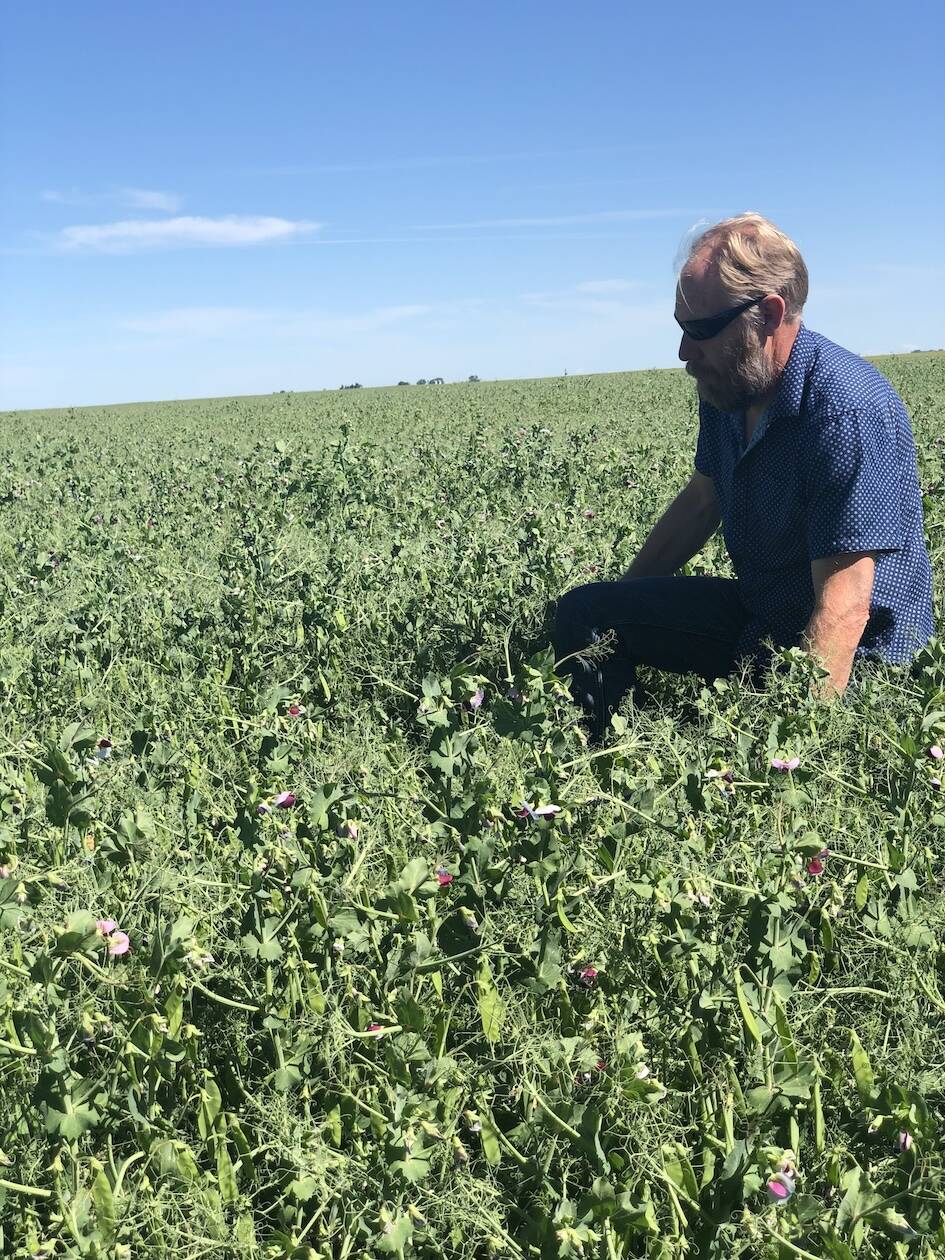
Hildebrand dived into the 90 members of of the five different grazing associations — Vauxhall, Hays, Fincastle, Barnwell and Circle E — which border 7,900 municipality residents. In earlier December correspondence to council, Hildebrand noted the best way to allow young/small operators to enter the market is to allow some turnover in leases. Transferability of leases without first going to a public process makes it harder for smaller farms to enter or expand.
At a meeting in February, a lease tender summary for some parts of grassland in the M.D. showed offers of $200 to $250 per animal unit month (AUM), shattering both provincial and market rate averages at the time.
“It’s not a factor of, it’s orders of magnitude. It’s not a factor of two, or a factor of five. It’s an order for magnitude,” said Hildebrand, as the M.D. looks for ways to collect about $19-$20 million in taxes to balance its budget.
With increasing demand of services and limited taxpayers to draw from in the rural agricultural land base, Hildebrand has been at odds at how long Taber’s 75,344 acres of grazing land has been underutilized as a revenue-generating source.
He cited from 2016 to present, the tax-recovery lands and grazing leasing in question were getting a 70 cents per acre lease rate. Oil and gas revenue paid out to the leaseholders averaged about $160,000 per year. Add it all up and it amounts to over a $1 million loss servicing the leases.
“For those 10 years, the M.D. of Taber would of been further ahead to have that land vacant and just collect the oil revenue. Plus all the cost of administering these leases,” said Hildebrand.
Hildebrand has heard the concerns in council chambers of large corporations taking over the M.D. lands in investment funds, squeezing out the “little guy.” But with some discussions on policy-change proposals on leases in question, they seem to be counterintuitive to that fear.
“I find it very strange that one of the proposals is the first right of refusal to purchase, or the first opportunity to buy at appraised rate by the current leaseholders. The transferability of the leases to another individual at the same time, there’s a fear of these large corporations. How does transferability of the first opportunity to purchase protect against that?,” questioned Hildebrand.
A handful of conservation groups entered the M.D. grazing lease debate back in August and September, along with the Oldman Lease Holders Association, rallying behind a petition to try and block the 3,100-acre carve out proposal for the Scope Reservoir joint project with BRID.
Whispers of possible legal action were discussed during information sessions rallying the petition, speaking of the M.D. being in violation of its own prairie conservation bylaw it adopted back in 2014. Some producers have also looked for compensation for all the funding and maintenance they have put into their leases over the years and decades if they are taken away.
The lands in question were forfeited to the province for non-payment of taxes before being handed over to the M.D., with no restrictions put on them as they were broken and farmed previously.
“Conservation is another issue. If the purpose of the M.D. is to conserve these lands, that’s a different conversation. Is that a municipal responsibility for conservation, or is that a provincial or federal responsibility?” asked Hildebrand.
Public engagement will continue at a Jan. 27 council meeting on the direction of changes to grazing policy and associate leases, to go along with a draft of an agricultural land sales policy.