

After several years running on deficit budgets, the Alberta Canola Producers Commission declared a surplus after budgeting for a shortfall in the 2024-25 year.
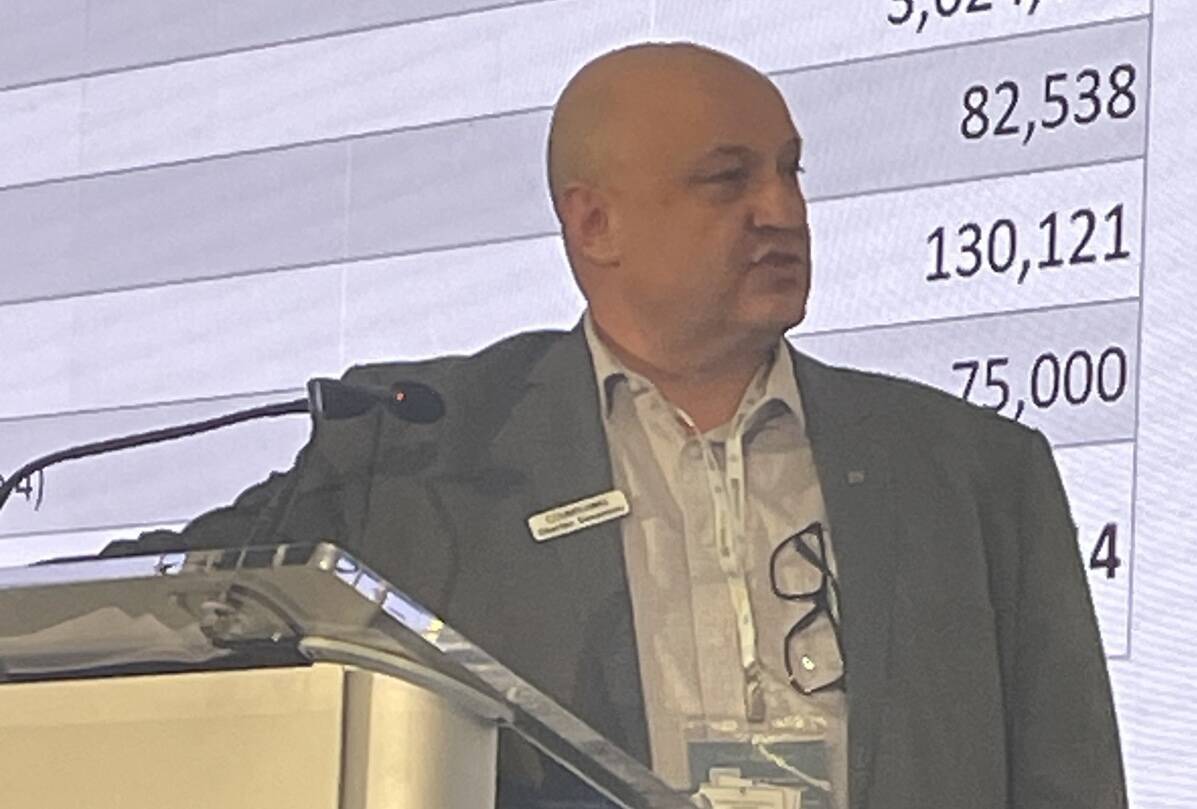
“We had budgeted a $786,000 loss. We ended up with a $643,000 surplus,” reported Charles Simoneau, vice-chair of the Alberta Canola board of directors.
He spoke at the Alberta Canola Annual General Meeting (AGM), held as part of the Crossroads Crop Conference in Edmonton Jan. 27.
Read Also
Alberta farmers and ranchers aided by Water Amendment Act
A quarter-century in the making, the Water Amendment Act officially modernizes how Alberta manages its most precious resource. From streamlining multi-licence consolidations for irrigation districts to allowing ministerial approval for low-risk inter-basin transfers, these changes aim to support a growing economy while protecting the environment and the “first-in-time, first-in-right” priority system.
WHY IT MATTERS: The Alberta Canola Producers Commission has been running on deficit budgets for most of the decade to date.
However, there were factors — not all of them beneficial — which put the producer group back in the black.
Service fee levies for producers came in around $250,000 higher than budgeted, said Simoneau, who pins this on producers holding on to binfuls of canola waiting for more favourable prices.
“A lot of the grain buyers in the room will tell you there was a flood of canola that was hitting the market in the first quarter and that was old production. So that’s part of the reason why our levies were up more in the budget.”
This was before the increased producer levy of $1.75 per tonne came into effect in August. Alberta Canola member growers voted to increase the charge by 75 cents in January 2025.
2024-25 research actuals came in at 1.2 million off a $1.4 million budget in that category. This was the result of some research projects coming in under budget at the same time others failed to get approval, explained Simoneau.
“There’s a whole due diligence process around research, not just throwing good money after bad,” he said.
“There’s a very, very, very strong selection process. So we are constantly looking for research but it’s got to be the right research for the right reasons.”
Another cause for the surplus was a major change to Alberta Canola’s contribution to its umbrella organization, the Canola Council of Canada. Although budgeted for $800,000, this fee was ultimately just short of $500,000 based on matters related to the national organization’s change in strategic framework in July.
Although the surplus was welcome, it ultimately came with the loss of some benefits, said Simoneau.
“(We had a) $250,000 higher revenue figure, $290,000 less of research, $200,000 (sic) less in the Council of Canada due to the changes, and then some lower-than-expected funding in programs that we weren’t expecting.”