
The clock continues to click for M.D. of Taber for exactly how they will be treating their grazing and cultivated leases going forward for their agricultural producers.
The local government holds title to 81,535 aces of land, with about 73,000 acres of that leased under two programs:
Read Also
CALVING 2026: Keep those newborn beef calves healthy
Biosecurity, vaccines, vitamin injections and colostrum — veterinarian Roy Lewis runs down how beef farmers can keep newborn calves free from disease and gaining weight fast.
- tax recovery grazing leases
- municipal district grazing leases
A further 6,191 acres are leased for crop production under cultivated leases. Some leases are expiring at the end of February as the M.D. looks to present it latest proposed changes to both grazing and cultivation policies and leases, and a draft land sales policy that applies to both grazing and cultivation lands, at a public engagement session on Feb. 10.
WHY IT MATTERS: Balancing tax bases between residential/non-residential and farm land can be a tricky thing for rural municipalities across Canada.
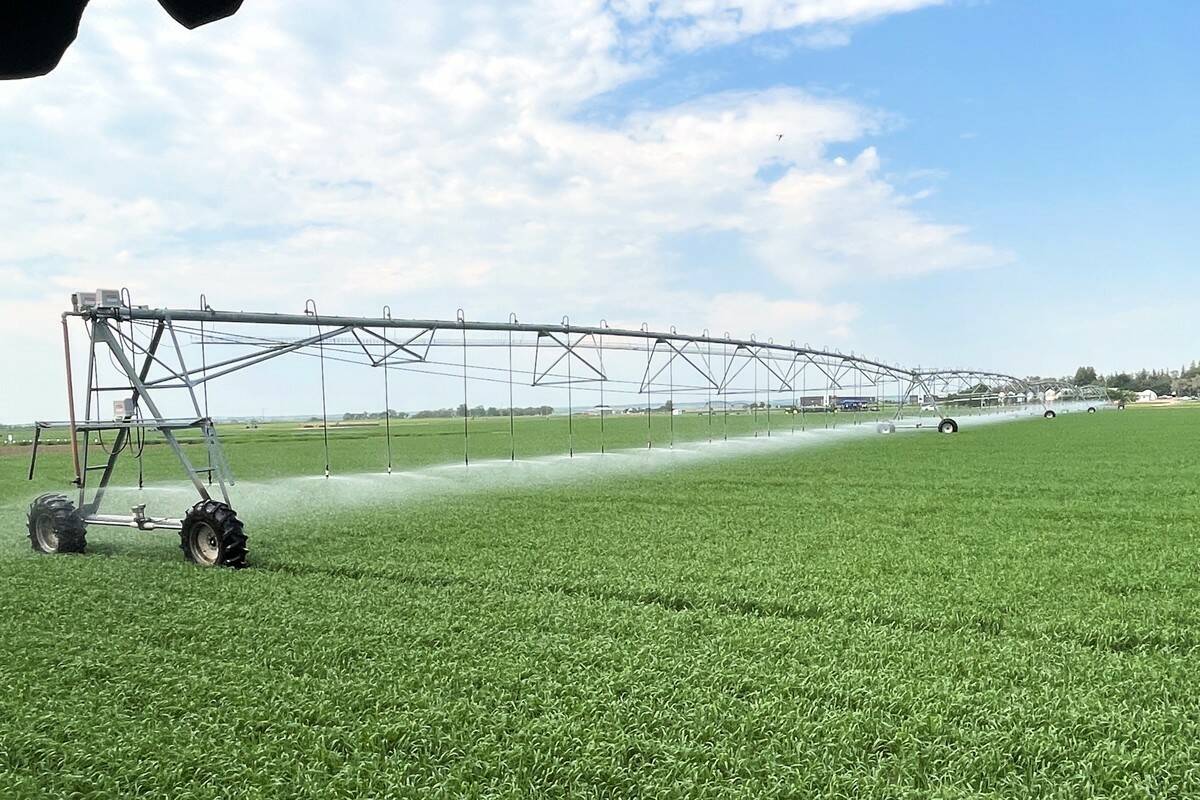
There have been several starts and stops in a fractured council drafting grazing lease annual rates, term lengths, term conditions and compensation, all met with distinctive split votes among councillors back in December. A previous council decision to convert 3,100 grassland acres to irrigated cropland in a joint venture with Bow River Irrigation District was halted by the newly elected council in October.
The Feb. 10 engagement session is expected to be standing-room only as previous sessions have been, as ranchers/conservationists and high-value crop producers have been at odds at exactly how the tax-recovery lands should be utilized along with the processes on who has access to them in serving the municipality.
Concerns over tax disparity
As the focus has been on agricultural producers, one resident hopes other taxpayers that help prop up rural municipalities, are not lost in the debate with farm versus residential/non-residential property owners in how best to utilize the M.D.’s asset valued at $345 million minimum.
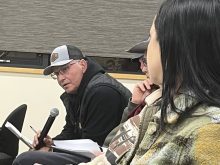
“It is no longer uncommon for residents to pay $500 to $1,000 plus a month in residential property taxes, and even more, for non-residential property owners,” said Tom Rodwell, in a delegation at M.D. council’s Jan. 27 meeting, prior to discussing the latest tweaks in policy.
“If property taxes continue to increase, the M.D. may be in danger of losing the great businesses and residents that keep farms and farming industries running.”
Rodwell noted the huge disparities of taxation on farm land and residential property.
“Selling for anything less than market value is turning up to a subsidy. How will it be explained to the other 7,800 or so M.D. ratepayers?“
Tom Rodwell
According to Rodwell, prime irrigated land in the coveted southern Alberta ag corridor sells for around $20,000 per acre, yet the assessment on that land is set at $450 per acre by the province, and $350 per acre per dry land.
Transposing the mill rate for residential and on-residential on land valued at the same rate for a quarter section shows stark differences in servicing the needs of the municipality.
“The mill rate on that $3 million quarter section of irrigated land is taxed at $914 base rate. Contrast that to residential property using the same $3 million for dollar value … and you get $11,100. Non-residential property rate on the same $3 million for dollar value works out to $28,530. That means dollar per dollar the M.D. rate, excluding provincial taxes, for residential property taxes, is 1,114 per cent higher than on farmland,” said Rodwell.
“The M.D. non residential property tax rate is a staggering 3,021 per cent higher than on farm, excluding provincial taxes.”
As the M.D. looks to service its operating budget partially with approximately $18-$20 million in tax revenue, Rodwell hopes the highly subsidized rates grazers and cultivators have got in the past will be addressed in the latest policy changes for the benefit of all nearly 8,000 residents, as oil and gas revenue continues to decline.
True cost of subsidies
Revenue from the M.D. tax recovery grazing leases of 58,340 acres was $40,838. In addition, leaseholders were paid $164,000 for oil and gas revenue. Leaseholders received a payment of $123,162 per year more than what was paid to lease the land.
“In addition, leases were allowed to be bought and sold for large amounts of money, possibly under the misconception that these leases could continue in perpetuity, contrary to what contracts clearly stated. The M.D. received a fraction of those funds as a transfer fee. All of this against the backdrop of ever increasing residential and non residential property taxes,” said Rodwell.
Rodwell cited an agriculture commission survey of residents that was amended last April. It showed 57 per cent saying lease rates should be set on market value. Seventy per cent said oil and gas payments to leaseholders should be eliminated. Seventy-one per cent of respondents said leaseholders should not be able to sell their leases. Respondents were split 50/50 on whether the land should be sold.
“The M.D. of Taber residents expectations for the directions of lands policy was clearly defined. Selling for anything less than market value is turning up to a subsidy. How will it be explained to the other 7,800 or so M.D. ratepayers? How will it be explained to the majority of residents made up of residential and non-residential property owners who are subject to taxation based on market value that they are essentially subsidizing someone’s operation?,” questioned Rodwell.
“In the end, this isn’t about any one group. It’s about prudent management of a publicly-owned asset for the benefit of all the citizens of the M.D. of Taber.”
By the numbers: the property tax divide
During his delegation, resident Tom Rodwell provided a comparison of how different property types in the M.D. of Taber are taxed based on a theoretical $3 million market value:
Property type
Irrigated farmland
Residential
Non-residential
Base tax rate (approx)
$914
$11,100
$28,530
% difference vs farm land
—
1,114 per cent higher
3,021 per cent higher