

Have you ever been confused by the impact — or lack thereof — of nitrogen applications?
If so, you’re not alone.
WHY IT MATTERS: Nitrogen is considered one of the most challenging nutrients for corn production.
Read Also
How soil fertility management can boost pasture yield by 43 per cent
Learn how soil testing and targeted fertilization can increase pasture biomass by 43%. Expert tips on N, P, and K management for beef cattle producers.
Daniel Quinn, associate professor of corn production and agronomy at Indiana’s Purdue University, said the interaction between corn yields and nitrogen levels is perennially confusing.
Indeed, Quinn considers nitrogen to be “one of the most challenging nutrients” to manage in corn production, in part because of how it responds to environmental conditions.
Dependent on the weather
Weather conditions determine how nitrogen moves and transforms, as well as its availability to the crop.
Too much rain, for example, leads to leaching and denitrification. Too much heat and little moisture, conversely, increase volatilization to the atmosphere. Less mineralization under the same conditions also means it’s less available to crops. High residue levels can immobilize nitrogen for growing crops, often necessitating the application of higher nitrogen rates.
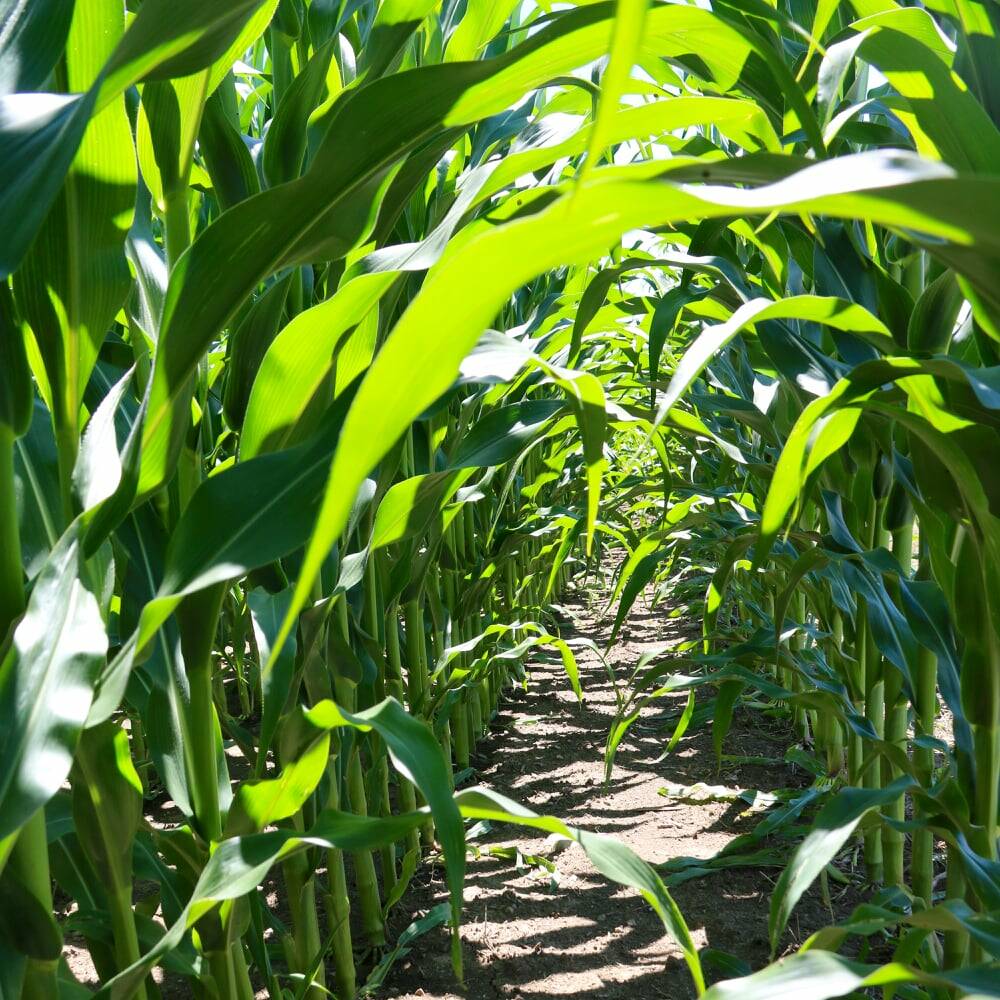
Soil productivity can have a significant impact as well. In corn trials conducted across different growing regions in Indiana, check plots receiving no nitrogen fertilizer brought yields ranging from 20 bushels to more than 200 bu./acre.
Such a range, says Quinn, is clearly “a function of the productivity of these soils,” but understanding exactly how nitrogen is more available in higher quality soils is difficult.
What we can control
While environmental variations are a “big frustration, headache, and challenge,” Quinn emphasizes corn growers can exert some control by mitigating nitrogen losses and ensuring it’s maintained in sufficient levels for when the crop needs it. Regarding the latter, he says modern hybrids do not require more nitrogen overall compared to older genetics, but they do take up more of the nutrient post-silking — anywhere from 30 to 40 per cent more, according to Purdue’s research.
Inhibitor additives can be an effective tool for both reducing losses and ensuring fertility levels at critical growth periods. But, when possible, it’s important to match the type of inhibitor being used with risk.
For example, using a volatilization inhibitor in sandy soil with subsoil-applied liquid UAN — a growing environment where leaching might be of greater concern — may not be ideal.
With so many inhibitor products on the market, Quinn also stresses growers should “pay attention to the active ingredient and what type of inhibitors” a product is using. Some products are proven effective, others less so. Even in products that have proven effective at increasing corn yields growers should not expect to see better results when environmental conditions are good.
“If we don’t have leaching, we don’t have nitrogen loss conditions, we don’t expect nitrification occurring, so we’re not going to expect a response,” says Quinn.
“Inhibitors do what they are supposed to do. But environmental conditions and application methods often dictate the magnitude of response.”