

Most companies have a research and development budget, where they spend a certain amount of money on innovation each year.
Canadian farmers may want to copy that corporate model, says a Saskatchewan agronomist, because on-farm research and access to local data are critical for improving margins in crop production.
“If you think of other private corporations … they have a percentage of gross revenue that they apply to R&D. I don’t see that on (many) farms,” said Mike Palmier, an agronomist with MNP in Saskatoon.
Read Also
CALVING 2026: Keep those newborn beef calves healthy
Biosecurity, vaccines, vitamin injections and colostrum — veterinarian Roy Lewis runs down how beef farmers can keep newborn calves free from disease and gaining weight fast.
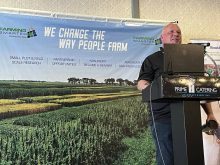
Palmier was part of a panel discussion of agronomists at CanolaWeek, a Canola Council of Canada event held in early December.
WHY IT MATTERS: The panel’s topic was profitability and what canola growers can do to increase margins.
Individual farms don’t need a massive budget for R&D, where they evaluate dozens of innovative practices during the growing season.
What’s more important is a network of local farmers, where members of the group test new varieties, experiment with nutrient management and novel products, the agronomists said.
Then, share the results of those on-farm trials within the group.
“(You) have to have local data. … What works for us in the (Red River) Valley doesn’t work in Alberta or Saskatchewan,” said Jennifer Sabourin, co-owner of Antara Agronomy in southern Manitoba.
Andre Lacoursiere, who runs 2nd Opinion Consulting in Vulcan, Alta., helps growers in his region with research trials and data sharing.
Farmers in the group will test different canola hybrids and crop varieties and then report their findings at the end of the year.
“We get together and have a really good meal … and everyone makes a mini-presentation on what they saw,” he said.
“Some of the products we’re trying is not just seed.”
At the CanolaWeek event, the agronomists were asked if there’s something new that canola growers could try to increase profitability.
The answer from all four on stage was similar — there are no easy buttons in agriculture, no product or practice that will increase canola yields by 10 bushels.
“If we’re going for moonshots all the time … we’re missing the small incremental improvements we need,” Palmier said.
What canola growers should be seeking are three or four additional bu., without adding costs.
“When we’re doing trials, we’re not looking for that (easy button). … We’re looking for the $30 to $50 per acre of additional profit margin,” he said.
Bigger picture, canola growers and most farmers across the Prairies want answers to the same questions: Does practice X “pencil out?” Does product Y “pencil out?”
On-farm research and local networks can help answer those questions for multiple practices and products, Sabourin said.
“Let’s figure out what makes farmers the most money in their area.”