

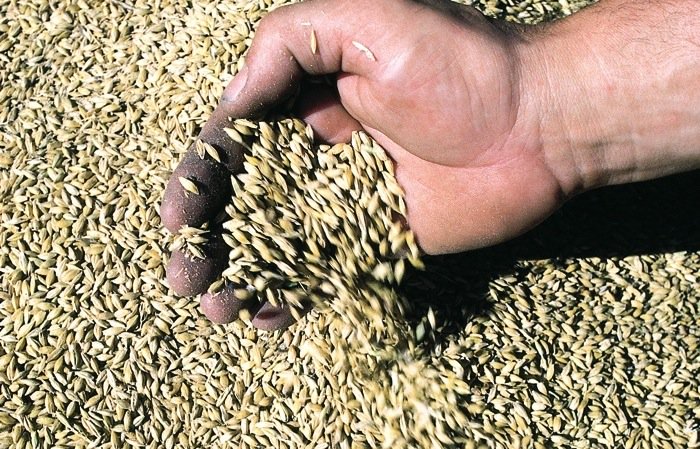
MarketsFarm – As harvest season kicks off for feed grains, new crop prices are at “market-clearing levels.”
Allen Pirness of Market Place Commodities in Lethbridge, Alta., said cattle farmers are “in pretty good shape for old crop grain,” and are “waiting for new crop to hit.”
“It’s taking its toll on prices a little bit, with the expectation of large availability for new crop,” he said.
Nelson Neumann, a grain trader with Agfinity, said “the wheels fell off the bus” for old crop barley recently, as most buyers are content to wait a few weeks until prices are a bit cheaper.
Read Also
AAFC projects tighter canola stocks for 2026-27
Canadian canola carryout supplies at the end of the upcoming 2026-27 marketing year will be tighter than earlier projections, according to updated supply and demand estimates from Agriculture and Agri-Food Canada, released April 17.
“If you have old crop barley, you should sell it now or be prepared to hold on to it well into next year,” said Neumann.
New crop barley bids are between C$225 and C$230 per tonne, with the expectation that prices will drop off slightly after harvest.
“We can clear a lot of grain at these levels,” said Pirness.
Export demand for Canadian feed barley has remained low, further contributing to lower prices heading into harvest.
Prices for feed wheat are comparable to that of barley, and corn bids are few and far between.
“Corn is a bit of a wild card,” commented Neumann, as domestic feed prices for the upcoming year could depend quite a bit on U.S. corn prices.
“Feeders have pretty much made the switch over to barley,” said Pirness.
Barley prices are expected to remain relatively stable for the foreseeable future.
“If we started seeing prices go much lower, I think farmers would start to hold back on sales,” he remarked.