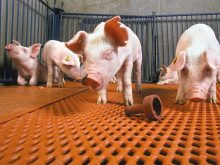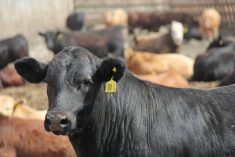


Chicago | Reuters — Chicago Mercantile Exchange lean hog and live cattle futures closed lower on Monday, pressured by declines on Wall Street along with slowdowns at slaughterhouses due to worker shortages, traders said.
CME February live cattle futures settled down 1.075 cents at 136.25 cents/lb., while March feeder cattle futures ended down 1.325 cents at 165.35 cents/lb. (all figures US$).
CME February lean hog futures settled down 1.275 cents at 78.375 cents/lb.
“The protein complex is largely under pressure from sharp losses in the equities, as well as worker absenteeism at processing plants that is slowing chain speeds,” Arlan Suderman, StoneX chief commodities economist, wrote in a client note.
Read Also

Feed Grain Weekly: Demand rises despite war uncertainty
Demand is ongoing and prices are slowly rising for feed grains despite the war in Iran, said Brandon Motz, owner and manager of CorNine Commodities in Lacombe, Alta.
Rising COVID-19 infections among U.S. workers have forced meat plants to slow production and the government to replace slaughterhouse inspectors, meat companies and union officials said. The slowdowns threaten to back up supplies of market-ready cattle and hogs, pressuring futures.
The U.S. Department of Agriculture estimated beef processors killed 112,000 cattle on Friday, down about six per cent from a year earlier and matching Jan. 3 levels that were the lowest since October. The kill increased to 113,000 head on Monday.
Pig slaughtering, meanwhile, was down about five per cent from last year on Friday, USDA said.
Equity markets fell on Monday as worries about interest rates rising as soon as March led investors to pare risky assets — a sentiment that extended to commodities. Managed funds hold net long positions in CME lean hog and live cattle futures, leaving the markets prone to bouts of long liquidation.
In trade news, India agreed to allow imports of U.S. pork and pork products, removing a longstanding barrier to U.S. agricultural trade, U.S. Trade Representative Katherine Tai and Agriculture Secretary Tom Vilsack said after Monday’s CME close.
Meanwhile, China and the Philippines suspended imports of Canadian beef due to Canada’s detection in December of a cow infected with bovine spongiform encephalopathy (BSE). The moves follow an import suspension by South Korea last month, after Canada reported its first BSE case in six years.
— Reporting for Reuters by Julie Ingwersen in Chicago.