
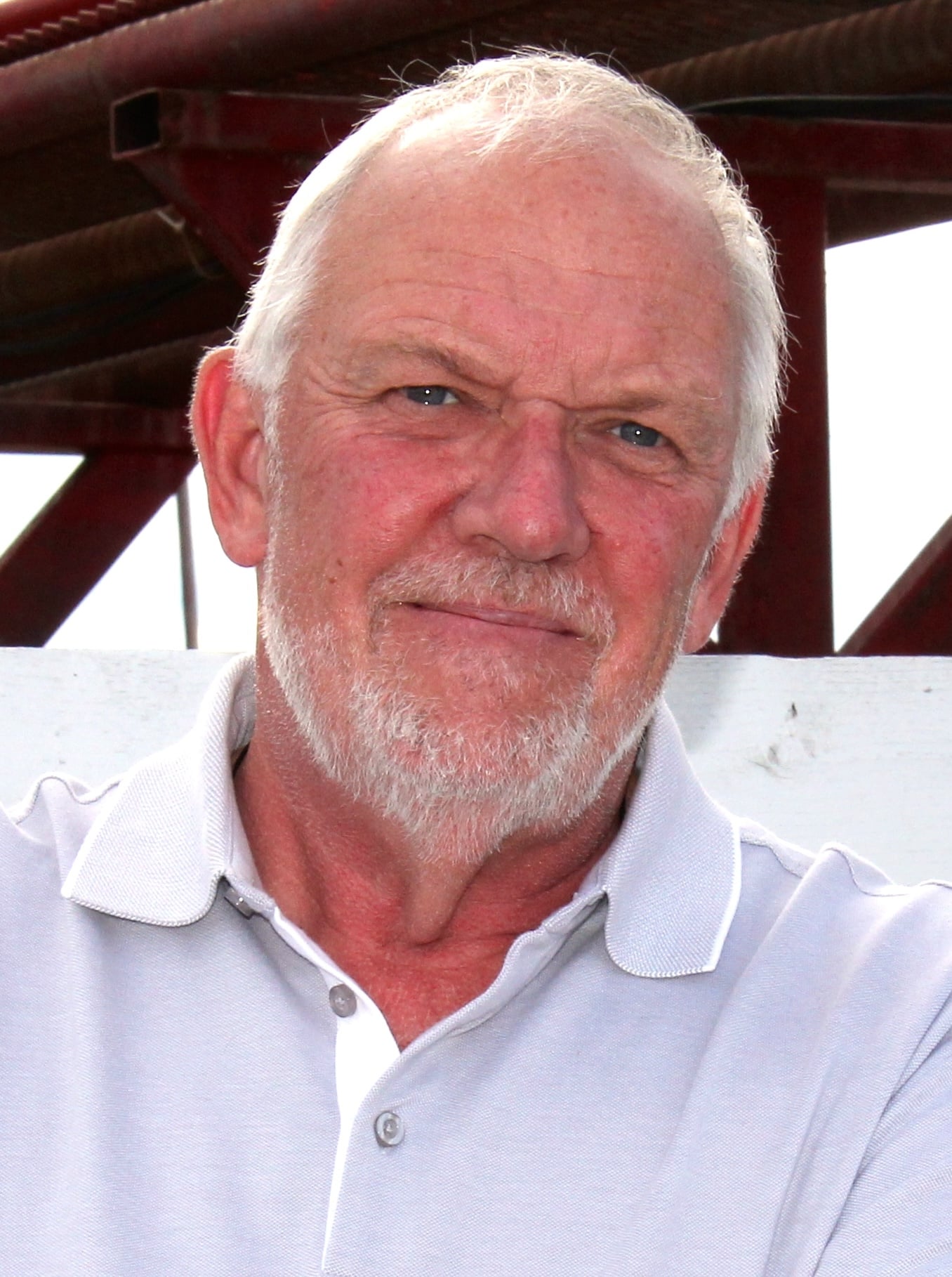
About 100 years ago, when I was 12 or 13 years old, I had this great idea to turn an old chicken coop (colony house) that had been in the farmyard forever into a fort or summer cabin — like there just wasn’t enough room in our two-storey four-bedroom farmhouse.
Since we didn’t have chickens anymore, my dad gave his blessings to the project. First, I had to knock down the roosting rails and remove a few nest boxes. Then I sweated hard to clean out what I assumed was a lifetime buildup of chicken litter from the floor. That was a project. I finally got down to bare wood, washed everything thoroughly with water and bleach. I dragged in an old cot that had been stored in the woodshed. This all took a few days to accomplish.
Finally, I sat on the cot on a hot July day enjoying the combined lingering odour of bleach and chicken poop, looked around at the bleakness of the 10×15 foot space, and worried there still might be a chink somewhere for mice or a rat to venture in. I don’t think I ever did sleep in the place — the glitter quickly disappeared off a great idea.
Read Also
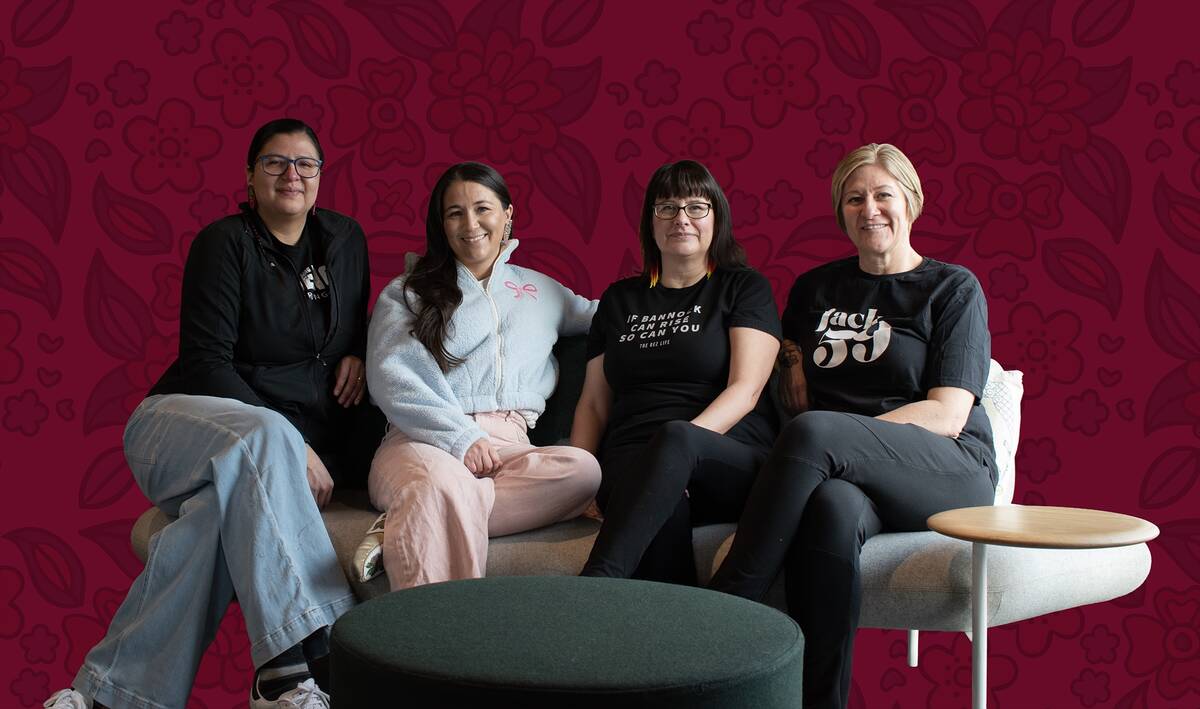
‘Big Auntie Energy’: Indigenous entrepreneurs launch podcast
Four Edmonton-based founders unite to dismantle business misconceptions and share matriarchal wisdom on navigating western industry models.
The Saddle Hill project
Fortunately the same fate did not befall a great idea the Morrison family of southern Alberta had for diversifying their ranching business — get into the rural hospitality industry by converting grain bins into guest cabins.
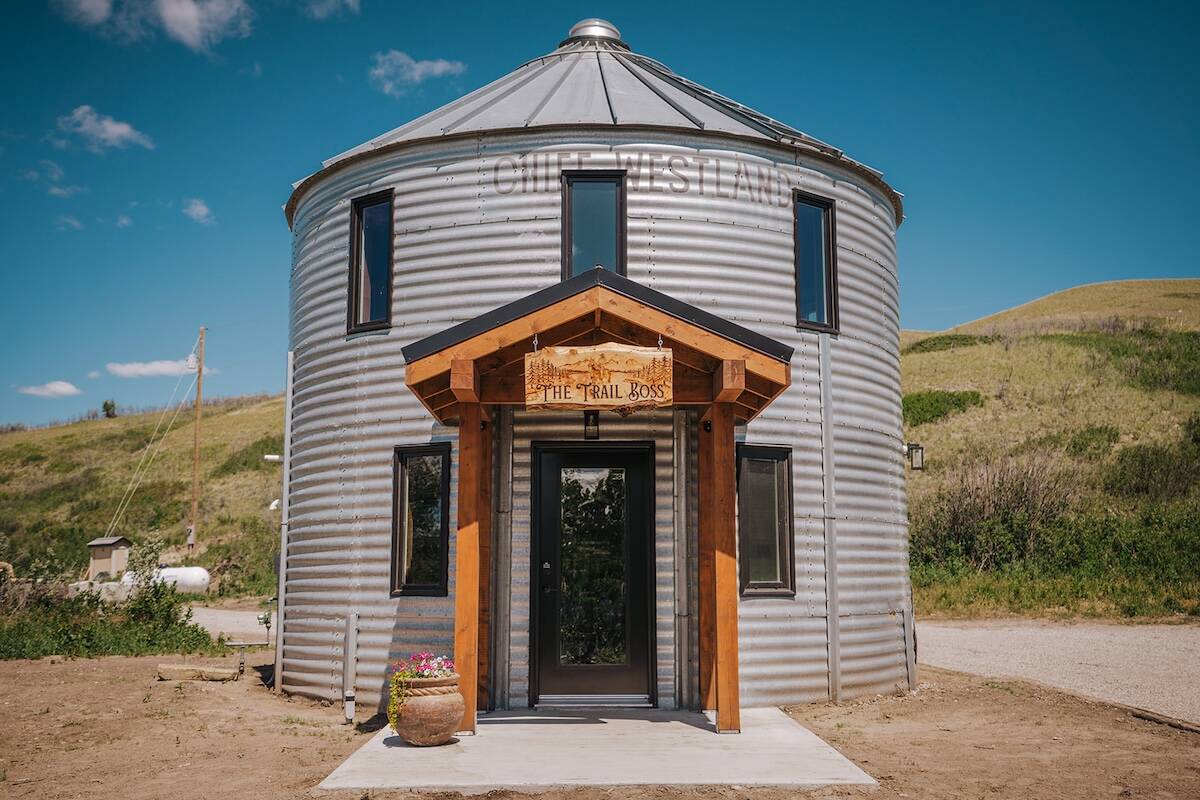
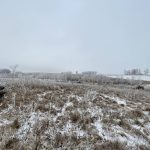
While the project has been more than two years in the making, today you can stay at Saddle Hill Ranch Cabins (also on Facebook and Instagram) along the Castle River — northwest of Pincher Creek, south of Lundbreck.
You can enjoy any of the five fully furnished, year-round “cabins” that are actually retrofitted 5,000 bushel Westeel grain bins. Except for the windows and doors they still have that corrugated grain bin look from the outside, but you’ll find an amazing transformation on the inside — a fully insulated and drywalled interior, power and modern plumbing, Wi-Fi and TV service, two beds (sleeps four), a curved staircase leading to the loft, heated floors, a fireplace, a living room as well as a kitchenette.
The cabins have been named to capture a western atmosphere: The Cattleman, The Trail Boss, The Wagoneer, The Cowboy and The Wrangler. And each features art work from local artists, that is also for sale.
Each cabin provides a cosy 400 sq. ft. of living space on the inside, while outside the door you are steps away from the Castle River and close proximity to other renowned southern Alberta fishing streams. The foothills and Rocky Mountains for hiking and hunting make a great back drop to the west, and if you’re into winter recreation, you’re only 25 minutes from the Castle Mountain Ski Resort.
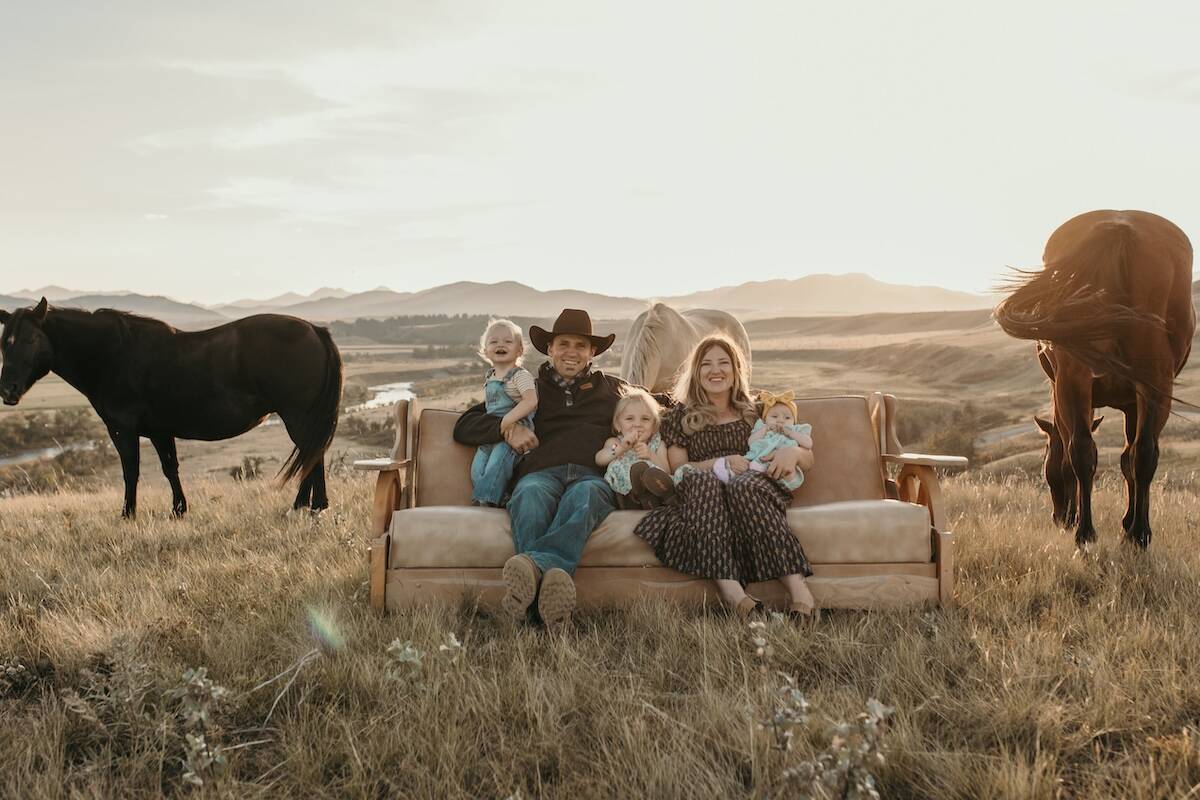
It wasn’t exactly an overnight project, however. Getting the Saddle Hill Ranch Cabins on site and retrofitted for the July 2025 opening took a lot of planning and work, says Breanna Morrison, who along with her husband, Dylan, own and operate the third-generation Saddle Hill Ranch cow-calf operation.
“Finding the grain bins turned out to be the easy part,” says Breanna who also works as an agricultural lender for CIBC. This fall she continues to be home on maternity leave, after they welcomed their third child (all under four years of age) into the family in June.
It took about two years to get 20 acres designated as Rural Recreation Zoning and obtain other construction permits. There was some pushback from the community as people considered the impact of this recreational activity, but the rezoning was approved.
Breanna bought three of the grain bins through an online auction from a farm near Manning (a community in the Peace River Region about 1,000 km north of Pincher Creek) and later found two more just north of Calgary. They specifically wanted 21-foot diameter bins, five-tiers high to provide sufficient space. The bins cost in the $2,000 to $3,000 range each.
Once the bins were secured, that’s when the real work and expense started. They had to build a road into the site, pour concrete pads, bring in power, drill a water well and install two septic systems.
Cutting openings in each bin for windows and doors was relatively straight forward, but it took some effort to get window and door casings to seal. Even the top hatch or inspection hatch of each bin was converted to a skylight.
Outfitting the interior of the bins was a combined effort. The Morrisons did as much work as they could themselves, but also hired contractors as needed. Dylan’s dad constructed the circular staircases that lead to the loft area.
“It was definitely a learning experience,” says Breanna.
“Remodeling the first bin took the longest as we figured out how to make things fit within the curved configuration of the bin. And then we got faster as we worked on each of the other bins.”
Construction started on the first bin in the fall of 2023, and all were completed and ready to go for the grand opening in July 2025. Along with their own money invested in the project, the Morrisons appreciated a grant and other support provided by Travel Alberta. Other than Travel Alberta, which promotes the “hidden gem” features of southwest Alberta, their main advertising relied on their website, along with social media platforms such as Facebook and Instagram.
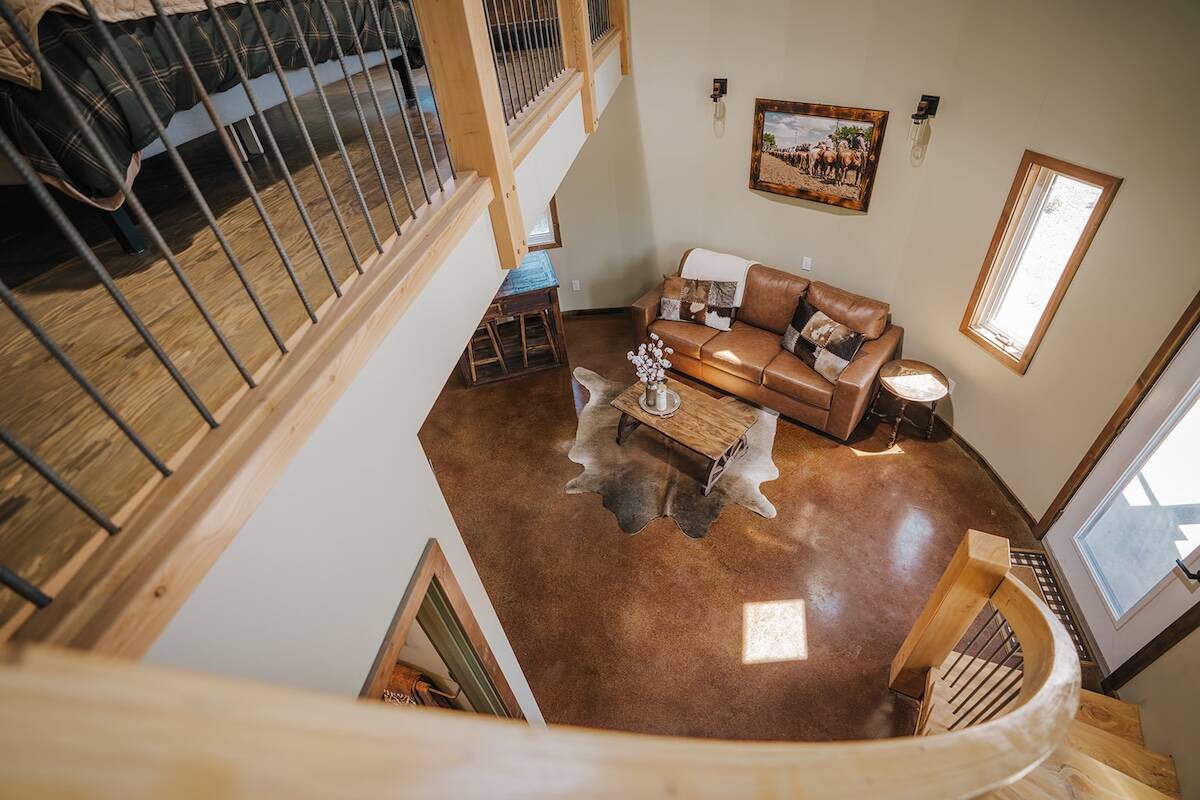
For the summer run, the cabins, which rent for between $250 and $300 per night depending on the season, were fully booked. There has been a bit of lull in bookings this fall, but they are expecting more bookings this winter as skiers and snowmobilers look for accommodation in the area.
“We have been really pleased with the response so far and look forward to the winter recreation season,” says Breanna.
While Breanna was trying to look after cabin cleaning herself, she found it too much to manage along with a young family. She hired the services of the Pincher Creek Hutterite Colony, who do what she considers a “fantastic job” of cleaning and making up rooms.
The Saddle Hill Ranch Cabins project is intended as a farm diversification project.
“We are an operating cattle ranch and also raise quarter horses, but we felt the cabins were an opportunity to make use of the resources we have in this part of the country, and also have another source of income.”
Breanna says she hasn’t ruled out the idea of expanding the tourist cabin business one day, but for now is interested in getting a few seasons under her belt with the existing setup.
I don’t want to tempt her, but if she ever thinks about remodeling chicken coops into guest accommodation, I know where she can get a good deal on a gently used, very rustic first unit. I don’t know if saying “Lee Hart almost slept here once” would help with marketing, but it’s worth a try.