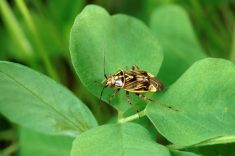
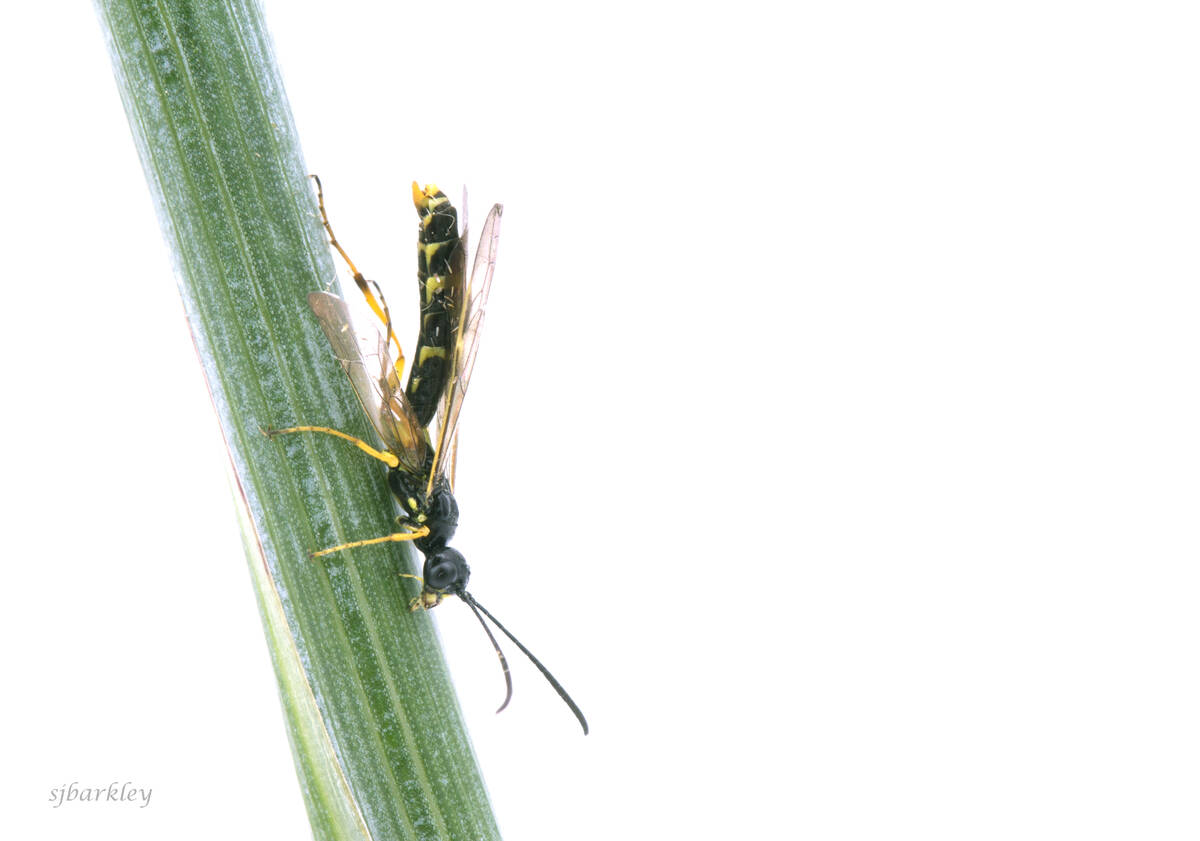
Wheat stem sawfly damage across Alberta was down this year, said a survey conducted by Alberta Agriculture and Irrigation.
But the wheat stem sawfly, a species native to Alberta, still caused moderate to high cutting damages in areas where the pest is most commonly found from year to year.
WHY IT MATTERS: Wheat stem sawfly can cause up to 15 per cent yield loss, but there are options for Alberta growers to minimize their losses.
Read Also

CUSMA review 2026: What agriculture needs to know about trade negotiations
Experts doubt the U.S., Canada and Mexico will maintain tariff-free trade under CUSMA when the review begins July 1.
“Sawfly have one generation per year, and they’re an insect that is going to start flying and looking for spots to lay eggs in early to mid-July, depending on the weather,” said Amanda Jorgensen, insect management specialist with Alberta Ag.
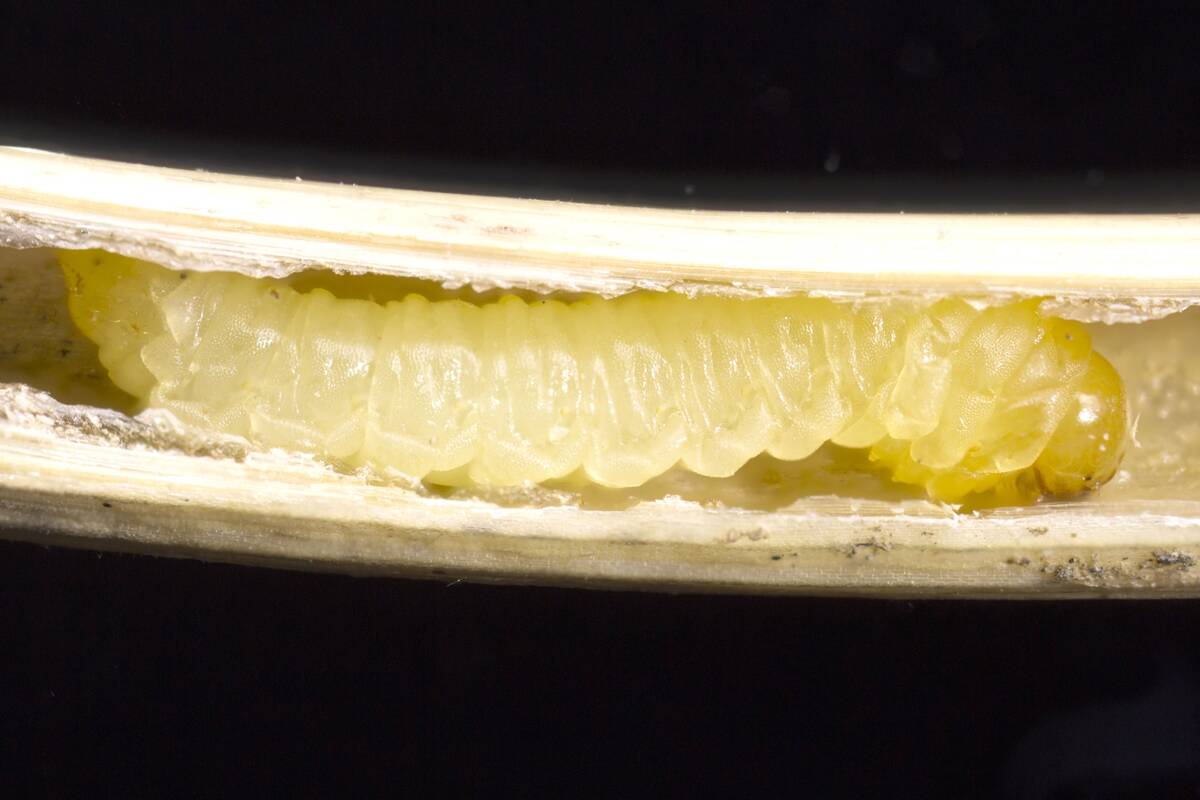
The females move into wheat fields from grassy ditches or wheat fields from the previous year, and they will lay their eggs in the wheat stems, where larvae will feed on them.
“They’re going to eat in there throughout the summer,” said Jorgensen.
“As we get closer to the end of the fall and towards harvest, they’ll move down to the bottom of the stem, sometimes below ground, in the soil, and that’s where they will hole up for the winter and eventually pupate and come out in spring.”
“They’re an insect that is going to do well in those stubble conditions, no matter what we do. The important thing in terms of natural control for this pest is that they’re strongly influenced by their parasitoid, a wasp known as Bracon cephi.”
The parasitoid, which is also a native species, has a different life cycle than the wheat stem sawfly. It has two generations per year, and the second generation is the one that gives the best control to the wheat stem sawfly. The parasitoid overwinters in stubble at higher populations than the wheat stem sawfly.
“Our cutting height for stubble actually impacts the natural enemy’s life cycle, quite a bit more than the sawfly,” said Jorgensen.
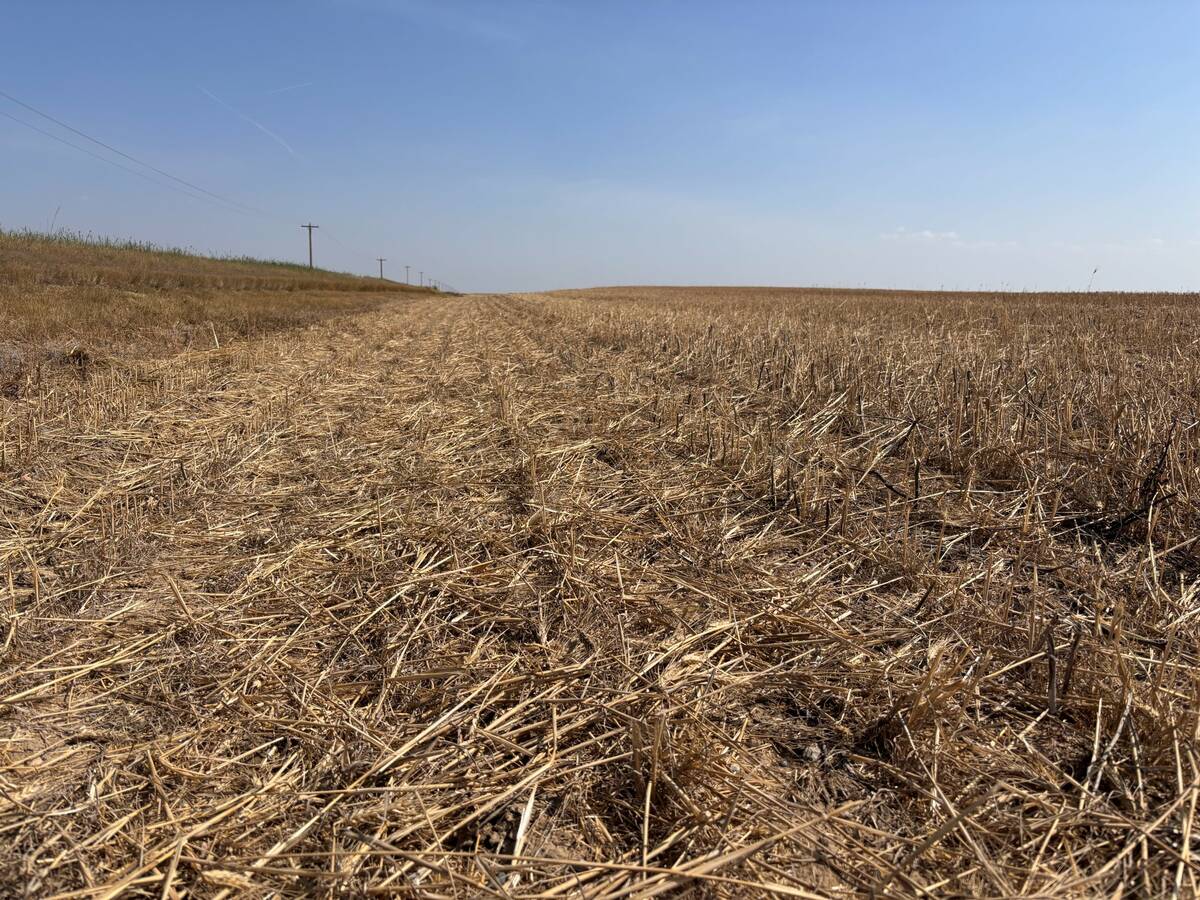
If producers want to help the parasitoid survive, they should leave about six inches of stem stubble in the field.
The wheat stem sawfly is affected by weather. Wheat stem sawflies can flourish with an early harvest. They also do better in hot, dry and even drought-like conditions.
However, in 2025, there was a reduction in population in the wheat stem sawfly in Alberta.
Forty Mile County and Warner County saw higher percentages of cutting and higher sawfly populations.
“But really, outside of those hotspots, we did not see much,” Jorgensen said.
There were reports of higher rates of parasitism, due to the better moisture situation.
In areas with consistently high sawfly pressures, growers can use durum wheat varieties with solid stems. There is also a solid stem Canadian Red Spring variety that will be available, as well as some semi-solid varieties.
“While we were doing our surveying, we saw quite a bit of use of those solid stem varieties. There are producers in those hotspots that are starting to switch to using those varieties to manage sawflies,” Jorgensen said.
Scientists have some idea of what will happen to the wheat stem sawfly population in 2026.
“We get a good idea of what those populations are like going into the winter from our survey,” Jorgensen said.
“We don’t see a lot of winter kill. They’re nestled cosy in those stems. We’re probably going to see similar amounts of sawfly coming out in the spring, as we have now in our surveys,” they said.
A high rate of parasitism may cause a bit of reduction, but the pressure at the start of the year is not going to be as high as it could have been.
“The conditions next year are going to determine whether we see an increase again in those populations,” Jorgensen said.
If there is a dry year with an early harvest, and parasitoids can’t establish well, there might be an increase in sawfly population.
“But we’re going into next year with lower pressure than we did coming into this year for sure.”
While the wheat stem sawfly can reproduce in most other cereals, except for oats, the insects pose the biggest economic concern for wheat.
In a heavy wheat steam sawfly infestation, a producer can lose 10 to 15 per cent of their yield from sawflies feeding and reducing seed weight and production quality.
“But the big loss with wheat stem sawfly is when they cut the stem, and you can lose that complete stem and make it unharvestable,” Jorgensen said.
“It can be dramatic if there are high numbers. Each sawfly is going to cut off one stem. Typically, the wheat stem sawfly will cut more stems around the edges of a field, so the centre of the field will not see many losses unless there is a tight crop rotation.”
Growers who continually have problems with the wheat stem sawfly should consider using a semi-solid or solid wheat variety and have a diverse crop rotation. Wheat stem sawfly cannot reproduce on broadleaf crops and cannot develop on oat crops.
“Just keep your eye out when you’re out harvesting to see what kind of amount of cutting you have if you’re in that sawfly area,” Jorgensen said.
“Producers might want to keep in mind what their individual fields look like when they’re making those decisions.”
The 2025 survey was completed by Alberta Ag’s Plant and Bee Health Surveillance staff, which includes Jorgensen, Shelley Barkley and a technician. Agronomists and agriculture fieldmen lined up fields, and producers offered their fields for survey. The survey is completed after harvest.