
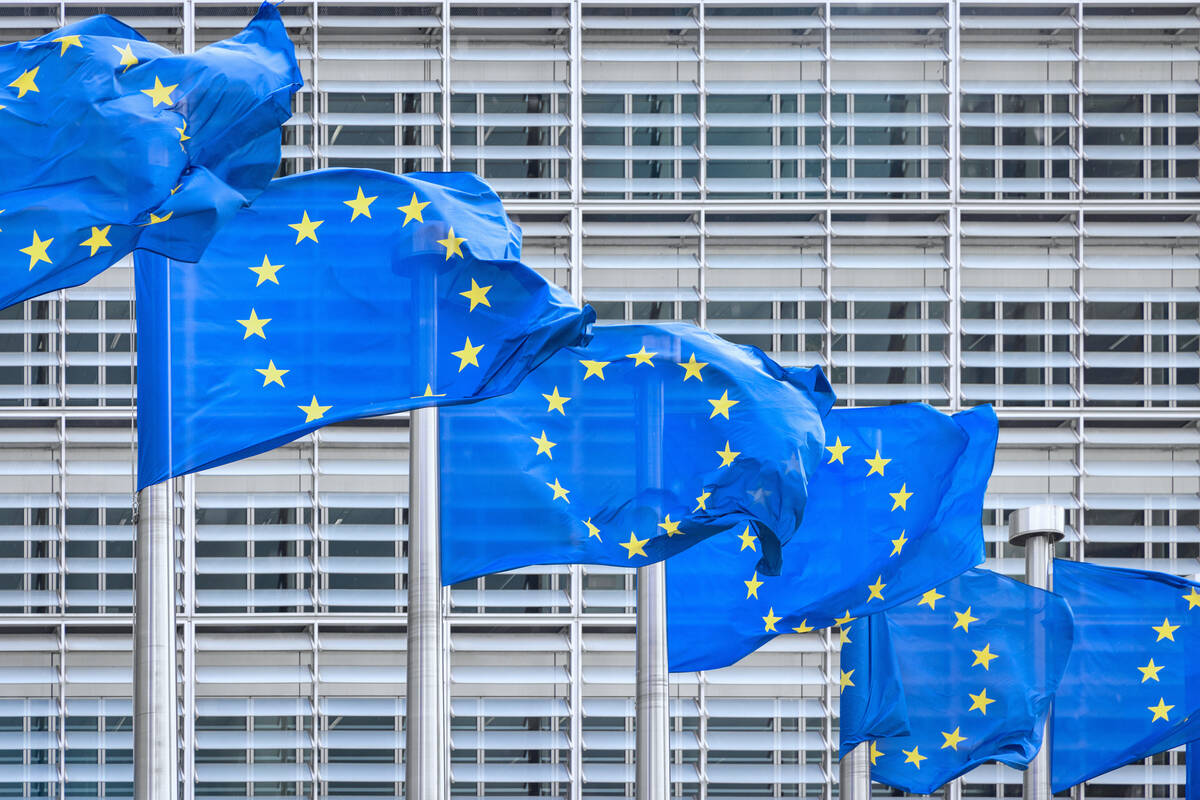
Sao Paulo/Montevideo | Reuters — A mega trade deal clinched between the European Union and South America’s biggest economies after a quarter-century of talks may signal the limits of the Trump administration’s pressure tactics in the region, officials and analysts said.
The trade alliance between the EU and South America’s Mercosur, comprising Brazil, Argentina, Paraguay and Uruguay, will substantially boost trade ties in a region that saw commerce with China soar in recent decades while U.S. influence plummeted.
But even as U.S. President Donald Trump’s administration seeks wider regional fealty, South American governments from Brazil to Peru are unlikely to relinquish strengthening ties to China or Europe at a time when they have eclipsed the U.S. in trade in most of the region.
Read Also
PMRA renamed as Pesticides Regulatory Directorate
Pest Management Regulatory Agency has been renamed the Pesticides Regulatory Directorate. Implications of the change are unclear.
Venezuela raid may have sealed the deal
If anything, several analysts said, Trump’s efforts to flex American power in the region may have helped push past the finish line a trade agreement that suffered numerous delays over two decades of negotiations.
“If credit for this deal goes to anyone, it is to the international context,” said Ignacio Bartesaghi, a foreign policy adviser who has worked with numerous Uruguayan governments over the years. “It goes to Trump’s tariff war, the conflict in Ukraine, to what happened in Venezuela recently.”
Trump’s commando raid to seize Venezuelan President Nicolas Maduro, which set the stage for a more amenable successor government, was the latest of several moves by the U.S. president to sway regional governments.
Last year, Trump threatened to cut off U.S. financial support to Honduras if a conservative candidate did not win the presidential election and conditioned billions of dollars in loans to Argentina on conservatives triumphing in the country’s midterms.
He also used steep tariffs on Brazilian goods to try forcing the country to stop the prosecution of former President Jair Bolsonaro, a staunch Trump ally.
Voters backed Trump’s choice in both elections. But Bolsonaro was later convicted, and the U.S. government dropped most of the new tariffs against Brazilian products soon after.
“The return of America’s pre-eminence in the Western Hemisphere, led by President Trump, is undisputed,” Anna Kelly, a White House spokeswoman, said in a statement. “All of the President’s foreign policy actions have restored American strength after four years of weakness under Joe Biden.”
More deals to come
Trump has repeatedly bashed multilateralism and refused to abide by international rules, withdrawing the U.S. from several global pacts and even telling The New York Times last week that he did not need “international law.”
Few countries in Latin America seem to agree.
While Argentine President Javier Milei, one of Trump’s closest allies in the region, praised the U.S.-backed capture of Maduro, his Foreign Minister Pablo Quirno also celebrated the deal with the EU as a victory for “clear rules and freedom.”
Venezuela was a full Mercosur member until its suspension in 2016 for failing to meet trade and human rights commitments.
One Brazilian official close to the presidency, who asked not to be named to discuss private deliberations, called the EU deal a “breath of fresh air” in “the most shameful and negatively critical week for multilateralism in decades.”
The agreement signed this month may also push Mercosur to conclude other trade agreements with Canada and the United Arab Emirates, said Welber Barral, a former Brazilian trade secretary.
“Countries are seeking to create regional rules that can be obeyed, so they won’t depend on the World Trade Organization, which is being discredited by Trump,” Barral said.
The EU-Mercosur deal is just one more example of several being negotiated and signed by countries that were hit with steep tariffs by the Trump administration, such as Indonesia’s trade accord with the European bloc and a pledge between Japan, South Korea and China to increase regional trade.
The deal between Europe and South America shows that many countries want to reinforce global norms, said Margaret Myers, director of the Asia & Latin America Program at the Inter-American Dialogue.
“At a time when the U.S. is breaking from the status quo, parts of Latin America appear to be upholding it,” she said. “It’s a wake-up call for the U.S.”
— Additional reporting By Luciana Magalhaes in Sao Paulo and Ricardo Brito in Brasilia