
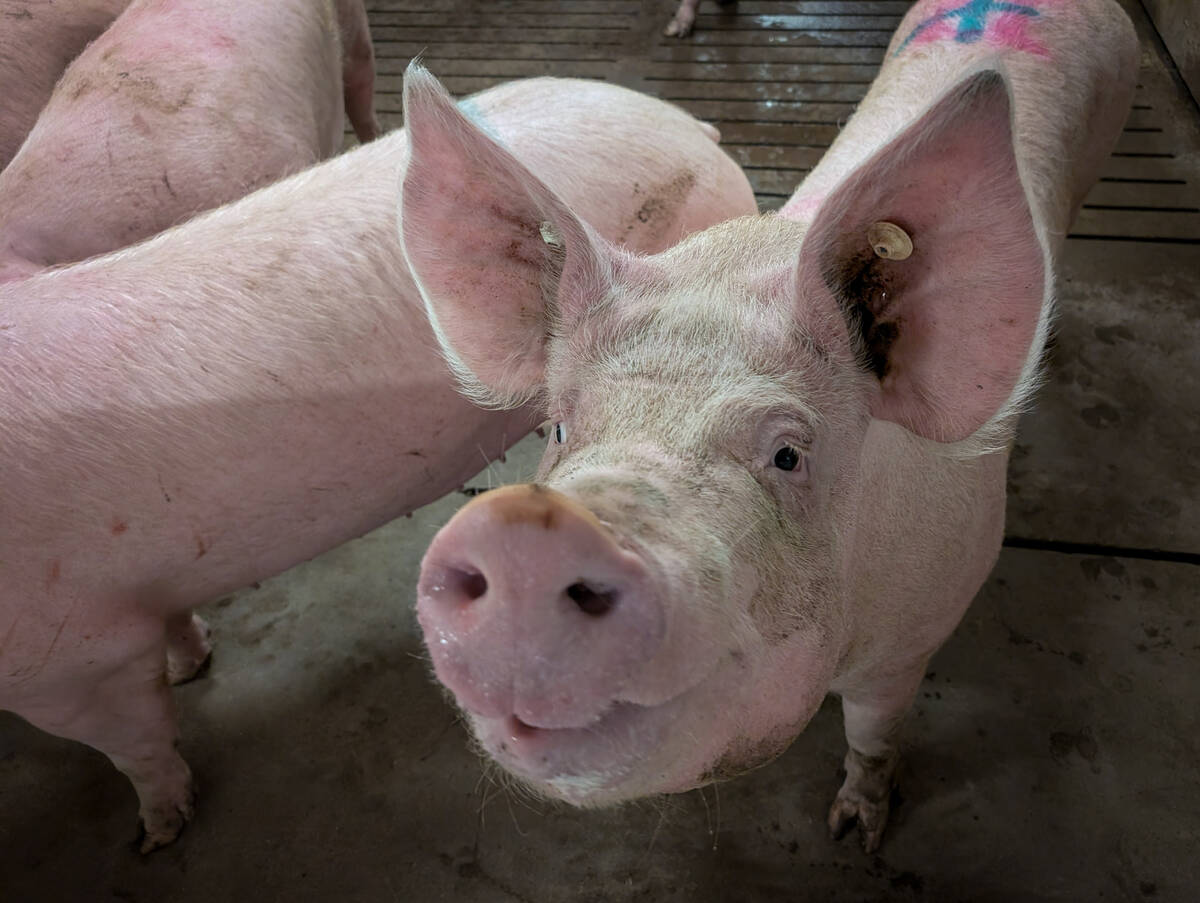
Porcine epidemic diarrhea (PEDv) has been found on a farm in southern Alberta, with a case confirmed by a lab on Feb. 21. This is the first confirmed case of PEDv in Alberta since February 2022.
The affected farm currently has three-kilometre and 10-kilometre buffer zones established to prevent the disease from spreading. No other farms are located within these zones. Alberta Pork will communicate updates on this outbreak as new information is received.
WHY IT MATTERS: PEDv is highly fatal in piglets and can be crippling to an operation.
Read Also
Prairie spring forecast: What weather models predict for March to May
Weather models offer varied outlooks for Prairie spring. This forecast review compares Old Farmer’s Almanac, NOAA, CFS, CanSIPS, and ECMWF predictions for March through May temperatures and precipitation.
The first case of PEDv was found in Alberta in 2019.
Javier Bahamon, Alberta Pork’s quality assurance and production manager, said producers should enhance their biosecurity.
Producers have multiple ways of enhancing their biosecurity. One key way to do so is monitoring their barns.
“They need to be watching who is coming inside. Not only the people that are in your farm, your household, but you need to know where any of them have been before they get into the barn, so you can really start to look at it if there is a risk to it. Any time we go to different places or have contact with different animals in our day, that’s when you need to be careful too,” Bahamon said.
“We are trying to tell the industry right now; you need to be alert.”

A full investigation has been launched to determine the source of the outbreak in southern Alberta. The impacted producer, the producer’s herd veterinarian, the office of the Chief Veterinarian and Alberta Pork are all working together to contain the disease and avoid further spread.
As of Feb. 19, all facilities participating in Alberta Pork’s Environmental Disease Monitoring Program have tested negative for PEDv and porcine deltacoronavirus.
Enhancing biosecurity
Bahamon said a key component of biosecurity is controlling the access to the animals. Producers may want to limit or cut off visitors who don’t need to be in the barn.
There’s an increased risk for disease any time hogs are moved, whether it is to a marketplace or an abattoir.
“You need to look at what kind of movement it is, and if there is any risk to it,” he said.
Bahamon said Alberta Pork is not limiting movement, but just wants producers to think about potential risks.
He said all places should be treated as if they were contaminated.
“You need to go to one of those facilities that are available, truck washes, and you need to clean and disinfect your trailer, your vehicles, your equipment, footwear, whatever you’re using to do that delivery, in order to reduce the risk of bringing any of these viruses or bacteria to your farm,” he said.
When producers are around other groups of pigs, they need to change booties or footwear and change clothes after they’ve moved the animals. Producers should remember to submit all swine manifests, including farm-to-farm movements, in a timely manner. Any place off-farm is a potential source for spreading the disease.
Producers should also make sure that other stakeholders, like people who bring feed or any other suppliers, follow biosecurity protocols.
Producers can also be alert for PEDv by monitoring activities on their farm.
Signs of PEDv
“You take care of animals every day. If you see something odd, you just need to call your vet right away,” Bahamon said.
Signs can include pigs showing lethargy or having yellowish diarrhea or seeing an increase in mortalities. Pigs with PEDv have reduced appetites and don’t move as much as normal. Young piglets, like those in the farrowing area or in the nursery, need to be monitored closely for signs of diarrhea.
If any of these signs occur, a producer should call their vet immediately.
“The herd vet will come and assess the situation and that’s how we get the information when it’s a reportable disease like this,” said Bahamon.
The vet will send samples to the lab, which will confirm the disease.
Alberta Pork has a book called “the producer book” on its website. It contains a lot of information about how to deal with swine diseases, including PEDv.