

Conflict in the Middle East is hurting sales of Canadian pulse crops to that important region of the world, say traders.
“If you have a cargo with any of the shipping lines, they are ending the journey at a destination that is not on your bill of lading,” said Tala Mobayen, director of Victoria Pulse Trading Corporation.
Her firm operates a pulse processing plant in Francis, Sask., and a trading office in Vancouver. The Middle East is one of many markets they service.
WHY IT MATTERS: The Middle East is a major market for Canadian pulses
Mobayen said shipping companies are also imposing add-on fees related to the conflict.
Read Also

Rodeo hall of fame inductee blowing out candles on celebrated cowboy life
Canadian Pro Rodeo Hall of Fame inductee’s family reflects on a fun and interesting southern Alberta life on and off the cowboy grounds.
“They are very, very hefty at this point in time,” she said.
As a result, there is no business being conducted in that market.
“I don’t see anyone buying new cargo because they’re just worried about their safety,” said Mobayen.
Mideast accounts for $769M in pulse sales
The Middle East and North Africa (MENA) region bought 801,000 tonnes of Canadian pulses worth $769 million in 2025, according to Pulse Canada.
Roughly 78 per cent of that business was lentils, with chickpeas chipping in another nine per cent.
Shippers face $2,000-per-container surcharges
Saleh Reda, vice-president of GEDKO Global Trading Partners, said shippers with product on the water heading to the Middle East are being slammed with a US$2,000 per container, or $80 per tonne, surcharge.
They are also being forced to pay an $800 per container, or $32 per tonne, rerouting charge with their cargo being dropped off at the nearest safe port.
“It is for the importer to figure out how to get it from that safe port to their own destination,” he said.
GEDKO ships Canadian pulses primarily to the MENA region, although it services other markets around the world as well.
Reda said further sales to the Middle East market are “frozen” because freight forwarders are telling buyers they must pay a $200 per container emergency conflict surcharge a $500 per container rate restoration initiative fee and a $150 per container emergency fuel surcharge.
“The long and short of it is, I don’t think anybody is really having the stomach to make a sale to that region,” he said.
Algeria adds to regional trade complications
Business was already slow in the MENA region even before war broke out. Liquidity has dried up in the pulse industry due to U.S. President Donald Trump’s tariffs and ensuing market uncertainty.
Reda had been anticipating brisk sales due to vastly reduced pulse prices in 2025-26, but if anything, business has been slower than the previous year.
“The demand was lousy and now it’s lousier,” he said.
Exporters are used to encountering unexpected problems in the MENA region.
For instance, Algeria recently announced that only the Algerian government is allowed to import pulses as of January 2026.
Port closures block access to key distribution hub
In the past, a couple dozen Canadian exporters would ship product to a couple dozen Algerian importers.
“It’s now pretty much going to be just one or two exporters from Canada (shipping) to that one Algerian importer,” said Reda.
“That’s one unfortunate event that has happened recently.”
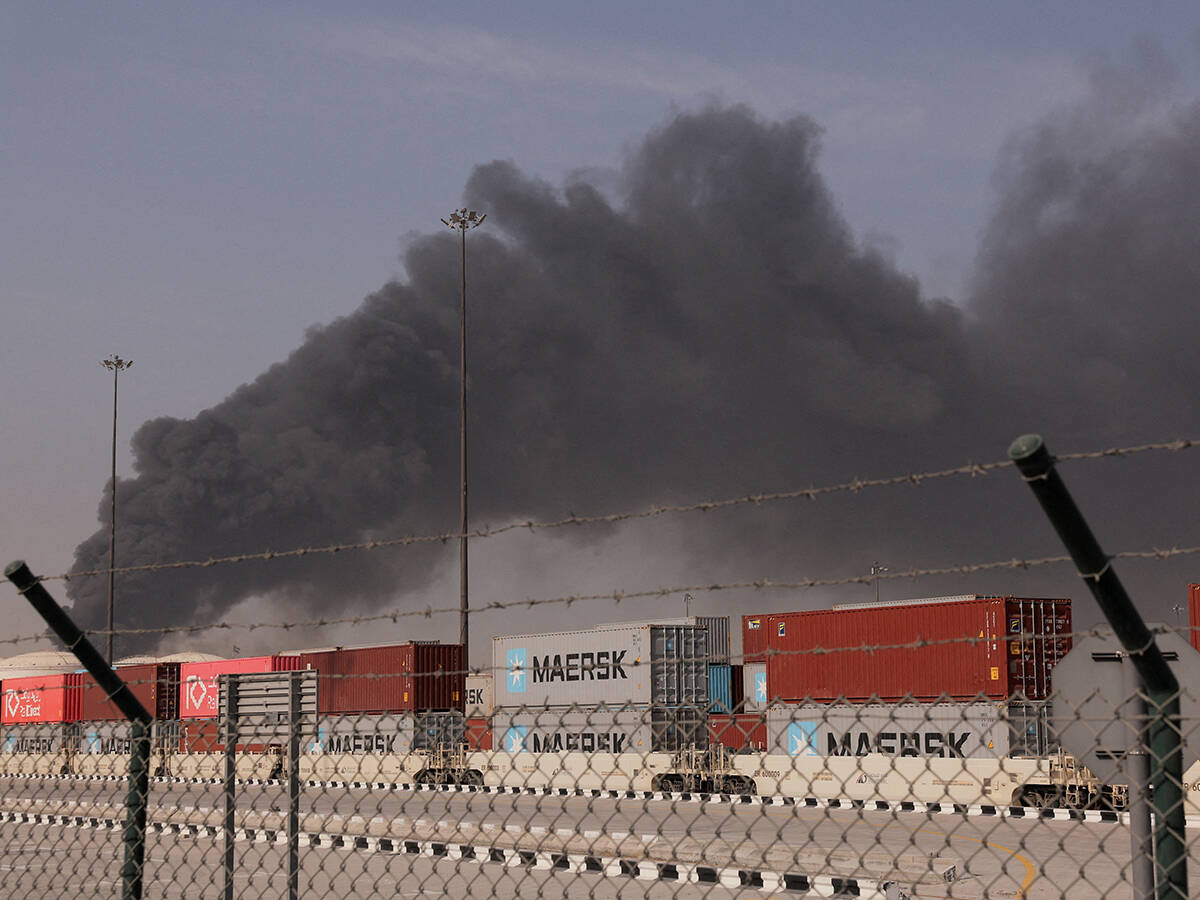
However, the war in Iran is affecting multiple markets at once. Shippers can no longer access ports such as Jebel Ali located near Dubai in the United Arab Emirates.
It is an important hub that services many other countries in the region.
“As an exporting nation, we need every single market out there to be open for us,” he said.
Red lentil prices slip as markets close
Reda believes the sudden loss of many vital markets in the Middle East will hurt pulse prices in Canada.
Red lentil prices were about $0.23 per pound as of March 16, according to Stat Publishing. That compares to about $0.25 before the onset of the conflict in Iran.