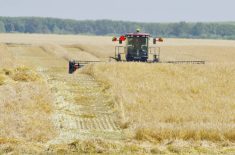

“We’re getting calls at the Ag-Info Centre from producers who have lost their crop to hail and want to know when they should be cutting what’s left for silage or green feed,” says Barry Yaremcio, beef/forage specialist, Alberta Agriculture and Rural Development, Stettler. “The answer to this question largely depends on how much the crop was fertilized before the storm.”
Annual crops, such as canola and wheat, are heavily fertilized with nitrogen to optimize yield. At the current stage of development, a lot of this nitrogen still remains in the soil. After a hail storm, plants cannot convert this nitrate into protein as efficiently as before. As such, the nitrate levels increase, peaking about four days after the storm. If the plants recover, their nitrate levels are back to normal after about two weeks.
Read Also
Copper deficiency could be costing you 50 per cent of your yield
Copper deficiency can slash crop yields by 50 per cent and is often mistaken for herbicide injury — an agronomy expert explains what growers need to know.
“For these fertilized crops, you want to get and cut them within a day or two of the storm before the nitrate levels rise,” says Yaremcio. “Otherwise, you’re going to have to wait a couple of weeks until levels subside. However, crops like hay that weren’t fertilized can be cut at any time.”
For further information, call the Ag-Info Centre at 310-FARM (3276).