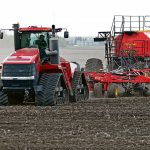



Modern planters are sophisticated pieces of technology, but they all have common mechanical wear points growers should examine before hitting the field.
“I’m hoping that you would have had your planter in the shop over winter … and you would have done your inspections on gauge wheel arms, gauge wheels, things like that,” said Eric Bossuyt, account manager with AgWest in Russell, Man.
Ideally, storing a planter in a shop makes pre-season inspection easier and keeps it out of the weather — but that’s not always possible.
Read Also
Copper deficiency could be costing you 50 per cent of your yield
Copper deficiency can slash crop yields by 50 per cent and is often mistaken for herbicide injury — an agronomy expert explains what growers need to know.
WHY IT MATTERS: A missed inspection before planting season can mean costly downtime in the field when every hour counts. Planters are complex, high-precision machines, and the wear points that cause the most trouble are the easiest to catch in the shop.
What to check before you go
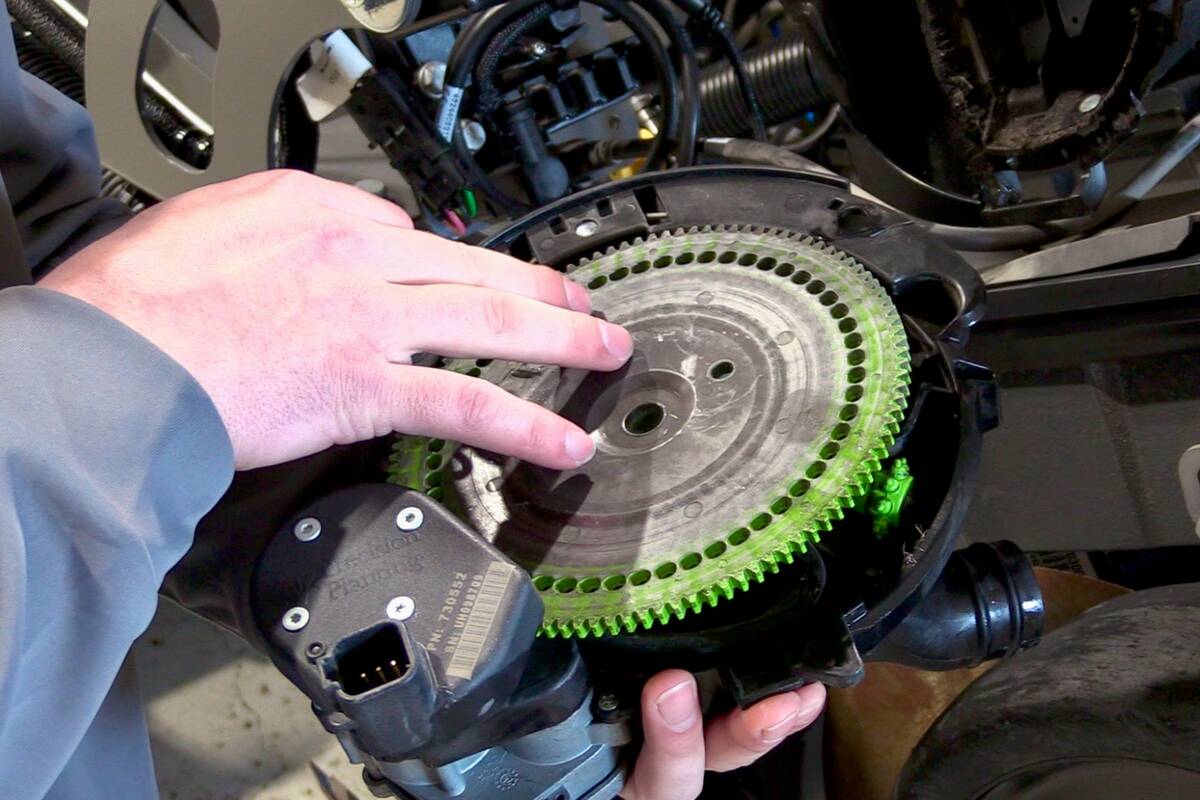
Bossuyt said meter units deserve a close look — pop the cover on each row unit to confirm seals are intact, and add some graphite lube to the seed disc while you’re in there to keep it spinning smoothly.
Hose connections are another area that often gets overlooked. Check that connections are secure and that no splits have occurred during storage, particularly if the planter was stored outside.
“Ultraviolet light weakens plastic hoses over time when exposed to the sun and can lead to holes, resulting in vacuum loss within the system,” said Bossuyt.
Preparing for downtime
No matter how well-prepared you are heading into planting season, malfunctions can happen in a hurry.
Bossuyt said poor singulation is one of the most common trouble spots growers hit once they’re in the field.
“This is often caused by a hole in a hose causing vacuum loss or worn internal parts on the meters themselves, whether your doubles eliminator is worn or the seed disc is having some issues if it’s too tight. Maybe you’re getting surging with the V-drive. Stuff like that can cause missed singulation.”
It may end up being as simple as a misplaced wire or a poor contact point — but chasing a diagnosis in the field costs time you don’t have.
“That’s going to cause you downtime to try and diagnose what’s going on in the field,” said Bossuyt.
His recommendation: keep at least one spare row unit on hand so individual parts can be swapped out quickly if something malfunctions.
“Every module, you should have one spare. That way, you’re not running to the dealership for one little finicky module.”
A quick swap keeps you moving, and you can assess the pulled part later to determine whether it’s failed or just had a connection issue.
Check your on and off times
Bossuyt also recommends checking on and off times every season. Technology changes — including updates to guidance systems — can create communication issues between equipment that lead to misses in the field.
“The hertz might change and you might have frequency issues,” said Bossuyt.
Run a test before you go
Before heading to the field, Bossuyt recommends a test run close to home to catch any remaining issues while a repair or part swap is still straightforward.
“Pull out the planter and simulate planting. Run a few seeds out in the yard, fill it up, do whatever. You just want to make sure all your sensors are working, all your meters are running.”
It’s also a good time to check singulation and GPS timing and confirm the on and offs are operating as intended. Any fine tuning can be handled in the field once the basics are confirmed.
Get out of the cab
Once you’re in the field, seed-to-soil contact is the priority — and Bossuyt is direct about what that requires.
“Not everybody wants to hear that, but we’ve got to get out,” he said.
“We’ve got to be checking if the sun’s beating down and soil is drying up. We might need to adjust our depth or adjust our closing pressure, things like that.”