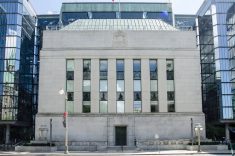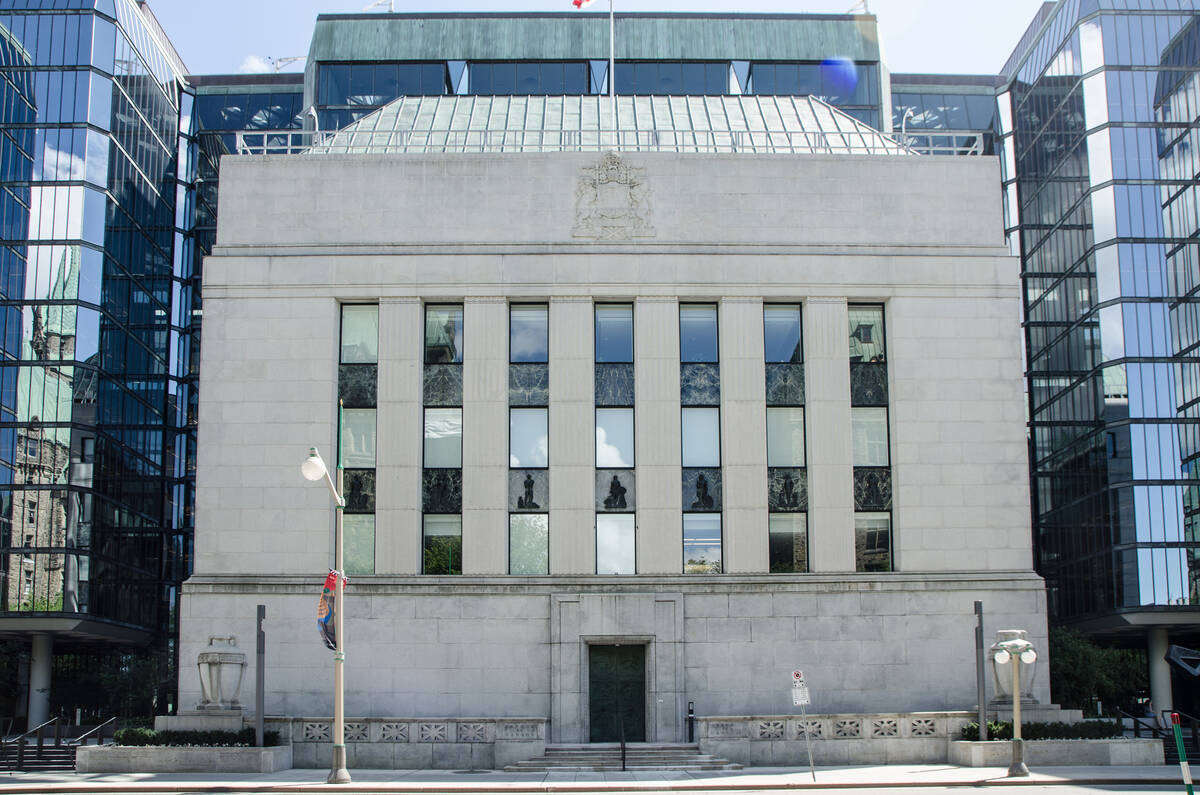
Ottawa | Reuters — The Bank of Canada on Wednesday kept its key policy rate on hold as widely expected but Governor Tiff Macklem said the central bank was ready to raise rates to prevent higher energy prices becoming persistent inflation.
The bank, which has kept its rate at 2.25 per cent since last October, said the Middle East conflict would drive up gasoline prices and boost inflation in the short term.
“It is too early to assess the impact of the war on growth in Canada,” Macklem told reporters, saying the risk of higher energy prices quickly spreading to the prices of other goods and services looked contained for the moment.
Read Also

Prairie CWRS wheat bids mixed
Canada spring wheat bids were mixed during the week ended March 17, as the United States futures traded in a wide range and the Canadian dollar weakened. General uncertainty in the world markets due to the escalating conflict in the Middle East accounted for some of the choppiness in the wheat market.
“Governing Council will look through the war’s immediate impact on inflation but if energy prices stay high, we will not let their effects broaden and become persistent inflation,” he told reporters.
Before the war started, the inflation rate in Canada had hovered around the central bank’s two per cent target for several months with the bank’s monetary policy stance seen as moderately stimulating a weak economy.
Iran war likely to affect forecasts
Economists say high energy prices are likely to affect forecasts for inflation and growth if the Strait of Hormuz, responsible for a fifth of global oil trade, stays closed beyond a few weeks.
Money markets, which had been expecting the bank to sit on the sidelines in 2026, firmed their bets for a rate hike in December.
The Canadian dollar weakened after the rates announcement and was trading down 0.20 per cent to C$1.3717 or 72.90 U.S. cents.
“Economic weakness combined with rising inflation is a dilemma for central banks,” said Macklem.
“Raising interest rates to slow inflation could further weaken the economy. Easing interest rates to support growth risks pushing inflation well above target.”
Macklem said near-term Canadian growth was likely to be weaker than the bank had forecast in January and described uncertainty as acute.
Canada is also dealing with U.S. tariffs on some critical sectors, subdued business investment, a soft labor market and a lack of clarity on the future of a free trade deal between the U.S., Mexico and Canada.
“Canada’s economy is dealing with a lot, and now we face more volatility,” he said.