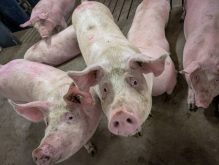

Another nursery barn in Quebec’s Monteregie is the site of the province’s sixth case of porcine epidemic diarrhea in hogs, provincial officials said Thursday.
The infections were confirmed Wednesday through lab tests on fecal samples from a 5,000-hog operation at St-Aime, about 30 km southeast of Sorel, Quebec’s provincial swine health team (EQSP) said in a statement.
An epidemiological traceback is now underway, EQSP said, to see if the case is linked to the province’s third through fifth cases, all reported since Dec. 31.
Those cases included two nursery barns and a finishing barn at St-Denis-sur-Richelieu, about 35 km southwest of St-Aime.
Read Also
Health Canada stops sales of coccidiosis medication Deccox on procedural issue
Deccox, a medication to prevent coccidiosis in calves and other livestock, is temporarily off the market after Health Canada issued a stop sale order earlier this month.
The St-Aime operation is now under quarantine, EQSP said, and the team is working with the farmer on “elevated biosecurity” measures for the site.
In infected nursery- and finishing-weight hogs, PED symptoms include diarrhea, vomiting and loss of appetite, and death loss rates generally run between one and five per cent, EQSP said.
In infected newborn and unweaned piglets, the team said, mortalities range from 50 up to 100 per cent, while in infected full-grown breeding hogs, mortality rates are generally lower than one per cent.
“Rigorous” biosecurity should continue at all levels of the Quebec pork sector, EQSP added in Thursday’s release.
Hog transports, in particular, should be washed, disinfected and dried after every trip to a slaughter plant or assembly yard before they return to a farm, the team said.
The latest confirmation brings Canada’s total of on-farm PED infections in hogs to 80 since the virus was first confirmed in southern Ontario last January, including 69 in Ontario, four in Manitoba and one in Prince Edward Island. — AGCanada.com Network