


Reuters — Benchmark Chicago corn and wheat futures rose roughly one per cent on Tuesday, lifted by worries about tensions in the Black Sea grain export region as well as cold weather slowing grain movement in the U.S. Midwest, analysts said.
Soybean futures declined, pressured by favorable South American crop weather and a retreat in soymeal futures, they said.
Chicago Board of Trade March corn CH26 was up five cents at $4.50 per bushel and March wheat was up six cents at $5.41 bushel. CBOT January soybeans were down 3-1/4 cents at $11.24-3/4 a bushel.
Read Also
Canadian farmers intend to plant more canola, less wheat in 2026
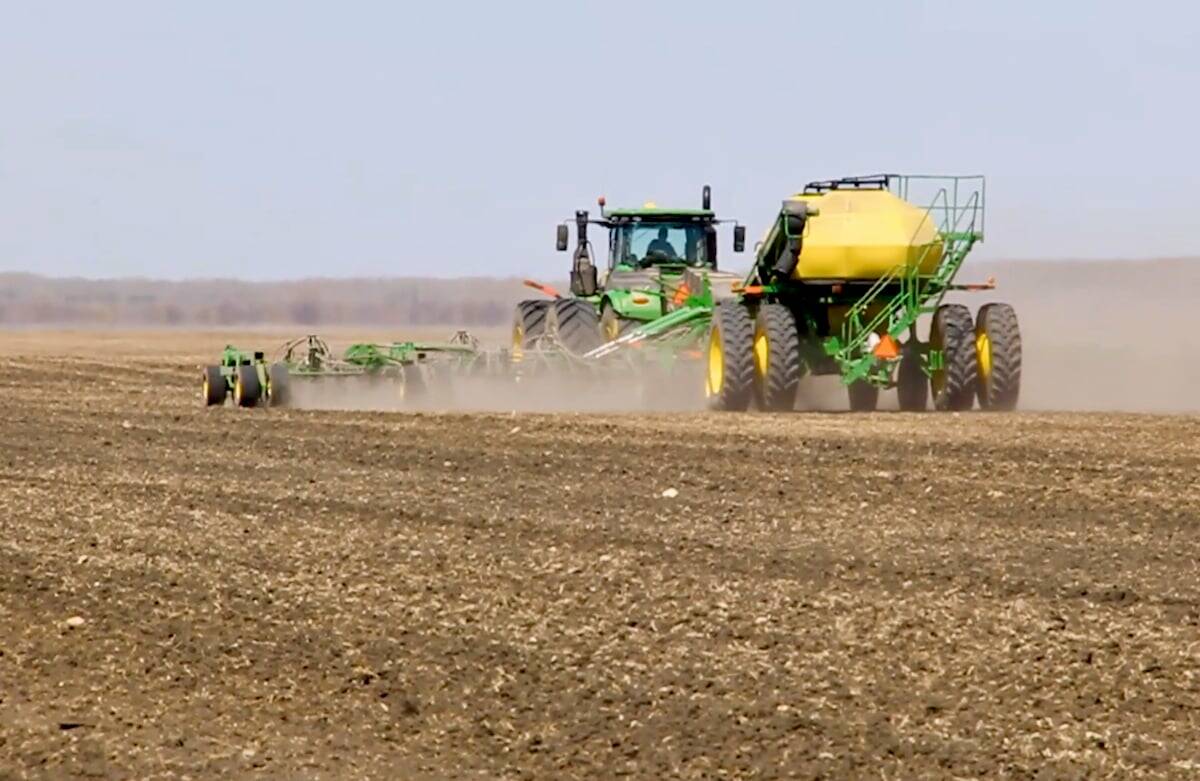
Canadian farmers expect to plant more canola and less wheat in 2026 compared to the previous year, according to the first planting intentions report from Statistics Canada released March 5. Barley, soybeans and corn area are also expected to increase, while oats, lentils and dry peas are forecast to decrease.
Traders were monitoring risks to Black Sea shipping from the war in Ukraine. Ukrainian drone strikes last week against two oil tankers bound for a Russian port were followed by a drone attack on Tuesday against a Russian-flagged vessel carrying sunflower oil. A Ukrainian official said Ukraine was not involved in Tuesday’s attack, but Russian President Vladimir Putin threatened to sever Ukraine’s access to the sea.
“Commodity prices soared when Russia first invaded Ukraine nearly four years ago on fears that commodity shipments out of this major export region would be curtailed. The risk is that we may be seeing that threat emerge once again,” StoneX chief commodity economist Arlan Suderman said in a client note.
Others noted firming U.S. cash markets after wintry weather slowed grain movement in the Corn Belt, with frigid temperatures following heavy weekend snowfall in northern areas.
“Out here in the country, in order to buy grain from the farmer, you are seeing basis levels firm up. And the funds are short, so I think you are seeing a little short-covering as the cash market firms up,” said Don Roose, president of Iowa-based U.S. Commodities. “It’s the cold weather that has slowed movement. Call it a transportation premium.”
Soybean futures fell as South American weather continued to bolster expectations for a large Brazilian soy harvest. Traders continued to gauge Chinese demand for U.S. soy supplies. The United States Department of Agriculture reported no new “flash” sales of U.S. soybeans on Tuesday, following a string of bookings confirmed last week.
“Soybean bulls will be looking for further U.S. export announcements to China to break higher out of the rangebound trade established in November,” said Josh Lawrence, adviser at IKON Commodities in Sydney.
— Reporting by Julie Ingwersen; additional reporting by Ella Cao, Lewis Jackson and Gus Trompiz