

Washington | Reuters — The United States on Tuesday took steps to make clear that U.S. sanctions imposed on Russia over its invasion of Ukraine do not stand in the way of humanitarian assistance and agricultural and medical exports, among other support.
The U.S. Treasury Department in a fact sheet outlined that Americans can engage in transactions related to agricultural and medical exports, the work of nongovernmental organizations (NGOs), COVID-19 relief, humanitarian assistance and telecommunications and internet services to support the free flow of information.
Read Also
Bayer takes its multi-front battle on pesticide liability to Kansas
Kansas lawmakers were set to take up a bill on Tuesday backed by Bayer that would prevent people from suing pesticide manufacturers for not warning them that their products could cause cancer or other illnesses.
The Treasury on Tuesday also authorized transactions necessary for certain activities, including for humanitarian projects in Russia and Ukraine, by NGOs despite U.S. sanctions on Moscow.
Washington has imposed several rafts of sanctions targeting Moscow since its Feb. 24 invasion of Ukraine, including targeting the country’s largest lenders and Russian President Vladimir Putin.
It has also issued general licenses alongside the sanctions, authorizing certain transactions related to humanitarian assistance, agricultural and medical trade and other support.
The biggest attack on a European state since 1945, the invasion has killed or wounded thousands. More than 12 million people need humanitarian assistance in Ukraine, U.N. Secretary-General Antonio Guterres said on Tuesday.
Since starting what it calls a special operation to demilitarize Ukraine, Russia has bombed cities to rubble and hundreds of civilian bodies have been found in towns where its forces withdrew. It denies targeting civilians and says, without evidence, that signs of atrocities were staged.
Western countries and Ukraine accuse Putin of unprovoked aggression.
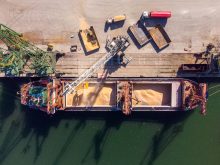
The U.N.’s World Food Programme has warned that the conflict will have a global impact on food security, as the Black Sea basin is one of the world’s most important areas for grain and agricultural production.
World Bank president David Malpass on Tuesday urged advanced economies to boost food aid to developing countries, and work to increase production of food, energy and fertilizer to address shortages and rising prices caused by the war.
The Treasury said it was working to address food security risks, including through strengthening countries’ domestic food production and unlocking trade finance to smooth disrupted supply chains.
“Treasury is deeply concerned about the risks to global food supplies and food prices at a time when many emerging market and developing countries are still struggling to recover from the COVID-19 pandemic,” the fact sheet read.
— Reporting for Reuters by Daphne Psaledakis in Washington.