
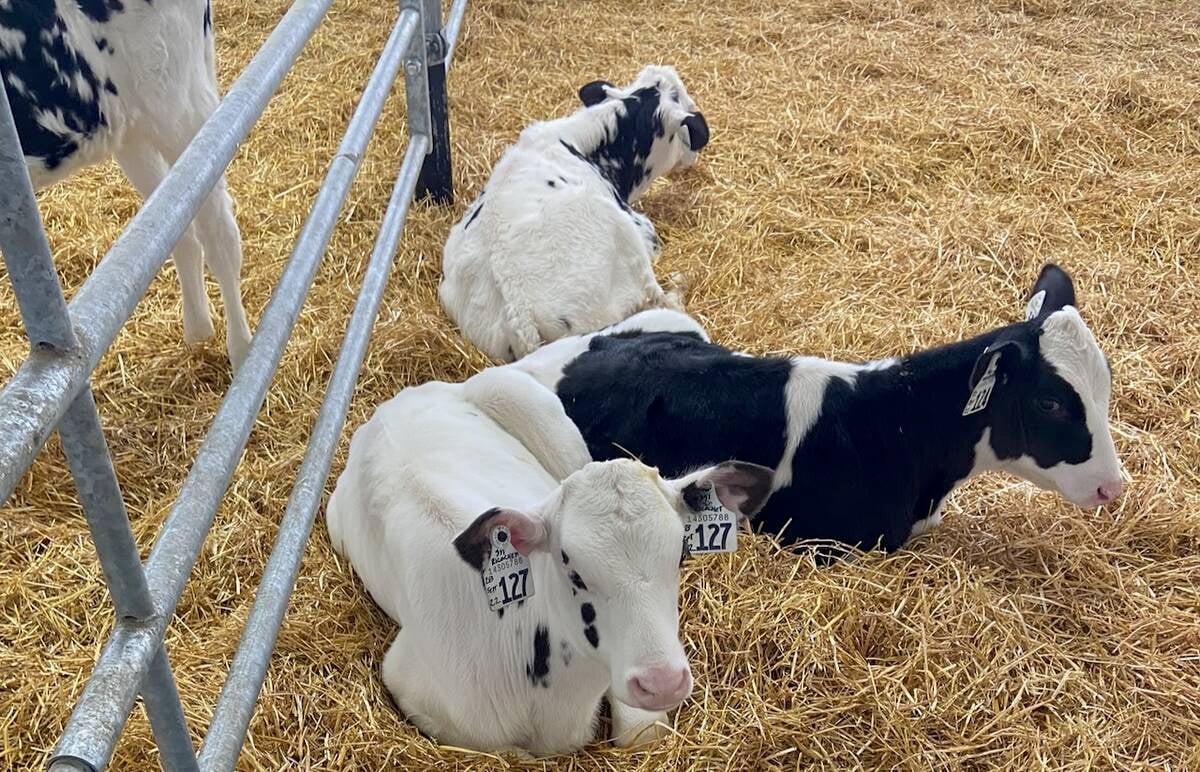
Diarrhea in calves continues to be one of the most costly illnesses on dairy farms, but researchers know more now how to prevent and manage it.
WHY IT MATTERS: Calves are worth much more money than they were five years ago, so taking extra care of calves is not only an animal welfare imperative, but a financial one as well.
Dave Renaud, an associate professor at the University of Guelph, told the recent Dairy at Guelph research day that diarrhea costs an average dairy farm $28,000 per year, and that of 100 calves that contract diarrhea, five to 29 of those will die.
Read Also
Liver abscesses in cattle cost producers millions each year
Research points to rising costs as cattle spend more days on feed.
Renaud went through several best practices for calves when they are seen to have diarrhea.
Don’t worry about which pathogen caused the diarrhea. Olivia Gibson, a masters student in Renaud’s lab looked at coronavirus, cryptosporidium and rotavirus and found that resolution happens at the same rate. Salmonella cases take a big longer, but not longer enough to warrant special treatment. Similarly, treatment doesn’t change if the calf is affected by multiple pathogens.
Fluids are critical
“We really need to give this calf fluid, because it’s losing a lot of fluid every single day,” says Renaud. Risk of mortality is reduced significantly.
Research in Guelph professor Mike Steele’s lab showed that a 50 kg calf can be losing two litres of fluid per day due to diarrhea.
A challenge for farmers yet is that there’s little known about what the best electrolyte solution is for calves. Be cautious of electrolytes that are hypertonic as these can exacerbate problems with dehydration, but creating osmotic pressure pulling fluids into the rumen and make diarrhea problems worse, he says.
Calves need intravenous (IV) fluids when their eyes are recessed and they can’t stand. Don’t give up on calves, he says, as IV fluids can have a quick and powerful effect.
Alleviate pain and inflammation
There’s good research that supports treating calves with a non-steroidal anti-inflammatory at the onset of diarrhea, says Renaud. Research shows that calves get better faster, and also improves their ability to consume grain and water when treated with Meloxicam.
Antibiotics as a last resort
Research has shown that not all calves need antibiotics to recover from diarrhea. In fact, “There’s very few cases of diarrhea that truly need it,” says Renaud. About 30 per cent of calves have levels of bacteria in their bloodstream that says they need antibiotics.
If the calves are bright and alert, Renaud says they don’t need antibiotics. However, if the calf is dull and inactive, then it’s more likely that they’ll need antibiotics. It’s a bit of an unknown whether calves with fever and blood in their stools need antibiotics.

Recent research has shown that an treatment based on an evidence-based algorithm showed that targeting calves with antibiotics meant they recovered quicker than calves that had been all treated with antibiotics.
“We need to be really smart and strategic about when we’re providing antibiotics to ensure we’re doing at the right time.”
Colostrum therapy could be an alternative
Research in Renaud’s lab by Havie Carter looked at feed colostrum to calves with diarrhea. Her study included a control group, a colostrum fed group and a group fed half colostrum, half milk replacer. There were also calves that were feed four feedings of colostrum and some fed eight.
Calves fed the larger amount of colostrum recovered two days earlier and weighed more than the control group at 56 days after onset of diarrhea. The control group also had 14 per cent mortality, while the colostrum-fed calves had none.